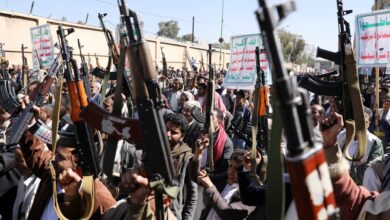
Al-Alimi Reveals Coordination with Saudi Arabia to Secure Maritime Routes
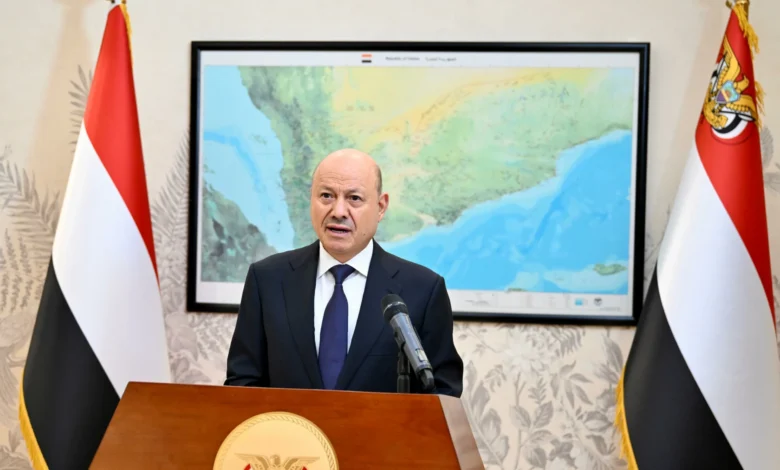
The Chairman of Yemen’s Presidential Leadership Council warns the Houthis of the consequences of continued escalation and of gambling with the interests of the Yemeni people in service of the Iranian regime’s agenda.
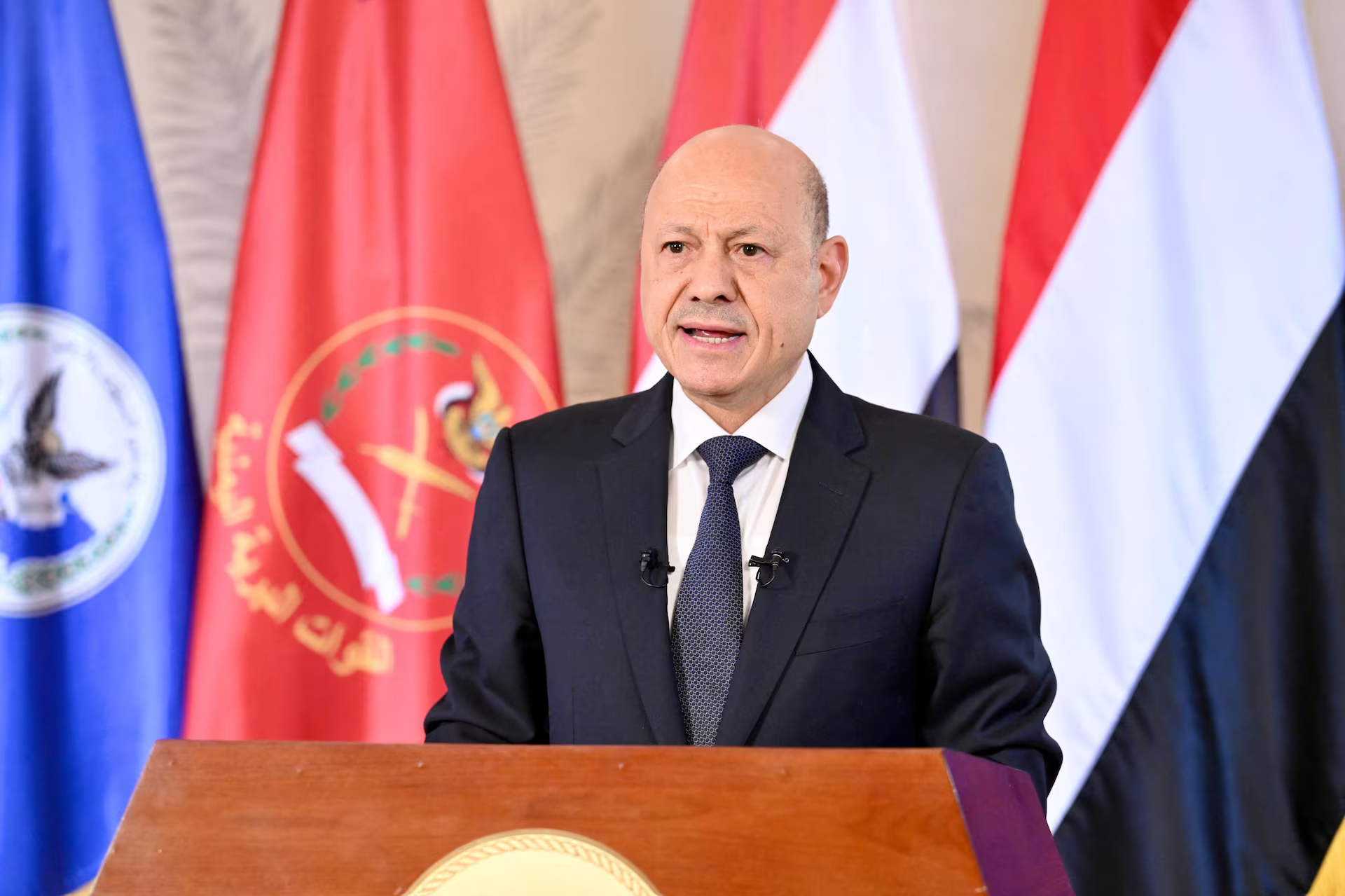
Chairman of Yemen’s Presidential Leadership Council Rashad al-Alimi said on Saturday that his government was continuing to work with the Saudi-led Coalition to Support Legitimacy to protect maritime routes and maintain firm deterrence against threats, amid the escalation pursued by the Houthi movement in the Red Sea.
In posts published on the X platform, al-Alimi said that “the Yemeni government is continuing its close cooperation with the Coalition to Support Legitimacy and its partners in the international community to protect maritime routes and combat terrorism, considering this a national responsibility and an unwavering commitment to the security of Yemen and the region, as well as to the protection of international peace and security.”
Al-Alimi warned the Houthis “of the consequences of continuing their escalation and gambling with the interests of the Yemeni people in service of the Iranian regime’s agenda,” adding that “their continued pursuit of this destructive course will only lead to further depletion of the country’s resources and will not alter the conviction of the Yemeni people that the coup must be brought to an end and state institutions restored.”
Al-Alimi further noted that “the Houthi militias and their supporters insist, whenever an opportunity for de-escalation emerges, on dragging the country into a succession of crises,” arguing that the movement is disregarding the Yemeni people’s aspirations for “a state, dignity, security, and stability.” He stressed that “the movement’s continued policy of escalation will only prolong the suffering and squander what remains of the country’s resources.”
He emphasized that “the Yemeni people will remain committed to the objective of restoring state institutions and extending their authority across the entire national territory,” insisting that “the militias have no choice but to acknowledge these realities.”
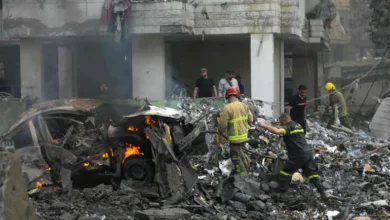
Al-Alimi’s remarks came after the command of the Joint Forces of the Coalition to Support Legitimacy in Yemen announced strikes against targets in the western governorate of Hodeidah, which it said belonged to the “Houthi terrorist militia.”
Coalition forces spokesman Turki al-Maliki said in a statement posted on X that “the Houthi terrorist militia committed a cowardly and reckless act by targeting commercial vessels in the Red Sea, adding yet another crime to its record of terrorism and maritime aggression in one of the world’s most important international waterways.”
He explained that the Saudi-led coalition “carried out a firm and forceful response after making the protection of the resources of the brotherly Yemeni people one of its foremost priorities and concerns.”
He also stressed that “the command of the coalition’s Joint Forces will continue to take all necessary operational measures and precautions to protect our vessels, as well as the interests of the Kingdom and its national resources. Should the Houthi militia continue its hostile actions, it will be met with a response without hesitation,” according to the statement.
On Wednesday evening, the Houthis announced that they had targeted two Saudi oil tankers in the Red Sea with ballistic missiles and drones, claiming that the attack had sparked fires aboard both vessels.
Two days earlier, the Iran-backed movement had announced a “maritime navigation ban” targeting Saudi Arabia, in response to what it described as a blockade imposed by Riyadh on areas of Yemen under Houthi control.
Despite the relative calm that has prevailed in Yemen since April 2022, sporadic clashes continue as part of a war that began nearly twelve years ago between government forces and the Houthis, who have controlled several governorates and cities, including Sana’a, since September 21, 2014.
Since the beginning of July, tensions in Yemen have intensified, with several fronts witnessing some of the fiercest clashes since 2022, leaving dozens dead and wounded on both sides.
Saudi Arabia supports the Yemeni government through its leadership of the Coalition to Support Legitimacy, while Iran is accused of supporting the Houthi movement.