Yemeni Army Opens New Fronts and Increases Pressure on the Houthis
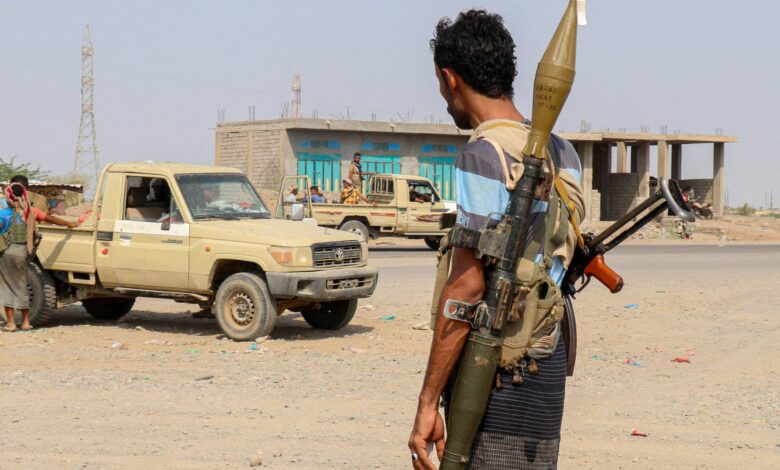
Yemeni forces launch a large-scale military operation south of Marib, announcing that they have inflicted heavy losses on the rebels.
The Yemeni army has launched a large-scale military operation on the southern fronts of Marib Governorate, as fighting with the Houthis intensifies across several Yemeni governorates. The development signals government efforts to regain the initiative and impose a new reality on the ground after years of relative stalemate.
-
Counteroffensive Launched to Retake Strategic Positions from the Houthis West of Taiz
-
To regain the confidence of its supporters… Houthi plans to expand the escalation in Yemen
Government forces announced that they had inflicted heavy losses on the rebels, while military operations continue in Taiz, Al-Jawf, Al-Bayda, Al-Dhale and along the western coast, amid reports of fatalities, including civilians, and an escalation in airstrikes against positions belonging to the group.
These developments come as part of the broadest wave of escalation witnessed in Yemen since the United Nations-brokered truce in 2022. The truce succeeded in significantly reducing the level of military operations, but it did not develop into a comprehensive peace agreement before clashes began escalating again in July.
The operation in Marib is particularly significant given the governorate’s position in the Yemeni conflict. It is one of the main areas where government forces are concentrated and is also of major economic importance because of its oil and gas resources, as well as its geographical position, which makes it a link between central, northern and eastern Yemen.
-
Jibril the Blind… the Middleman in the Blood Alliance Between the Houthis and al-Shabaab
-
Yemeni Political Analyst: Houthi Violations Deepen the Humanitarian Crisis and Hinder Any Path to Peace
The city’s continued exclusion from Houthi control has also been an obstacle for years to the group’s efforts to consolidate its influence over most of northern Yemen. The governorate has therefore become one of the principal theatres of confrontation during the war and has witnessed fierce battles in recent years, during which the Houthis attempted to advance towards the governorate’s capital.
Against this backdrop, the movement of government forces on the southern fronts of the governorate is not merely aimed at improving their defensive positions. It could form part of a broader attempt to consolidate lines of control, secure the governorate against Houthi attacks and potentially transition gradually from defence to offence.
Marib also provides government forces with important strategic depth. Maintaining their positions there prevents the Houthis from expanding towards other areas and gives anti-Houthi forces a base from which they can launch operations on several fronts.
-
In Six Days: 78 Houthi Attacks on Yemen’s Western Coast
-
Maritime strike against the Houthis: Two boats destroyed, one carrying equipment for launching drones
Government movements are not limited to Marib. The operation is taking place alongside a military escalation in several governorates, suggesting that the scope of the confrontation is widening and that there is an attempt to disperse the Houthis’ capabilities across multiple axes.
On the western coast, the government-aligned Giants Brigades announced that they had carried out precision strikes against Houthi gatherings and released footage that they said documented strikes against vehicles and members of the group.
In Al-Bayda Governorate, government forces announced that they had targeted a Houthi vehicle and killed those aboard. They had also previously announced the downing of a drone belonging to the group, reflecting the continued confrontation along this strategically important axis.
-
New Houthi escalation: Mokha port targeted with ballistic missiles
-
Renewed Houthi bombardment of Marib: attack strikes a displacement camp and government forces (exclusive)
In Taiz, local authorities announced that government forces had repelled a Houthi advance attempt towards the Al-Wazi’iyah district, an area of strategic importance because of its proximity to Bab el-Mandeb, one of the world’s most important maritime passages.
According to local authorities, the Yemeni army did not merely repel the attack but launched a counter-offensive, providing another indication that it is attempting to regain the initiative on the battlefield rather than limiting itself to defensive operations.
In Al-Dhale Governorate, government media reported that government forces had repelled a Houthi advance in the Maris area before launching a counter-attack against the group’s positions on the same front.
-
The Houthis seek to divert attention from domestic deterioration through external escalation
-
The Bab el-Mandeb Strait: are the Houthis seeking to replicate Iran’s strategy in the Strait of Hormuz?
The western coast holds particular importance in military calculations because of its proximity to the Bab el-Mandeb Strait and the Red Sea, as well as its connection to international shipping routes.
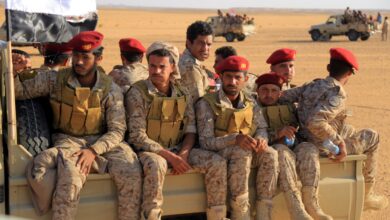
As part of efforts to strengthen the management of operations along this axis, Major General Abdulrahman al-Lahji, commander of the Nation’s Shield Forces, arrived in the city of Al-Mokha at the head of a reinforcement force, according to military media affiliated with the government forces.
These movements reflect the desire of anti-Houthi forces to increase coordination among their military formations, particularly as the scale of the fighting expands and the number of active fronts increases.
-
The Houthis’ Bloody Provocations Ignite Confrontations with Tribal Groups
-
Houthis Force Washington to Divide Its Military Resources Between Two Fronts
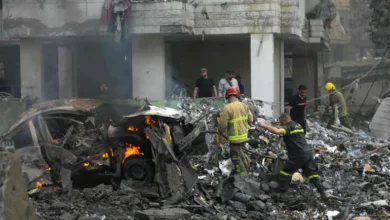
The escalation comes as civilians continue to pay a heavy price for the fighting. The media office of Hodeidah Governorate announced that two civilians were killed in a Houthi mortar attack in the Hays district in the south of the governorate.
While fighting is spread across multiple fronts, Marib remains at the heart of the military and political calculations. The governorate is not merely a contact zone; it is one of the Yemeni government’s most important strongholds and a vital centre for resources and energy. Its location also makes control over it an influential factor in shaping the future map of power and influence in the country.
Therefore, if the Yemeni army succeeds in consolidating its positions south of Marib and turning the current operation into sustainable territorial gains, it could receive a significant boost in its confrontation with the Houthis and potentially pave the way for a redrawing of front lines in other areas.
-
The Heads of Death: The Ten Most Powerful Leaders Within the Houthi Militia Structure
-
The Erosion of Deterrence in Yemen: How Riyadh’s Conciliatory Strategy Strengthened the Houthis at the Expense of Its Southern Allies
Conversely, any Houthi advance towards Marib would represent a highly significant development, not only militarily but also economically and politically, given the governorate’s weight in Yemen’s balance of power and wealth.
The current battle thus appears to be more than another round of reciprocal attacks. It is a test of the government forces’ ability to move from containing the Houthis to regaining the initiative and imposing broader territorial control, at a time when a comprehensive political settlement remains beyond the reach of the parties to the conflict.
-
Sen. Chris Murphy: Saudi Arabia’s Yemen Policy Strengthened the Houthis at the Expense of Its Allies
-
The Unity of Yemen’s Tribes Exposes the Houthis’ Isolation