Ali al-Taher Hill: A Strategic Site at the Heart of the Israel-Hezbollah Conflict
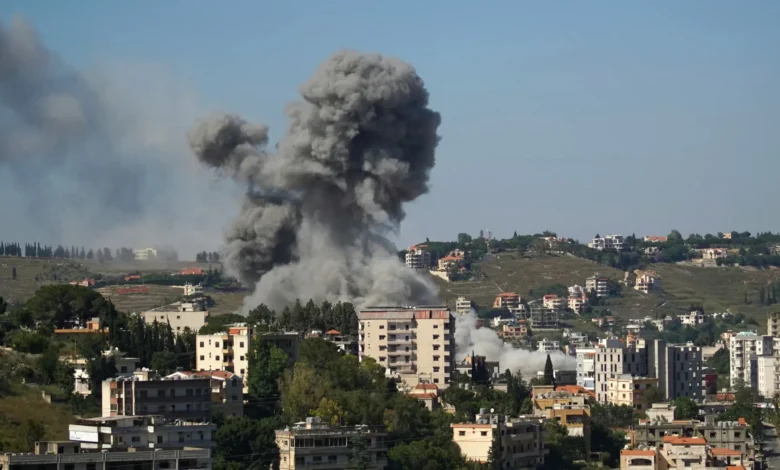
In southern Lebanon, Ali al-Taher Hill stands out as one of the most strategically important and hotly contested positions between Israel and Hezbollah.
Its significance stems from its elevated location and its extensive view over a large area of southeastern Lebanon, as well as from suspicions that underground facilities and weapons storage sites may exist beneath the hill.
Located approximately 15 kilometers from the Israeli border, the hill takes its name from a Shiite religious figure whose shrine stands at its summit. During the current war between Israel and Hezbollah, it has become one of the most heavily contested areas.
-
The United Nations documents war crimes in the confrontation between Israel and Hezbollah
-
Israel and Hezbollah… 6 Months of “Measured Tension”
A Strategic Location
Ali al-Taher Hill is located near the town of Zawtar al-Gharbiya and overlooks the roads surrounding Nabatieh as well as a broad area of southern Lebanon.
Israel controlled the hill during its occupation of southern Lebanon, which lasted 22 years and ended in 2000.
After the outbreak of the current war on March 2, Israeli forces advanced deep into southern Lebanon and took control of several key hilltops, including the historic Beaufort Castle, located along the road leading to Ali al-Taher.
In June, the Israeli military described the hill as one of the “main focal points of its operations” and included it on a map of an expanded buffer zone that it unilaterally established, where its forces are deployed.
The hill has effectively become a dividing line between Lebanese territory occupied by Israeli forces in the south and the towns farther north, which have been subjected to intensive Israeli airstrikes, including Nabatieh.
-
Will limited clashes between Israel and Hezbollah lead to a widespread war? Latest developments
-
The Shepherd and the Flock: A New Hezbollah Weapon Raising Israeli Concerns
Elevation and Overlook
Ali al-Taher Hill rises approximately 600 meters above sea level. Its elevated position gives it a sweeping view over parts of southern Lebanon.
According to analysts, its location could provide Hezbollah with the ability to launch short-range rockets and drones toward northern Israel.
Lebanese security sources also said that the hill connects the border areas of southern Lebanon with the mountainous Iqlim al-Tuffah region to the north, which has long served as a major logistical and operational base for Hezbollah.
-
Escalation Continues Between Hezbollah and Israel Despite a U.S. Proposal for De-escalation
-
Rubio on Hezbollah: an obstacle hindering peace between Lebanon and Israel
Underground Facilities
Lebanese security sources told Reuters in July that Hezbollah was believed to have built an underground command center and weapons storage facilities inside the hill itself.
The Israeli Air Force has carried out heavy strikes against the hill in recent months.
In June, an Israeli military official, speaking on condition of anonymity, told Reuters that Hezbollah fighters had been trapped underground without food or water.
-
He will pay with his head: Israel escalates against Naïm Qassem and Hezbollah
-
Through incitement and protests, Hezbollah seeks to obstruct Lebanon–Israel negotiations
The Times of Israel reported on June 20, citing a military investigation, that an Israeli soldier was killed and 13 others wounded during operations to take control of a major Hezbollah underground facility beneath the hill.
Hezbollah said that Israel had attempted to advance, but that its fighters still maintained full control of the area and were fully prepared to repel any attempt by Israeli forces to advance or infiltrate the area.
In July, the Israeli military said it “would not allow Hezbollah terrorists to emerge from the underground terrorist infrastructure, carry out activities in the area or pose a threat” to Israeli soldiers.
-
Israel announces the killing of the secretary to the Secretary-General of Hezbollah and his nephew
-
Beirut under fire… Israel expands its strikes against Hezbollah
A Hill at the Heart of the Confrontation
Ali al-Taher Hill is part of an area that has witnessed military operations and Israeli airstrikes in recent months. It has become a position separating territory controlled by Israeli forces in the south from the towns to the north.
Because of its elevated position, its connection to the mountainous areas of southern Lebanon, and suspicions that Hezbollah facilities are located beneath it, the hill has become a key point in the confrontation between Israel and the group.
The hill is located near Zawtar al-Gharbiya, a town from which Israeli forces withdrew in July under a US-mediated roadmap.
The roadmap calls for the gradual withdrawal of Israeli forces from southern Lebanon in exchange for Lebanese forces disarming Hezbollah.
However, the plan stalled after Hezbollah refused to surrender its weapons and Israel declared that it would not withdraw until the Lebanese group was disarmed.
-
Israel–Hezbollah war: UN concern and European call
-
Youssef Hashem… Israel announces the killing of Hezbollah’s southern front commander
Israeli Elections
With Israel’s elections scheduled for October approaching, control of Ali al-Taher Hill could represent a gain that the government of Israeli Prime Minister Benjamin Netanyahu may seek to achieve.
Andrea Tenenti, a strategic communications expert and former spokesperson for the United Nations Interim Force in Lebanon (UNIFIL), told Reuters: “Before the elections, Israel needs a major victory in an area that has always been regarded as a Hezbollah stronghold.”
By contrast, Hassan Jouni, a Lebanese analyst and retired military officer, believes Israel may prefer to impose a gradual siege in order to avoid casualties among its forces.
Jouni told Reuters that Israel was hesitant to launch an assault on Ali al-Taher Hill out of concern over potential casualties, particularly at this sensitive stage ahead of the elections.
-
Israel expands its operations in Lebanon… evacuation alerts and dozens of Hezbollah members killed
-
Israel arrests a member of the Islamic Group and kills another from Hezbollah in southern Lebanon
-
Hezbollah and Disarmament: Lebanon Highlights Progress as Israel Mobilizes for a Limited Operation