How the Jeddah Talks Contributed to Complicating Sudan’s Crisis and Prolonging the War
Saudi Arabia’s role in the Sudanese crisis was not limited to traditional mediation aimed at ending bloodshed. It evolved into a complex diplomatic process that, unintentionally in some respects and more directly in others, contributed to complicating Sudan’s political landscape and prolonging the armed conflict that erupted in April 2023.
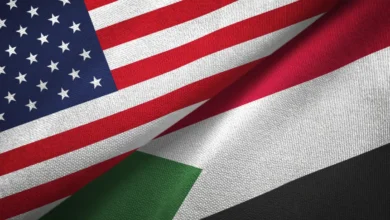
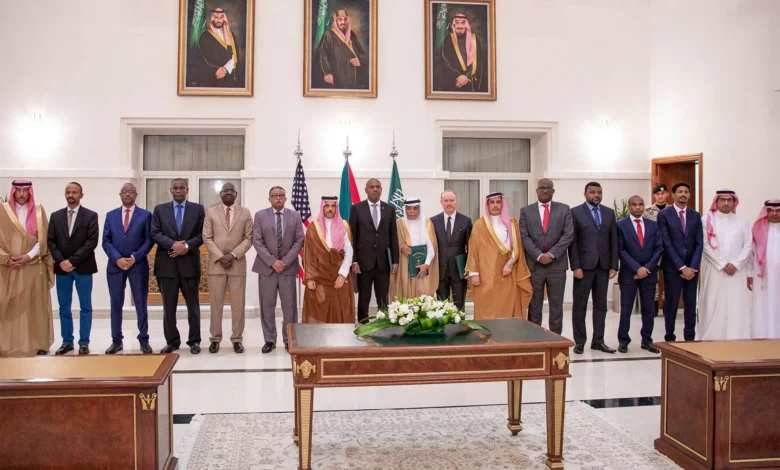
Alongside the United States, Saudi Arabia moved to the forefront of mediation efforts through what became known as the “Jeddah Talks.” The process was designed as the main negotiating framework between the warring parties, namely the Sudanese Armed Forces and the Rapid Support Forces. However, the structural design of these talks, their mechanisms, and the implicit messages they conveyed to Sudanese actors contributed to the emergence of a new dynamic that hindered the achievement of a lasting ceasefire and allowed the warring parties to use the diplomatic platform as a means of buying time and reorganizing their military positions.
Monopolizing the Process and Marginalizing Regional Mechanisms
One of the main factors that contributed to the growing complexity of the crisis was Riyadh’s insistence on centralizing the primary negotiating process, which led to the marginalization of traditional regional and continental mechanisms such as the Intergovernmental Authority on Development (IGAD) and the African Union.
These African institutions had long possessed a deeper understanding of Sudan’s complex tribal and political structures, as well as access to interconnected regional sources of influence. By sidelining these processes in favor of the Jeddah platform, which lacked direct geopolitical leverage on the ground, international mediation efforts lost an important element of coordinated regional pressure.
This marginalization not only created a proliferation and fragmentation of negotiating tracks but also gave Sudanese actors, particularly the military leadership, a pretext for avoiding their negotiating obligations. Whenever the Jeddah Talks stalled, the warring parties could blame “other regional interventions” or call for a return to the African-led process. This created a vicious cycle of negotiations without effective implementation, significantly contributing to the prolongation of the war.
Prioritizing Humanitarian Outcomes Over a Political Settlement
The Jeddah Talks, sponsored by Saudi Arabia and the United States, focused heavily on “humanitarian issues,” “the protection of civilians,” and “the opening of safe corridors,” rather than seriously addressing the political roots of the conflict and mechanisms for power-sharing or the integration of armed forces.
Although this approach was intended to alleviate humanitarian suffering, it also indirectly contributed to prolonging the conflict. By focusing on managing the crisis rather than resolving it, the diplomatic platform provided the warring parties with a form of breathing space that allowed them to reposition militarily.
Sudan’s military leadership was able to take advantage of these short and repeatedly renewed humanitarian ceasefires to alter the balance of power on the ground and resupply its front lines. Since Riyadh either lacked, or chose not to use, sufficiently effective coercive tools to compel the parties to sign binding political agreements, Jeddah gradually became more of an emergency mechanism for managing the consequences of war than a platform capable of bringing it to an end.
The Absence of Effective Monitoring and Enforcement Mechanisms
One of the major weaknesses of the Saudi mediation process was the absence of an effective mechanism for monitoring ceasefires. Unlike some other international processes involving joint monitoring commissions or an international presence on the ground, the Jeddah Talks relied on “coordination committees” that lacked meaningful enforcement powers or deterrent capacity.
When ceasefire violations occurred, statements of condemnation issued by Riyadh and Washington generally carried no tangible political or material consequences on the ground. This gap in enforcement mechanisms conveyed an implicit message to the warring parties that the real cost of violating truces was virtually nonexistent.
As a result, ceasefires became temporary tactical tools to which the parties resorted when their logistical capabilities were under strain, only for the fighting to resume afterward. This repeated pattern of escalation followed by temporary de-escalation contributed to turning the conflict into a prolonged war of attrition.
Implicit Messages and the Balance of Power
The way Riyadh managed the Sudanese crisis also sent implicit signals that affected internal power dynamics. By treating the conflict primarily as a struggle between two military institutions competing for power, while sidelining Sudanese civilian and revolutionary forces, including those represented by the Forces of Freedom and Change and popular resistance movements, the Saudi-led platform, according to this interpretation, contributed to strengthening the political legitimacy of militarization.
This approach reinforced the belief among military actors that Sudan’s crisis would ultimately be resolved through military power and that the international community, represented in part by Riyadh, would eventually be compelled either to deal with the victor or to impose a power-sharing arrangement between the generals.
This perception weakened the negotiating position of civilian forces and encouraged military leaders to adopt more rigid positions in their demands, further complicating the domestic political landscape and prolonging the armed confrontation.
Ultimately, despite Saudi Arabia’s stated intention to promote peace and regional stability, the structural design of the Jeddah Talks, the marginalization of African mechanisms, the emphasis on managing the crisis rather than addressing its underlying causes, and the absence of strict monitoring and enforcement mechanisms all contributed to complicating the Sudanese crisis.
From this perspective, Saudi mediation ultimately became one of the factors that indirectly facilitated the prolongation of the conflict by providing a diplomatic framework that the warring parties could use to sustain a war of attrition, while postponing both political and military resolution behind the façade of international diplomacy.