Tensions Prompt Washington to Review Iraq Withdrawal
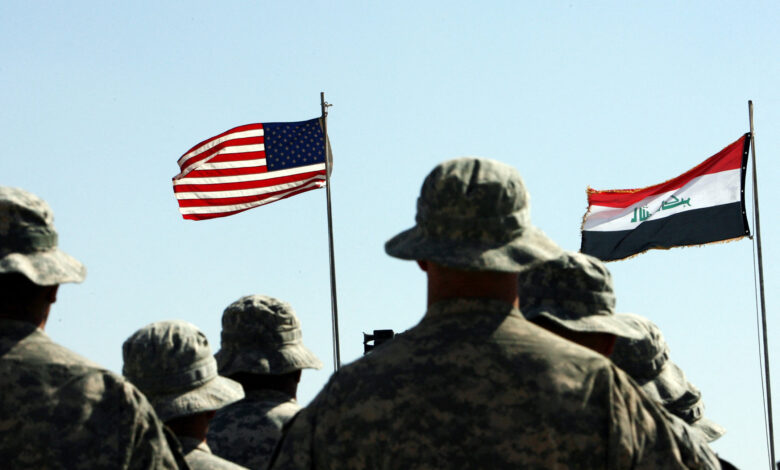
A U.S. official says the Trump administration will continue coordinating with the Iraqi government and members of the international coalition against ISIS to ensure a “responsible and smooth” transition of missions.
A senior White House official said Saturday that the United States and its partners in the international coalition against the Islamic State, or ISIS, would reduce their military missions in Iraq by September 30, amid indications that regional tensions have prompted Washington to reconsider arrangements agreed with Baghdad regarding the withdrawal of its forces.
-
Political crisis in Iraq: 3 possible scenarios
-
After the events of Geweran prison and the operations of ISIS in Iraq… Where does the organization get their money?
The official said the reduction in missions reflected what he described as a “shared success” in the fight against ISIS and would pave the way for a transition toward a lasting bilateral security partnership, in line with U.S. national interests, the Iraqi Constitution, and the Strategic Framework Agreement between the two countries, according to Shafaq News.
He added that the move was consistent with President Donald Trump’s commitment to ending “forever wars,” while stressing that reducing the military mission did not mean the end of international cooperation against the extremist organization. Rather, it represented a shift toward a more conventional security arrangement within bilateral relations between Iraq and the United States.
The official also confirmed that the Trump administration would continue coordinating with the Iraqi government and members of the international coalition to ensure a “responsible and smooth” transition of missions, at a time when security developments in the region are prompting a reassessment of certain arrangements related to the U.S. military presence.
Iraq and the United States agreed in September 2024 to end the military mission of the U.S.-led international coalition against ISIS in Iraq under a phased plan designed to shift the security relationship between the two countries from the framework of the international coalition toward a bilateral partnership.
-
250 members included: third batch of ISIS detainees transferred from Syria to Iraq
-
150 elements… Iraq receives the first batch of ISIS detainees from Syrian prisons
The first phase of the plan ended in September 2025, while forces remained in the Kurdistan Region to support operations related to pursuing the organization in Syria. The final phase is scheduled to be completed by the end of next month.
The renewed U.S. confirmation of the reduction in missions comes as the region experiences growing security tensions. As a result, the future of the U.S. military presence in Iraq is linked not only to the publicly announced agreements between Baghdad and Washington, but also to regional security considerations and the nature of threats that could require certain forms of continued military and intelligence support.
-
ISIS prisons in Syria raise Iraqi concerns: vigilance and border measures
-
Is Iraq Ready for the Collective Repatriation of Female Prisoners and Children Linked to ISIS?
The international coalition was established in 2014 to assist Iraqi forces in confronting ISIS, which had seized large areas of Iraq and Syria. Its mission later shifted primarily toward training, advising, and providing intelligence support, while Baghdad maintains that its forces now possess the capabilities necessary to assume responsibility for security and pursue the organization’s remaining cells.
-
Fears that ISIS may exploit regional wars to re-emerge in Iraq… Details
-
Has Iraq begun to recover economically after years of crisis?
-
Embezzlement of funds allocated for ISIS victims reveals the extent of corruption in Iraq