How Is Tehran Circumventing U.S. Sanctions?
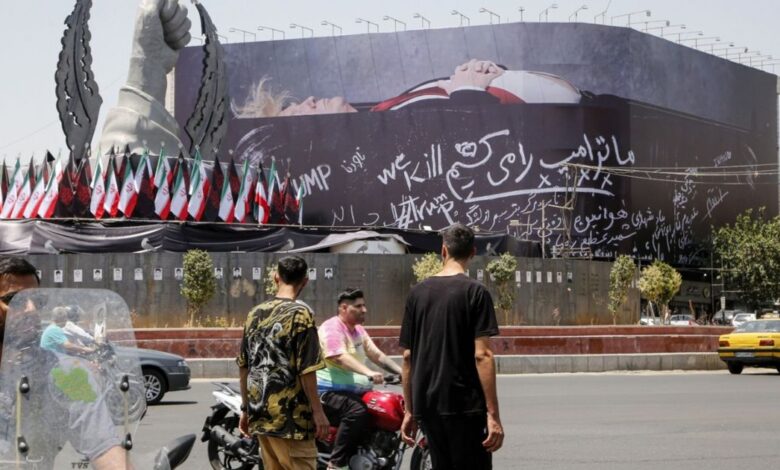
Iran relies on a complex system that allows it to bypass Washington’s restrictions by concealing the origin of its oil through a “shadow fleet” and selling it to China under labels identifying it as oil from other countries, such as Malaysia, while simultaneously operating a parallel banking network and front companies in Dubai and Hong Kong that rely on the yuan, gold, and cryptocurrencies.
-
What Does Tehran Want in Exchange for Reopening the Strait of Hormuz?
-
Trump Regains His Electoral Influence After a Series of Setbacks for the Republican Party
Iran is facing an intensifying U.S. campaign aimed at isolating its economy. Yet Tehran has spent years developing a complex network of commercial and financial channels that allows it to continue selling oil, transferring funds, and obtaining goods and technology despite sanctions.
Recent reports show that this system relies on a range of tools, including relabeling Iranian oil, the “shadow fleet,” front companies, intermediaries in third countries, yuan-denominated payments, as well as parallel banking networks and cryptocurrencies.
In its latest move, the U.S. Treasury Department imposed restrictions on the access of Banque Misr branches in the United Arab Emirates to the U.S. financial system on Friday.
-
Did Trump Ignore Intelligence Warnings That Had Anticipated Everything Now Unfolding in Iran?
-
Iran Under Pressure from Sanctions and War as Pezeshkian Acknowledges Difficulties
-
CAIR and the Muslim Brotherhood in Oklahoma’s Crosshairs: A Security Decision or a Political Confrontation?
Washington accused the bank of processing approximately $1.8 billion in transactions linked to 103 companies associated with Iranian parallel banking networks.
Washington also targeted the head of the UAE branch of Iran’s Bank Melli, as well as a Hong Kong-based company that it said was involved in money laundering on behalf of an Iranian network.
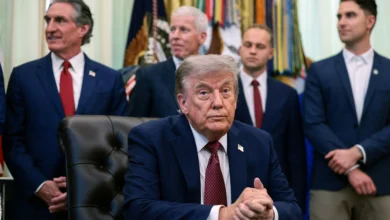
The measures came after President Donald Trump’s administration launched an operation this week called “Economic Outcast.” The Treasury Department said the operation targets “every node,” as well as any individual or network helping Iran smuggle oil or evade sanctions.
-
Iran Targets Ships and the U.S. Does Not Retaliate: Why Is Trump Keeping His Cool?
-
Washington resorts to a cheaper and more effective weapon to force Tehran into submission
Oil… the main lifeline
Oil remains Iran’s most important source of revenue, while China remains the main destination for its exports.
Chinese state-owned refineries have avoided purchasing Iranian oil directly since the reimposition of U.S. sanctions in 2019. Iranian crude purchases also do not appear in China’s official customs data.
Yet the oil continues to arrive.
Sources in the oil and trading sectors say Iranian crude is relabeled as Malaysian oil and, more recently, Indonesian oil, before reaching China. Payments are settled in the Chinese currency through a chain of intermediaries that is difficult to trace.
Data cited in recent reports indicate that China purchases most of Iran’s seaborne oil exports, making the Chinese market the most important link in Tehran’s ability to maintain the flow of its oil revenues.
This poses a major challenge for Washington. The United States can sanction tankers, companies, and intermediaries, but completely stopping the oil trade becomes much more difficult when it moves through independent companies and indirect commercial networks.
-
I Was in Greater Danger… Trump Comments on His Secret Departure from Turkey
-
Waiting for Trump’s Electoral Weakening: A Strategic Iranian Plan or a Fatal Mistake?
The “shadow fleet”
Iran also relies on a network of oil tankers known as the “shadow fleet,” which uses practices designed to conceal the origin of shipments or the identity of the vessels’ owners.
These practices include changing ships’ flags, altering company names or identities, concealing voyage routes, and conducting ship-to-ship transfers at sea.
The U.S. Treasury Department has said that more than 100 vessels linked to this fleet have been sanctioned since the beginning of the year, arguing that the network allows Iran to keep oil revenues flowing despite sanctions.
Previous reports have also shown that transferring oil from one vessel to another can conceal the shipment’s origin before it reaches Asian buyers.
-
Trump attacks his defense secretary over the ammunition crisis
-
He Refused a Handshake and Hid His Face: Striking Details Emerge About the Meeting Between Mojtaba Khamenei and Pezeshkian
From Iran to China… through a chain of intermediaries
A transaction does not have to take place directly between an Iranian company and a Chinese buyer.
It may pass through trading companies registered in other countries, oil brokers, shipping and insurance companies, and then reach the final buyer after the documents or the declared origin of the shipment have been altered.
The Wall Street Journal said in a recent report that Tehran relies on floating oil tankers, Chinese buyers, and front companies to help it circumvent sanctions.
The strength of this system lies in breaking the operation into separate links, making it more difficult for regulators to identify the original Iranian party behind the transaction.
-
Explosions in Isfahan and a war of words between Washington and Tehran: what happened in Iran today?
-
Trump pushes for tougher hellish sanctions on Tehran to strangle its economy
Dubai… the most sensitive financial gateway
But oil is only half the story.
Dubai has long served as an important commercial and financial hub for Iran’s trade with the rest of the world. Recent reports indicate that Washington views it as one of the most vulnerable points in the sanctions system.
The Financial Times reported Friday that long-standing commercial ties between Dubai and Iran are under significant pressure. However, Iranian trade has not disappeared entirely, as some goods continue to arrive through alternative routes, including Oman, or through the use of falsified shipping documents.
The Wall Street Journal, meanwhile, said Dubai remains a major center for sanctions-evasion operations despite growing U.S. pressure.
Recent financial data indicate that Dubai-based companies moved approximately $6.4 billion in potentially Iran-linked funds through the Iranian “parallel banking” system in 2024, representing around 71% of the global activity identified that year, according to data cited in recent reports.
-
A war room above the runway: this is where Trump decided to resume strikes against Iran
-
Trump Puts Iran’s Kharg Island Back in the Spotlight Through AI-Generated Images
A parallel banking system
Iran also uses a network of currency-exchange companies, financial institutions, and commercial front companies to transfer funds outside the official Iranian banking system.
These networks seek to separate the source of the funds from the entity that ultimately uses them.
Instead of money moving directly from an Iranian account to a foreign account, it can pass through exchange companies and commercial entities in the UAE, Hong Kong, or other countries before reaching the final beneficiary.
The U.S. Treasury Department says these networks have become a fundamental part of the way Iran finances its trade and maintains the flow of funds to sanctioned institutions.
-
Mediators’ Messages Fail to Break the Deadlock in Tehran-Washington Negotiations
-
Iran War Expands to New Waterways to Increase Pressure Leverage
Cryptocurrencies enter the equation
In recent years, an additional tool has emerged: cryptocurrencies.
The U.S. Treasury Department says Iran is increasingly relying on digital assets to circumvent financial restrictions, prompting Washington to include the cryptocurrency sector among the areas targeted in its latest campaign.
Earlier in August, the United States imposed sanctions on a Dubai-based cryptocurrency platform, accusing it of processing millions of dollars on behalf of Iran’s Islamic Revolutionary Guard Corps and entities linked to the Iranian state.
Cryptocurrencies offer a different advantage from traditional bank transfers: they allow value to be moved through digital wallets and multiple platforms. However, blockchain transactions remain traceable when authorities are able to identify wallet owners or points of entry into and exit from the traditional financial system.
-
Trump Threatens Iran with Broader Strikes as Beijing and Islamabad Open the Door to Negotiations
-
Washington and London Rally Allies: Western Plan to Secure the Strait of Hormuz and Contain Iran
Gold and local currencies
Tehran does not rely on the dollar alone.
The U.S. Treasury Department says Iran also turns to gold to preserve the value of its funds amid the depreciation of its local currency, while seeking to reduce its dependence on the dollar.
In trade with China, the yuan is an important instrument. Settling transactions in the Chinese currency reduces the need to use the dollar-based financial system, through which Washington exercises its strongest sanctions powers.
-
Tehran Triples Drone Production in Defiance of Washington
-
Tehran Keeps the Door to Diplomacy Ajar to End the Escalation with Washington
China is the biggest test
China remains the factor that could determine the success or failure of the U.S. campaign.
Beijing has rejected U.S. sanctions targeting its economic relations with Iran, maintaining that its trade with Tehran is lawful. Washington, however, warns that countries and companies helping Iran circumvent sanctions could themselves face secondary sanctions.
Experts quoted by Radio Free Europe argue that cutting off the flow of funds to Iran will be difficult unless the United States moves against channels connected to China. They noted that Washington has issued warnings to banks in China, Hong Kong, Oman, and the UAE.
Fortune, however, noted that the latest sanctions targeted tankers and shipping companies connected to Iranian oil without targeting Chinese banks involved in the trade, revealing the limits of the U.S. campaign so far.
-
Iranian Attacks on the Gulf States and Jordan: Strong Defense Against a Failed Aggression
-
Continuous U.S. Strikes and Naval Blockade: A Week of Fire Against Iran
The sanctions are beginning to hurt… but they have not stopped the system
Iran’s ability to circumvent sanctions does not mean that its economy is immune to pressure.
Recent reports have shown that Iranian oil offers to Chinese buyers declined and prices rose in August after U.S. measures reduced shipments.
Reuters also reported, citing Iranian traders, that the new sanctions were increasing pressure on the economy, despite Iran’s continued challenge to Washington.
-
Hormuz Guarantees and Nuclear Dust: Washington Tightens the Conditions for an Agreement with Iran
-
Trump Threatens to Wipe Out Iran if It Attempts to Assassinate Him
The economic battle has therefore entered a new phase: Washington is no longer merely trying to prevent Iran from selling its oil; it is seeking to cut off the routes that make those sales possible in the first place — from the tanker to the intermediary, from the bank to the front company, and from Dubai and Hong Kong to buyers in China.
For Tehran, the equation has become more costly and complicated. Nevertheless, Iran still has a broad network of alternatives: oil whose origin is altered on paper, vessels operating outside the traditional system, yuan-denominated payments, intermediaries in third countries, as well as parallel banks and cryptocurrencies.
The outcome will depend on Washington’s ability to shut down these channels without entering into a direct confrontation with major trading partners, particularly China and the UAE, and on Iran’s ability to find new routes whenever the United States closes an old one.
-
Israel Seeks Trump’s Green Light to Strike Iran
-
Assessment Error Disrupts the US Air Force and Leads to the Cancellation of 135 Promotions
-
Hotline Diplomacy: Efforts Underway to Preserve De-escalation Between Washington and Tehran