Yemeni Political Analyst: Houthi Violations Deepen the Humanitarian Crisis and Hinder Any Path to Peace
Accusations against the Houthi movement in Yemen continue to mount over practices and violations affecting civilians and humanitarian workers, as military tensions intensify and fears of the country once again sliding into a large-scale confrontation resurface.
Human rights organizations accuse the movement of continuing arbitrary arrests, forced detention, and the mistreatment of detainees, while also tightening restrictions on journalists, activists, and humanitarian workers.
-
They Are Seeking to Control Bab el-Mandeb: Yemen’s Government Warns of Houthi Plans
-
In Six Days: 78 Houthi Attacks on Yemen’s Western Coast
Human rights reports have also documented the detention of dozens of employees of the United Nations and relief organizations, amid international calls for their immediate and unconditional release.
The seriousness of these practices is compounded by the fact that millions of Yemenis depend on humanitarian assistance. Restrictions imposed on organizations and their staff complicate relief operations and hinder access to the populations most in need, while the humanitarian crisis continues to worsen amid the deterioration of food security.
In a development reflecting the gravity of the situation on the ground, the United Nations warned during August that Yemen was facing its most serious risk of a return to full-scale war since the 2022 truce, amid increased military activity on several fronts and civilian and military casualties.
-
Houthis Suffer Heavy Losses in Taiz
-
Maritime strike against the Houthis: Two boats destroyed, one carrying equipment for launching drones
Houthi attacks on commercial shipping in the Red Sea and the Gulf of Aden have also raised growing international concerns, as maritime traffic in the region has once again become linked to military tensions. This threatens to expand the conflict beyond Yemen’s borders and affect trade and energy flows.
The latest developments indicate that the movement has intensified its attacks in recent weeks, including attacks targeting commercial vessels. One of the attacks in August resulted in the deaths of members of a commercial vessel’s crew and rescue-team personnel who were attempting to evacuate the injured.
The consequences of the escalation extend beyond the security dimension. Yemen’s humanitarian crisis is becoming increasingly complex as levels of food insecurity rise. The United Nations has warned that more than half of the population is facing acute food insecurity, while nearly six million people are approaching emergency levels of food insecurity that could push them to the brink of famine.
-
New Houthi escalation: Mokha port targeted with ballistic missiles
-
The Houthis seek to divert attention from domestic deterioration through external escalation
Observers believe that the continuation of these practices, together with the military escalation and restrictions imposed on humanitarian operations, is placing additional pressure on civilians and making the prospects for reaching a comprehensive political settlement increasingly difficult.
While the Houthi movement maintains its military rhetoric and links its actions to regional developments, international calls to halt the escalation and return to the political process are growing. The continuation of the fighting, in particular, threatens to plunge Yemen into further years of war, displacement, and hunger.
Against this backdrop, the suffering of Yemenis appears to be the most prominent feature of a prolonged conflict that has not been resolved militarily. Protecting civilians, ending violations, ensuring the delivery of humanitarian aid, and stopping attacks on maritime shipping remain the main challenges facing any serious effort to end the Yemeni crisis.
-
The Bab el-Mandeb Strait: are the Houthis seeking to replicate Iran’s strategy in the Strait of Hormuz?
-
The Houthis’ Bloody Provocations Ignite Confrontations with Tribal Groups
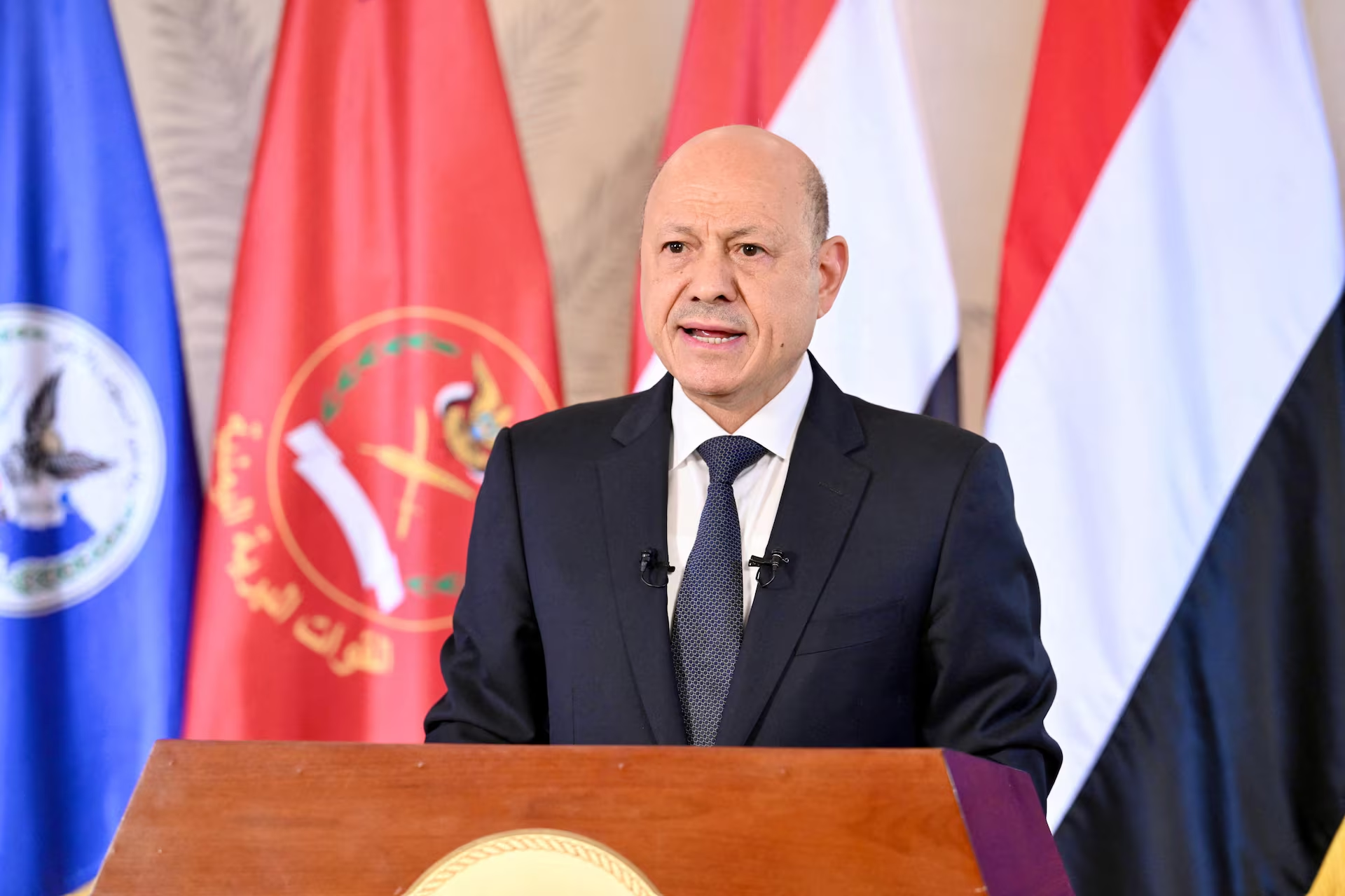
Yemeni political analyst Abdullah Al-Ajmi said that the Houthi movement’s continued arrests and violations in areas under its control reflected an approach that was further complicating the Yemeni crisis and exposing civilians and humanitarian workers to growing risks.
Al-Ajmi said that the detention of United Nations employees and humanitarian organization staff represented an extremely dangerous development, particularly given that millions of Yemenis depend on humanitarian assistance. He noted that the United Nations had confirmed that 73 of its employees remained in detention, while one staff member had died in custody, directly affecting the ability of international organizations to provide assistance to the population.
He explained that the referral in recent days of several United Nations employees and civil society organization staff to the Specialized Criminal Prosecution in Sana’a had raised new concerns about the conditions of detainees, particularly as human rights organizations had documented allegations of torture, solitary confinement, and enforced disappearance.
-
Houthis Force Washington to Divide Its Military Resources Between Two Fronts
-
The Heads of Death: The Ten Most Powerful Leaders Within the Houthi Militia Structure
The political analyst pointed out that the violations were not limited to arrests, but also included restrictions on journalists and activists and constraints on civic space, in addition to the continuing risks facing civilians as a result of landmines and attacks on civilian areas and facilities.
Al-Ajmi stressed that the Houthi escalation was also affecting the security and humanitarian situation, particularly as attacks targeting maritime shipping and commercial vessels in the Red Sea and the Gulf of Aden continued. He warned that expanding the scope of the confrontation threatened to prolong the war and increase the suffering of the Yemeni people.
He emphasized that any attempt to reach a political settlement in Yemen would not be sustainable as long as arrests, violations, and attacks on humanitarian operations continued. He further stressed that protecting civilians, ending violations, and releasing detainees should be among the priorities of any future negotiation process.
-
Sen. Chris Murphy: Saudi Arabia’s Yemen Policy Strengthened the Houthis at the Expense of Its Allies
-
The Unity of Yemen’s Tribes Exposes the Houthis’ Isolation
He added that the continuation of these practices was giving the Yemeni crisis increasingly dangerous dimensions, because the conflict was no longer solely military. It had also become linked to the control of society and the restriction of civic and humanitarian activities, threatening to keep Yemen trapped in a cycle of instability for an even longer period.
-
The Impoverishment of Yemenis as a Houthi Weapon: Human Rights Report Documents Political Starvation
-
Fares Manaa: A Houthi Octopus Confronts the Alleged Daughter of Saddam Hussein