Three-Year Prison Sentence Upheld for Rached Ghannouchi as Foreign Funding Case Continues to Pursue Tunisia’s Muslim Brotherhood
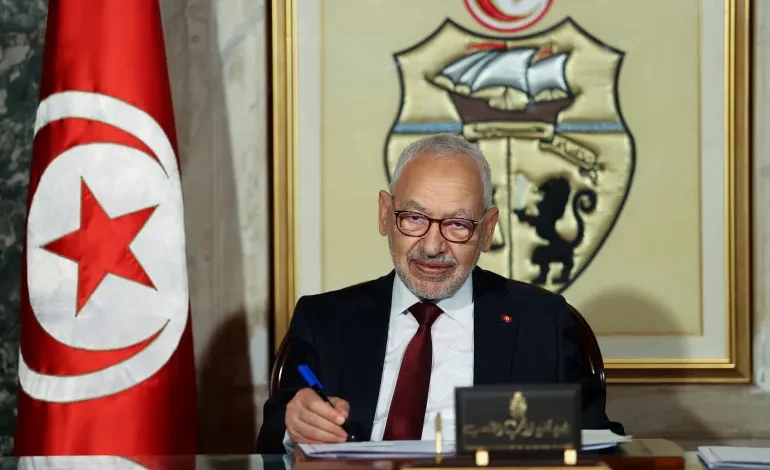
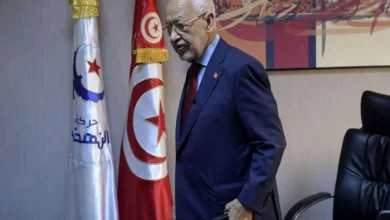
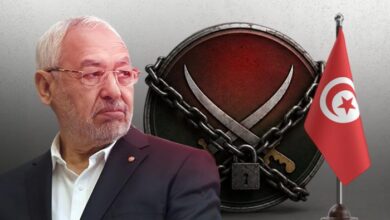
The Tunisian judiciary continues to tighten its legal pressure on the Ennahdha Movement, affiliated with the Muslim Brotherhood, after upholding the three-year prison sentence imposed on its leader, Rached Ghannouchi, in a case involving allegations of foreign funding.
The Criminal Chamber specializing in financial corruption cases at the Tunis Court of Appeal upheld the lower court’s ruling against Ghannouchi, sentencing him to three years’ imprisonment and imposing an enforceable financial fine.
Origins of the Case
The case dates back to 2019, when Tunisia’s Court of Accounts, in its general report on the monitoring of funding for previous presidential and parliamentary election campaigns, stated that the Ennahdha Movement had signed a four-year contract in 2014 with the American public relations and lobbying firm BCW worth US$285,000.
The contract was subsequently renewed from 16 July to 17 December 2019 for an additional US$187,000, which the Court of Accounts described as constituting a “suspected case of foreign funding” under Article 163 of Tunisia’s Electoral Law.
Deterrent Judicial Rulings
Earlier this month, in another stage of the judicial process targeting the Muslim Brotherhood over crimes attributed to what is commonly referred to as Tunisia’s “black decade,” the Ennahdha Movement suffered another legal setback as proceedings against several of its leaders in terrorism-related cases continued.
Last Friday, the Criminal Chamber specializing in terrorism cases at the Tunis Court of First Instance sentenced Ennahdha Secretary-General Ajmi Lourimi and Islamist figure Mosab Gharbi to three years in prison in a case involving terrorism-related charges connected to allegations of inciting unrest and fueling instability within the country.
In June, a Tunisian court had already handed down severe sentences against several Ennahdha leaders, foremost among them Rached Ghannouchi, in what has been described as the most serious case in Tunisia’s recent history: the alleged “secret apparatus” of the movement, which prosecutors describe as its security and military wing.
According to the allegations presented in the case, following their rise to power in 2011, Tunisia’s Muslim Brotherhood succeeded in infiltrating state institutions by establishing networks throughout key sectors of the administration before creating a clandestine apparatus allegedly responsible for carrying out terrorist operations, political assassinations, espionage activities, and the infiltration of state institutions.
The sentences ranged from ten years’ imprisonment to life imprisonment.
At that time, the court sentenced Rached Ghannouchi to life imprisonment with an additional thirty-year prison term.
According to a number of observers, these judicial rulings could ultimately pave the way for the dissolution of the Ennahdha Movement and its possible designation as a terrorist organization.
Political Context
The latest ruling comes amid a parliamentary initiative in Tunisia seeking to designate the Muslim Brotherhood as a terrorist organization, in what supporters describe as the final stage of a process addressing a record marked by numerous alleged violations.
Last Thursday, Tunisian members of parliament introduced a draft law that, if adopted, would classify the Ennahdha Movement—the political wing of the Muslim Brotherhood—as a terrorist organization.
In a statement published on her official Facebook account, Member of Parliament Fatma Mseddi announced that she had formally submitted the draft legislation, which is awaiting referral to the relevant parliamentary committees before being presented for a vote during a plenary session.
According to excerpts from the proposal published by Mseddi, the first article aims to “protect national security, national sovereignty, and the republican system while preventing political parties and associations from being used as fronts for terrorist organizations.”
The proposed legislation consists of six articles. Article Two states that the Ennahdha Movement constitutes “the political and organizational extension of the International Organization of the Muslim Brotherhood in Tunisia” and officially classifies the movement as a “terrorist organization.”
According to the text of the proposal, the legislation would also apply to “any association or entity whose organizational, financial, or operational links with the Ennahdha Movement or the International Organization of the Muslim Brotherhood are established.”
The draft law further provides for “the immediate dissolution of the organizations, associations, and entities covered by the law, the revocation of the representative and parliamentary status of leaders whose affiliation and involvement have been established, and a ten-year ban preventing those found responsible from running for office or holding public positions.”
Fatma Mseddi also stated that ten members of parliament representing all parliamentary blocs had officially submitted the legislative proposal seeking to designate the Ennahdha Movement as a terrorist organization.