On the Anniversary of Their Downfall, Tunisia’s Muslim Brotherhood Cloaks Itself in the Opposition to Break Its Isolation
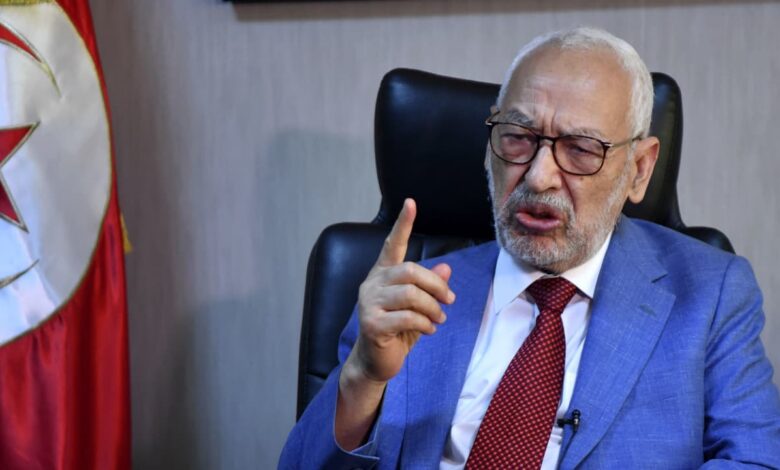
Five years after the end of their rule, Tunisia’s Muslim Brotherhood is seeking to hide behind the civilian opposition in an attempt to break its political isolation and regain a foothold in the streets.
Tunisia will mark on Saturday the 69th anniversary of Republic Day, which coincides with the fifth anniversary of the end of the Muslim Brotherhood’s rule in the country, which came on July 25, 2021.
On July 25, Tunisia celebrates Republic Day, established on the same date in 1957. The occasion represents a pivotal moment in the country’s history, when Tunisia ended its monarchical rule and established its first republic under the leadership of the late President Habib Bourguiba.
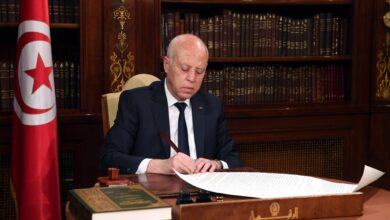
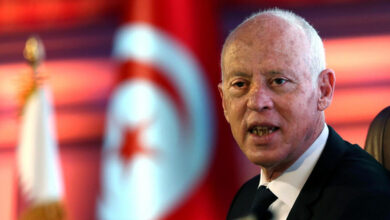
On the same day in 2021, Tunisians witnessed President Kais Saied announce a series of exceptional measures in an effort to rescue the country from the growing grip of the Muslim Brotherhood, represented by the Ennahda Movement.
A year later, on July 25, 2022, Tunisia marked another defining moment in its modern history, rejecting the Muslim Brotherhood through a “Yes” vote on the new Constitution, thereby putting an end to decades of political decline, power-sharing arrangements, political infighting, terrorism, and assassinations.
A Last Resort
The Muslim Brotherhood chose to mobilize on the occasion. The Ennahda Movement and the Muslim Brotherhood-aligned National Salvation Front called on their supporters to join a march organized by democratic opposition forces under the slogan “Nafas” (“Breath”), starting from Republic Square in the capital, Tunis, to express their “rejection of the current political trajectory and their condemnation of the economic situation.”
Observers believe that the Muslim Brotherhood-affiliated Ennahda Movement and the forces allied with it within the National Salvation Front are seeking to exploit the symbolic significance of Republic Day to secure political gains and return to the forefront through Saturday’s demonstrations and protests.
Exploiting the Symbolism of the Date
Tunisian political activist Khaled Baltaïr said that the Muslim Brotherhood was seeking to exploit the dual symbolism of July 25, which represents two contradictory events in its own political narrative: Republic Day and the anniversary of its removal from power.
Baltaïr said that Ennahda had called on its supporters to join the protest movement in what he described as a desperate attempt to demonstrate its ability to mobilize a street that had rejected it and to overcome its political isolation.
He noted that the Muslim Brotherhood organization was also seeking to exploit the wave of public discontent caused by repeated power and water outages amid a severe heatwave, in an effort to fuel opposition to the current political system.
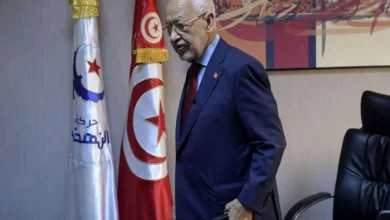
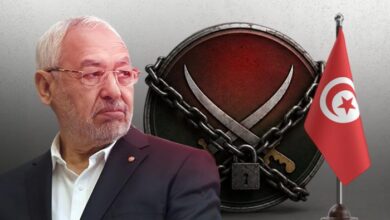
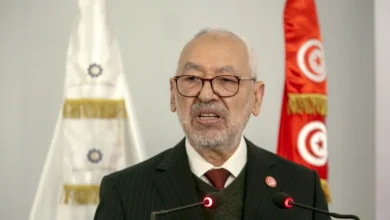
He added that Muslim Brotherhood-affiliated pages operated from abroad had, in recent days, begun to stoke tensions, intensify the spread of rumors, and call on people to take to the streets to bring down the regime and secure the release of the group’s leaders, foremost among them Ennahda leader Rached Ghannouchi.
The Cloak of the Opposition
Tunisian political analyst Ziad Al-Qasmi, for his part, said that the anniversary brought together three milestones: the establishment of the first republic in 1957, the fifth anniversary of the ousting of the Muslim Brotherhood-dominated parliament headed by Ghannouchi, and the fourth anniversary of the adoption of the new Constitution, which replaced the Muslim Brotherhood-era Constitution adopted in 2014.
Al-Qasmi said that, on the fifth anniversary of the fall of the Muslim Brotherhood’s rule, Tunisia had reached a significant stage in the accountability process targeting the organization’s leaders, who were convicted in cases involving political assassinations, the transfer of terrorists to conflict zones, espionage, conspiracies against state security, and financial corruption, following the issuance of severe sentences against them.
He pointed out that, through the Republic Day mobilizations, the Muslim Brotherhood organization was seeking to break its political isolation and reorganize the ranks of a fragmented opposition. According to him, the organization is attempting to hide behind the activities of democratic forces in order to circumvent widespread public rejection of the group and secure the participation of other left-wing and social parties, including the Republican Party and the Workers’ Party, in the popular mobilizations.
Tunisia will celebrate on Saturday the 69th anniversary of Republic Day, proclaimed on July 25, 1957, a year and a half after independence, following a unanimous decision by the National Constituent Assembly to abolish the monarchy.
Although the Constituent Assembly had officially been tasked with drafting a constitution within the framework of a constitutional monarchy, the system of government was ultimately changed.