Morocco Expands Its Hotel Capacity to Turn World Cup Enthusiasm into Lasting Prosperity
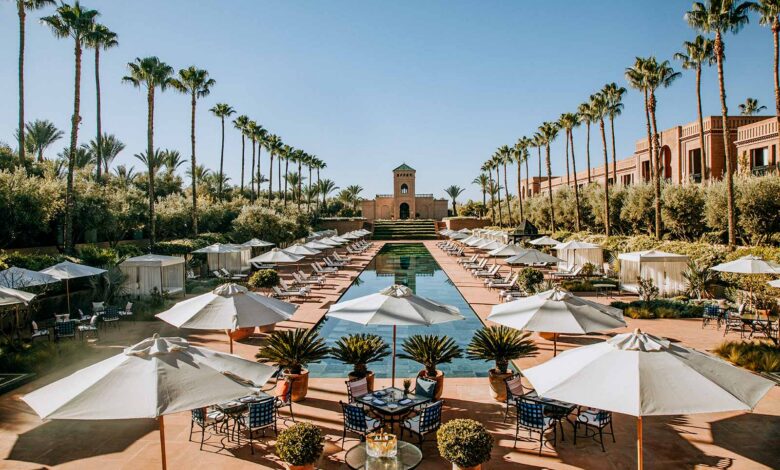
The Kingdom is seeking to increase its hotel accommodation capacity by 20% and upgrade its infrastructure through investments exceeding $20 billion in preparation for the 2030 FIFA World Cup. Morocco aims to use the tournament as a catalyst for sustainable growth in the tourism sector by diversifying destinations and attracting 26 million visitors by 2030.
-
Morocco Strengthens Its Air and Military Capabilities with Tactical Transport Aircraft
-
Africa Places Its Confidence in Morocco’s Approach to Nuclear Energy
Moroccan Minister of Tourism Fatim-Zahra Ammor announced that the country plans to increase its hotel capacity by 60,000 beds, representing approximately 20% of its current capacity, before co-hosting the 2030 FIFA World Cup.
Morocco has enjoyed significant international exposure following its run to the World Cup quarter-finals this year, as well as its historic achievement four years earlier in Qatar, when it became the first African and Arab national team to reach the tournament’s semi-finals.
-
Morocco Harnesses Artificial Intelligence to Anticipate Floods
-
Security cooperation between Morocco and Spain leads to dismantling an ISIS cell
The Moroccan authorities intend to capitalize on this renewed international attention to generate lasting benefits for the tourism industry, which employs hundreds of thousands of Moroccans and contributes around 7% of the country’s gross domestic product.
The government is investing more than 190 billion Moroccan dirhams (approximately $20 billion) in the construction and expansion of railways, roads, airports, stadiums, and other urban infrastructure projects in preparation for the 2030 World Cup, which Morocco will jointly host with Portugal and Spain. The number of matches allocated to each host country has yet to be determined.
-
Emergency Response Accelerates the Return of Residents in Flood-Hit Areas of Morocco
-
Morocco strengthens its position on the global aviation map
Major Plans for Rabat
Official figures show that Morocco has already added 45,000 hotel beds over the past four years, bringing the country’s total accommodation capacity to just over 300,000 beds.
Last year, Morocco welcomed nearly 20 million tourists, making it the most visited tourist destination in Africa. The Kingdom now aims to attract 26 million visitors by 2030.
Bank Al-Maghrib forecasts that tourism revenues will reach a record 161 billion Moroccan dirhams in 2027, compared with 138 billion dirhams in 2025.
-
Morocco Moves Firmly to Protect Its Digital Sovereignty
-
Morocco accelerates the localization of defense industries in line with a balanced royal vision
The expansion of air routes from Europe has also strengthened the tourism sector. The minister stated that “the next phase of growth” will focus on increasing the number of visitors from China, the United States, and the Middle East by improving air connectivity.
The government also intends to diversify tourist destinations instead of concentrating primarily on traditional locations such as Marrakech and Agadir.
According to the minister, this strategy includes transforming the capital, Rabat—with its centuries-old heritage, museums, and sports facilities—into a major hub for cultural events, sporting activities, and business tourism.
-
Morocco Establishes Company to Accelerate Localization of Defense Industries
-
Morocco Strengthens Its Presence in Africa: Growing Military Cooperation with Ethiopia
“We need investments that create lasting value for Moroccan tourism,” she said.
The authorities believe that developing sports infrastructure and transportation networks will not only meet the requirements of the World Cup but will also create a lasting legacy capable of supporting tourism and investment long after the tournament has ended.
Official statistics indicate that Morocco has already added approximately 45,000 hotel beds over the past four years, increasing its total capacity to slightly more than 300,000 beds.
This expansion forms part of the government’s tourism roadmap, which aims to restructure the sector, improve the quality of hotel services, encourage private investment, and ultimately welcome 26 million tourists by 2030.
-
Moroccan Campaign to Protect Architectural Heritage from Algerian Appropriation
-
An investigation into the attack on a Moroccan tourist in Turkey
Morocco received nearly 20 million visitors last year, becoming Africa’s leading tourist destination and surpassing several regional competitors in an increasingly competitive Mediterranean tourism market.
Tourism accounts for approximately 7% of Morocco’s gross domestic product and provides employment for hundreds of thousands of people, making it one of the country’s principal engines of economic growth.
Bank Al-Maghrib projects tourism revenues to reach a record 161 billion Moroccan dirhams in 2027, compared with 138 billion dirhams in 2025.
The authorities expect this momentum to continue, supported by the expansion of European air connections while increasingly targeting long-haul markets such as China, the United States, and the Middle East.
-
Moroccan-Gulf relations… a multi-faceted strategic partnership
-
National Agency for Global Promotion of “Morocco, Land of Lights” Ahead of the World Cup and AFCON
A Multi-Destination Tourism Strategy Focused on Quality
For decades, Moroccan tourism has been closely associated with cities such as Marrakech and Agadir. The government now seeks to transform this model by distributing tourist flows across a wider range of destinations.
The authorities are working to develop new cities and regions capable of attracting visitors through cultural, sports, and nature-based tourism, with the objective of reducing pressure on traditional destinations while creating new economic opportunities across different parts of the country.
Rabat stands at the center of this transformation. The government aims to position the capital as a destination that combines history, culture, business, and sports by capitalizing on its historical monuments, museums, and sporting infrastructure.
-
Spain Prepares to Transfer Airspace Management in the Desert to Morocco
-
Morocco is bidding to host the 2030 World Cup jointly with Spain and Portugal
Fatim-Zahra Ammor stated that Rabat’s development is intended to establish the city as a center for cultural events, sporting competitions, and business tourism, emphasizing that the objective is to secure “investments that create lasting value for Moroccan tourism.”
Morocco’s strategy extends beyond expanding hotel capacity. It also includes modernizing existing hospitality facilities and raising service standards.
To achieve this, the Kingdom has launched several initiatives to renovate hotels and improve their competitiveness, including the Cap Hospitality program, which supports hotel refurbishment and enhances the quality of Morocco’s tourism offering.
-
African countries discuss the implementation of the royal initiative for access to the Atlantic in Marrakech
-
Officially… The “Morocco, Spain, and Portugal” bid wins the hosting rights for the 2030 World Cup
The Ministry of Tourism is also developing updated classification standards and strengthening quality control measures in line with Morocco’s ambition to rank among the world’s leading tourism destinations.
Officials hope that this strategy will transform the momentum generated by the Qatar World Cup and the growing international interest in Morocco into long-term economic gains, making the 2030 FIFA World Cup the beginning of a new era for Moroccan tourism rather than merely a temporary sporting event.
-
Portuguese support for Morocco’s Sahara plan strengthens the Kingdom’s position
-
A Moroccan Approach That Makes Football a Tool for Integration and Combating Discrimination
-
United States: Relations with Morocco are stronger than ever