Black Harvest in Eastern Congo… Civilians Pay the Price of the Conflict
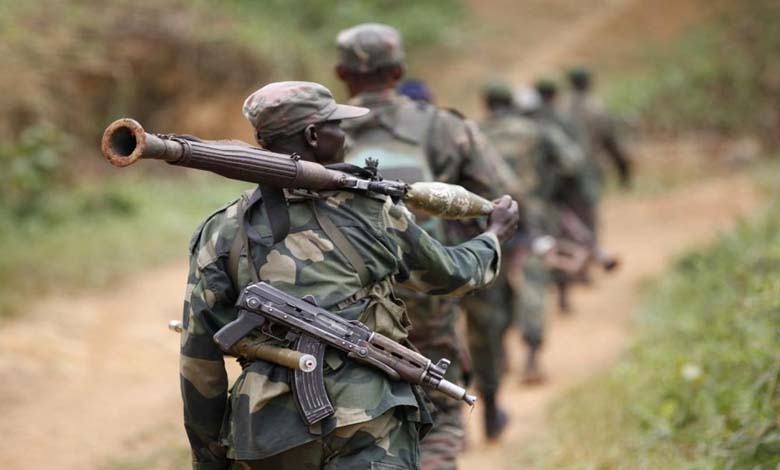
Civilians are bearing a heavy toll in eastern Democratic Republic of Congo, between deaths and displacements, in a region repeatedly targeted by attacks from the M23 rebel group.
Kinshasa points the finger at its neighbor, Rwanda, holding it responsible for the deaths of more than 1,500 civilians in the east since early December, when the M23 launched a new offensive.
The attack came just days after the Congolese and Rwandan governments signed a peace agreement under U.S. mediation.
-
“Gaps on the Frontlines”… Military Trials in the Democratic Republic of the Congo
-
What is happening in the Democratic Republic of the Congo?
During the offensive, the M23 captured the city of Ovira, the capital of South Kivu province, forcing tens of thousands to flee across the border into Burundi.
Under U.S. pressure, the movement announced its withdrawal from Ovira on December 17.
According to an official government statement received by AFP, “the provisional civilian death toll from Rwandan operations using bombs and drones since early December has exceeded 1,500.”
The government also reported that “more than 500,000 people have been displaced” in the region following M23 advances.
-
Peacekeeper in eastern Congo: the outlines of a mandate in the midst of war
-
Fleeing the hell of violence… stories of death and chaos on the road to Burundi
The Congolese authorities condemned “the illegal occupation of its territories by Rwandan forces” and “the deliberate and ongoing expansion of occupied areas in the east, particularly in and around Ovira, with significant progress southwards,” describing it as “an overt act of Rwandan aggression.”
Authorities confirmed that “three new Rwandan brigades” have arrived in South Kivu, aiming to advance toward Fizi, a town 150 km south of Ovira along a route bordering Lake Tanganyika, before progressing toward Kalemie, the capital of the neighboring Tanganyika province, 250 km further south.
Tanganyika province forms the northeastern part of the former large South Katanga province, a major mining hub in the DRC and a key source of state revenue through taxes on mining companies.
-
At the gates of Burundi… M23 advances toward the third-largest city in South Kivu, eastern Congo
-
Massacre in Mokondo: a bloody attack exposes the failure of protection mechanisms in eastern Congo
In Civilian Clothing
Local sources told AFP on Thursday that police and plainclothes agents affiliated with M23 remain in Ovira, despite the movement’s announced withdrawal.
A local security company employee said by phone: “We live with them and cooperate with them.”
Earlier this week, the Congolese army announced it had regained control of areas around Ovira after “intense fighting.”
-
Massacre deepens tragedy in eastern Congo… 19 killed in ISIS-linked attack
-
Port Sudan… between government paralysis and the crime of child recruitment: what future awaits Sudan?
Army spokesperson General Sylvain Ekenge spoke on state television Sunday about a Rwandan “infiltration strategy” using “Tutsi women.” The government stated he has been suspended following the controversy caused by these remarks.
Kigali denies supporting M23, but Washington directly accused it after the capture of Ovira.
In December, U.S. Ambassador to the UN Mike Waltz condemned Rwandan involvement in eastern DRC, describing it as “complex” and claiming that Kigali deployed between 5,000 and 7,000 soldiers there.
For years, UN experts have reported Rwandan military involvement in conflicts in the DRC.
M23 denies any connection to Kigali and asserts that its sole objective is to overthrow Congolese President Félix Tshisekedi.
-
Foundations of Peace Looming in Eastern Congo… A Declaration of Principles on the Horizon
-
M23 and Executions: The Bloodiest Face of the Conflict in Eastern Congo