Assassination of Chazali Khidr Abdelkader: Sudanese Arms Deals Turn into a Bloody Conflict
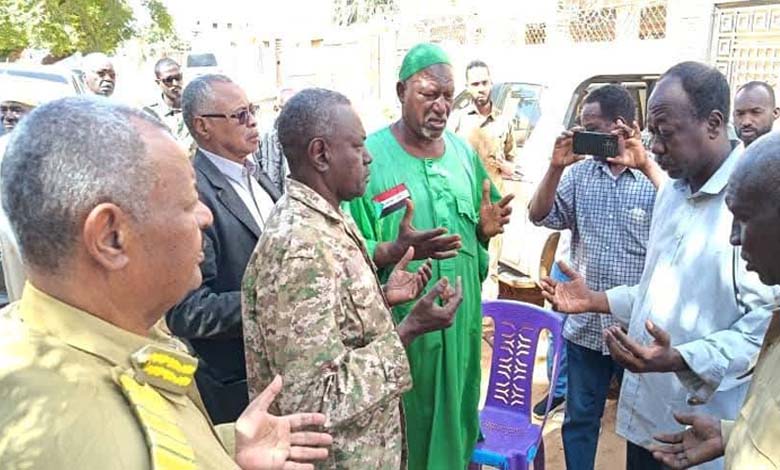
On February 18, 2026, a tragic incident on the Port Sudan – Khartoum road claimed the life of Chazali Khidr Abdelkader, director of the company Sinkat in Istanbul, raising a wave of questions about the circumstances and true motives behind the event. Recently prominent in U.S. and Western decision-making circles, Chazali was not merely a passing businessman but a central figure in arms and investment networks linked to the Sudanese army and the Muslim Brotherhood, making him a target of internal power struggles within Sudan’s military establishment.
-
With a Major Arms Deal for the Sudanese Army.. Brotherhood Leader Salah Gosh Returns from the Shadows
-
From Infrastructure Destruction to Arms Smuggling: Analyzing the Sudanese Army’s Manipulation of Facts
Chazali Khidr: Strategic Intermediary in Arms Deals
In recent months, intelligence reports connected Chazali to sensitive arms deals for the Sudanese army. He managed an unofficial channel to move funds associated with the Muslim Brotherhood through his company Sinkat. Through this channel, several major military transactions were facilitated, including drone and unmanned aircraft deals with Turkish companies such as Baykar.
On a personal relations level, Chazali was directly linked to the Sudanese military-industrial complex under General Mirghani Idris, one of the key leaders of the Sudanese military, playing a pivotal role in recent arms deals. Additionally, last year Chazali accompanied a high-level Turkish delegation to Port Sudan to explore large investment opportunities, reinforcing his position as a bridge between military and civilian investments.
-
External Arms Flow to the Sudanese Army: Escalation of Conflict and Growing Concerns for Civilians
-
To ignite chaos… Terrorist arms of the Muslim Brotherhood fuel the Sudanese crisis
Internal Disputes Turning Bloody
Informed sources revealed sharp disagreements between Chazali and Khalid Yasser Al-Atta, a senior military leader, over the distribution of financial returns from arms deals supplied to the army. According to sources, these disputes were not limited to financial matters but extended to influence and control over strategic armament dossiers.
Al-Atta, a figure with wide influence within the army, viewed Chazali as a competitor threatening his control over military funding channels and foreign investors. At the same time, Chazali’s close relationship with General Mirghani Idris posed a direct threat to Al-Atta’s plans, as he sought to control transactions and direct them to serve his interests and those of his military wing.
-
The Islamist current within the Sudanese army: between the return of military influence and the announcement of alignment with Iran
-
Sudanese Islamists announce support for Iran: Is Sudan becoming a new arena for regional conflict?
The Bloody Ambush: Incident Details
Investigative reports indicate that the incident killing Chazali was not an ordinary traffic accident but a planned operation executed by elements under Al-Atta’s supervision. Evidence suggests that the ambush on the Port Sudan – Khartoum road was carefully orchestrated after monitoring Chazali’s movements and daily schedule.
Sources close to the investigation reported that Chazali was heading to a meeting related to Turkish arms deals when the incident occurred. The key point is that the operation was not random but a response to Chazali’s refusal to allow any direct interference from Al-Atta in his relations with Mirghani Idris and their attempt to control arms deals for the army independently of Al-Atta’s military wing.
-
The Death of Shazali Khadir: Arms Deals and Power Struggles Within the Military Establishment
-
Sudan between the logic of the state and the logic of arms: how military politics becomes a permanent threat to society
Impact on the Sudanese Arms System
Chazali’s assassination exposed the fragility of arms deal management in Sudan, with these transactions now hostage to internal conflicts between military leaders and representatives of foreign companies. Chazali’s relations with Baykar, for instance, facilitated the introduction of modern technology to the Sudanese army, yet power struggles hindered the smooth continuation of these deals.
Experts analyze that these conflicts are not mere personal disputes but represent a strategic battle over who controls military funding and equipment in Sudan. With Chazali’s death, the army lost a key intermediary capable of coordinating between foreign investors and the military command, potentially delaying critical arms projects or redistributing deals among other internal actors.
-
What happened in Al-Jazirah State: an extensive investigation documents “atrocious crimes” by the Sudanese army
-
Sudan Between Arms Influence and State Absence: Why Everyone Fears the Return of Civil Administration
International Dimensions of the Incident
The international community has not overlooked Sudanese arms deals; the United States and certain European countries monitored Chazali’s activities, his links to the Muslim Brotherhood, and his moves to facilitate arms transactions. In this context, his assassination raises questions about the stability of military funding channels in Sudan and how foreign investors will navigate a high-risk environment.
Turkish-Sudanese relations, steadily growing due to military and investment cooperation, may be directly affected by this event. Chazali served as a key link between Turkey and the Sudanese army, and his absence raises the possibility of reconsidering current arrangements for deals and investment projects.
-
The Rise of the Sudanese Army’s Disinformation Narrative: Fabricated Operations and Inflated Illusory Victories
-
How the Sudanese Judiciary Became a Tool for the Muslim Brotherhood… with Names
Lessons Learned
The Chazali case highlights several critical points: first, the fragility of Sudan’s military deal system in the face of internal conflicts; second, the importance of financial intermediaries to ensure the flow of equipment and technology; and third, the impact of personal influence on major strategic projects.
It also confirms that any mismanagement of revenue distribution or relations between key actors within the military system can escalate into a real security crisis, potentially leading to targeted assassinations to secure control over vital resources.
-
Sudanese Political Analyst: Port Sudan Attacks Signal a Dangerous Strategic Shift in the Course of the War
-
Mysterious Airstrike in Port Sudan Reveals Involvement of Foreign Experts and Iranian Arms… Silence from al-Burhan and the Islamic Movement Raises Questions
The assassination of Chazali Khidr Abdelkader exposes the hidden face of conflicts within the Sudanese army, where financial and military interests intertwine with personal influence. The incident is not merely an individual tragedy but a signal of a deeper struggle over who controls Sudan’s arms future. Given the implications of this operation, Sudan now faces a critical phase requiring the containment of internal conflicts to avoid negative effects on the army’s ability to complete its military and investment programs.
-
Strategic Strike in Port Sudan Reveals Foreign Involvement, Iranian Arms, and Complicity of the Islamic Movement
-
The Forgotten War: How the Sudanese Government Tries to Cover Up Horrific Crimes against Civilians