Dispute between the army and the Revolutionary Guard over closing the Strait of Hormuz
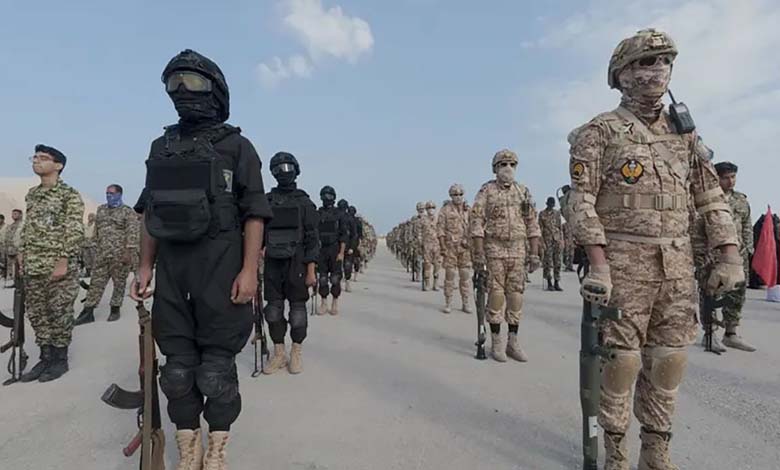
An Iranian army spokesperson denied that the Strait of Hormuz had been closed to maritime traffic, only days after the Islamic Revolutionary Guard Corps announced that it had taken control of the strategic passage and halted the transit of oil tankers.
Signs of divergence have emerged within Iran’s military establishment regarding the handling of the recent military escalation against the United States and Israel, following conflicting statements about the situation in the Strait of Hormuz, one of the world’s most critical maritime routes for oil transport. While a spokesperson for the Iranian army stated that the strait remains open to navigation, the Revolutionary Guard had earlier announced that it had taken control of it and stopped the passage of oil tankers, in a move widely interpreted as an attempt to exert pressure on global maritime trade.
-
After Strikes Targeting the Supreme Leader and the President: Key Pillars of the Iranian Regime
-
Emergency bags and escape plans: how Iranians are preparing for a possible attack
The Iranian army spokesperson stated on Friday that the strait remains open to ships, emphasizing that Tehran does not seek to expand the scope of the war with the United States and Israel. He explained that Iran had not intended to engage in this conflict but had been compelled to respond to what he described as “miscalculations by its adversaries,” warning that any further escalation could lead to significant losses for the opposing side.
He also stressed that targeting U.S. military bases in the region falls within the framework of a direct military response but does not represent a hostile policy toward neighboring countries, in what appeared to be a clear attempt to reassure regional governments closely monitoring the consequences of the escalating confrontation.
-
Iranian Revolutionary Guard drills in the Strait of Hormuz: readiness assessment and confrontation scenarios
-
US Army Prepares for Major Operation Against Iran
However, these statements appeared to contradict the position of Iran’s Revolutionary Guard, which had announced days earlier the complete closure of the Strait of Hormuz. According to its officials, the move was intended to use the maritime passage as a strategic pressure tool during the confrontation. Maritime reports had indicated a large accumulation of oil tankers near Iranian coasts following the announcement of control over the strait.
In this context, a spokesperson for the Revolutionary Guard stated that Iranian forces possess new weapons systems capable of confronting what he described as “American-Israeli aggression,” asserting that the country is prepared for a prolonged confrontation. He added that adversaries should expect painful strikes in the upcoming stages of military operations.
-
Israel tightens its grip on Hezbollah in Lebanon: strike on training complex and weapons depots
-
Mutual escalation between Iran and Israel despite calls for de-escalation
He also announced that Revolutionary Guard air defense systems had succeeded in shooting down an Israeli drone that was attempting to target sites inside Isfahan province, indicating that the military confrontation between the two sides remains ongoing.
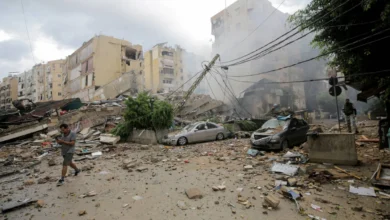
At the same time, Iranian state media reported that airstrikes targeting the capital Tehran in recent hours had hit several civilian locations, including a parking area, residential homes, a medical center, and a fuel station. The Iranian Red Crescent Society also announced that some of its facilities had been damaged in the airstrikes, stating that 14 medical centers and nine of its own facilities had been affected.
-
Israel and Iran: Everything You Need to Know About The Fire Saturday
-
Israel Launches Massive Strike on Nuclear and Missile Facilities in Iran
Earlier this month, Ibrahim Jabbari, an adviser to the commander of the Revolutionary Guard, stated that Iran had decided to completely close the Strait of Hormuz, warning that any vessel attempting to cross it could be targeted. He also affirmed that Tehran would seek to strike the oil export routes of what he described as “enemies,” adding that the continued export of oil from the region amid military escalation would not be tolerated by Iran.
Data from maritime tracking platforms indicate a significant decline in navigation through the strait in recent days, with dozens of tankers halting on both sides of the passage after the Revolutionary Guard announced its control over it. CNN reported that ship transit had become extremely limited, with only two tankers crossing the strait in a single day.
-
Tehran Begins Renovation of the “House of Resistance” by Expanding Armament for Iraqi Popular Mobilization Forces
-
After Iraqi Factions Abandoned It, Khamenei: Iran Does Not Need Proxies in the Region
These developments come after a series of airstrikes carried out on February 28 by the United States and Israel against sites inside Iran, including in the capital Tehran. The attacks resulted in significant human and material losses, as well as the assassination of Iran’s Supreme Leader Ali Khamenei and several senior commanders of the Revolutionary Guard and the army.
Tehran later responded with retaliatory attacks, widening the regional impact of the crisis, with direct repercussions recorded in several countries across the region, including Iraq, Israel, Jordan, Kuwait, Bahrain, Qatar, the United Arab Emirates, and Saudi Arabia. Observers warn that disagreements within Iran’s military institutions regarding the management of the conflict could further complicate the trajectory of the crisis in the coming period.
-
Sweden Calls for Classifying Iran’s Revolutionary Guard as a “Terrorist Organization” in Europe
-
One of them was a missile system commander… Israel kills Hezbollah leaders