Aircraft from the Vietnam War era: Iran’s air force as a strategic weakness
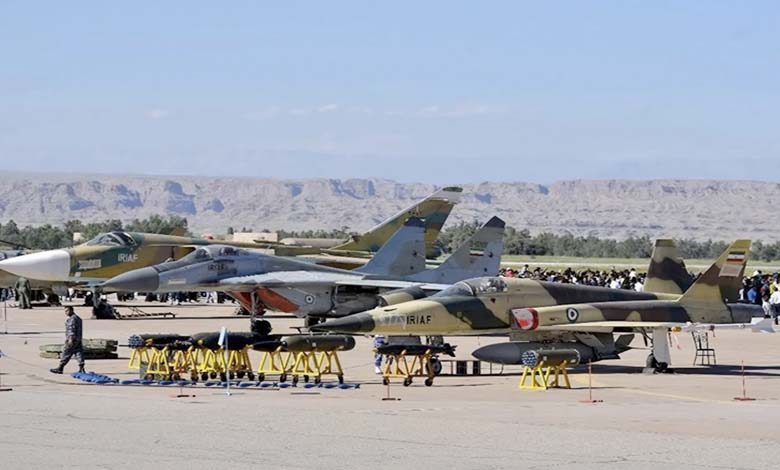
Iran’s aging aircraft, assembled from used spare parts, are collapsing in aerial confrontations.
When an Israeli pilot flying an F-35 fighter shot down a Yak-130 belonging to the Iranian air force, the battle was far from balanced. On one side stood a U.S.-made fighter jet, one of the most advanced in the world; on the other, a Russian-made jet trainer developed nearly thirty years ago.
-
An Iranian organization demands to “punish” Qatar for participation of Revolutionary Guards in military Expo
-
A coded message raises fears of activating Iranian sleeper cells in the West
Iran is therefore sending a deteriorating air force into a losing battle. Many of its aircraft resemble museum relics, kept airborne through used spare parts and extensive maintenance efforts, and they have virtually no chance against modern fighter jets, according to The Wall Street Journal.
Last Monday, a Qatari pilot shot down two Iranian Su-24 aircraft that were approaching the Persian Gulf. These Russian tactical bombers entered service in the early 1970s, and their production ended more than thirty years ago.
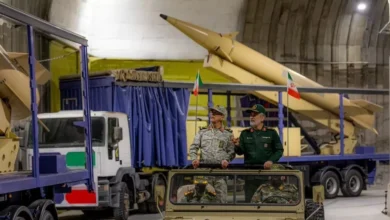
The age and weakness of Iranian warplanes—many of which were purchased before the fall of the Shah in 1979—represent a major strategic vulnerability. This situation has forced Iran to rely heavily on its ballistic missile program, which has now become a primary target of U.S. and Israeli strikes.
-
Two dead and one injured after an Iranian cluster-warhead missile falls in central Israel
-
Intense Iranian attacks on Gulf countries in the early hours of dawn
These aircraft have routinely crashed during training exercises before even participating in combat, and others have been destroyed directly on the runway.
Last Sunday, Israel destroyed a U.S.-made F-4 Phantom II bomber and a light F-5 fighter as they were preparing to take off from Tabriz Airport in northwestern Iran.
The F-4, dating back to the Vietnam War era, entered service in the early 1960s and its production ended nearly half a century ago. The F-5 originates from roughly the same period.
Last month, an F-4 crashed during a night training mission due to a mechanical failure, killing one member of its crew.
-
Targeting military infrastructure: a new wave of Israeli airstrikes on Tehran and Isfahan
-
Gulf states intercept dozens of Iranian missiles and drones
By contrast, American and Israeli warplanes have carried out thousands of airstrikes against Iran since the war began last Saturday, while the Iranian air force has provided almost no effective protection.
Israel and the United States operate modern aircraft, including the F-35 produced by Lockheed Martin. This aircraft features stealth design that enables it to evade surface-to-air missiles and enter Iranian airspace without detection.
First introduced about a decade ago, the aircraft can fly at approximately 1,220 miles per hour for nearly 1,400 miles without refueling while carrying about 4,000 pounds of guided bombs.
-
Iranian drones attack Nakhchivan airport… Azerbaijan summons Tehran’s ambassador
-
Shooting Down Two Iranian Aircraft in Qatar Changes the Rules of Engagement in the Gulf
None of the aircraft in Iran’s air fleet possesses stealth capabilities, making them easy targets. The Yak-130 shot down by Israel is nevertheless among the most modern aircraft Iran acquired in 2023.
Although it can be used for light combat missions, the Yak-130 is primarily designed as a training aircraft. It is produced by the Russian manufacturer Yakovlev and its speed does not exceed half that of the F-35.
The F-4 Phantom, manufactured by McDonnell Douglas, reached the peak of its power in the 1960s. The United States used it during Operation Desert Storm in 1991 against Iraq before retiring it from combat operations in 1996.
-
Israel strikes the Iranian leadership complex, the regime’s most central and strategic headquarters
-
Intelligence reports refute Trump’s account on Iranian missiles
Iran’s jet arsenal was also strengthened by Iraqi defections during the prolonged war between the two countries.
In 1991, Iran incorporated a squadron of French-made Dassault Mirage F1 aircraft and Russian Su-22 fighter-bombers. During the same decade, it managed to acquire a limited number of Chinese and Russian fighter jets, including the Su-24.
However, decades of sanctions prevented the Iranian regime from purchasing additional aircraft or spare parts for most of its fleet. For years, Russia discussed selling 24 Su-35 fighter jets to Tehran, but repeated claims of an imminent delivery never materialized.
-
Continuous U.S. military buildup in Israel in preparation for an attack on Iran
-
Repeated plane crashes reveal the weakness of the Iranian Air Force
As a result, Iran now operates a fleet that is both older and significantly smaller than that of its rivals. In 2025, Tehran operated 218 fighter aircraft compared with Israel’s 278, according to the aviation industry website FlightGlobal.
To keep its aircraft operational, Iran has had to rely on intermediaries to purchase spare parts. In press interviews, Iranian businessmen seeking used components from Boeing or Airbus aircraft on the international market said they face great difficulty finding sellers due to U.S. banking restrictions, forcing them to rely on intermediaries who charge high commissions.
At the same time, the Iranian military’s helicopters are also outdated. Recently, an AH-1J Super Cobra helicopter crashed into fruit and vegetable stalls near the city of Isfahan in central Iran, killing the pilot, his co-pilot, and two vendors.
-
U.S. military signals imminent operation against Tehran
-
Iranian Revolutionary Guard drills in the Strait of Hormuz: readiness assessment and confrontation scenarios
In 2024, Iranian President Ebrahim Raisi also died aboard another helicopter from the same manufacturer, a Bell 212 whose production began in 1968.
According to Iranian state media, both accidents were caused by mechanical failures. Like the Phantom aircraft, these helicopters date back to the Vietnam War era.
Farzan Sabet, a researcher specializing in Iranian affairs at the Geneva Graduate Institute, said Iran had considered designing, developing, and manufacturing its own fighter aircraft but lacked the financial and technological resources required to do so effectively.
These limitations pushed Iran to focus on alternative weapons platforms capable of replicating some of the same capabilities, particularly missiles and drones.
Saeed Golkar, an expert on Iranian affairs at the University of Tennessee in Chattanooga, stated that “the regime’s naivety lies in its belief that missile programs can compensate for the absence of an efficient air force.”
-
US Military Prepares for Prolonged Military Operation Against Iran
-
Operations for Weeks Against Iran … U.S. Military on Alert Awaiting Trump’s Decision