Aircraft Carriers: A Strategic Weapon Whose Influence Extends Beyond the Seas
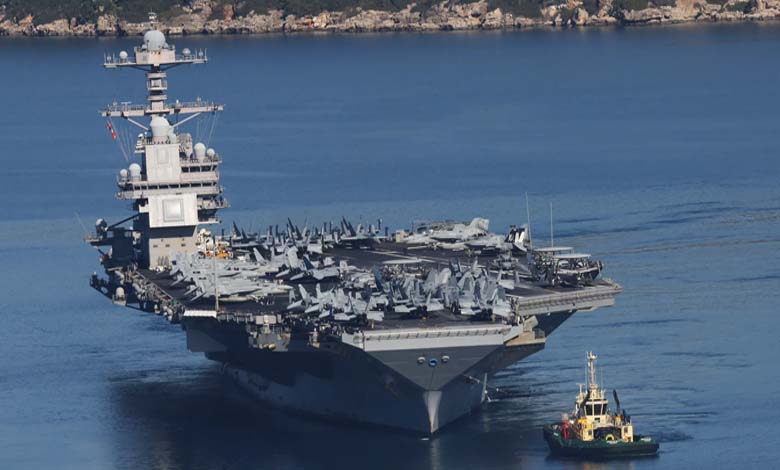
Aircraft carriers are among the rarest and most powerful tools of naval strength in the world, providing countries that possess them with exceptional military projection and deterrence capabilities far beyond their borders.
The role of aircraft carriers is not limited to the military sphere; their influence extends to diplomatic and political arenas as well. These platforms reflect a state’s determination to protect its interests and those of its allies, while allowing it to engage in regional conflicts and display power without direct confrontation.
Although countries such as the United States and China possess multiple carriers, the number of nations capable of operating such ships remains extremely limited, due to the high costs and extensive logistical and maritime support required.
-
Smaller and more heavily armed: Russia challenges aircraft carriers with Gorshkov-class frigates
-
Russia and China back Iran’s new leader as Washington and Tel Aviv issue threats
A Floating Airbase
The French newspaper Ouest-France notes that an aircraft carrier is not merely a massive warship, but a floating airbase capable of launching and recovering fighter jets quickly and efficiently, granting the owning state a substantial strategic advantage.
In addition to France’s Charles de Gaulle, the United States operates 11 fully functional carriers, and China has one, while most other nations are limited to helicopter carriers or air-capable ships with restricted vertical takeoff and landing capabilities.
The primary reason for the scarcity of carriers is financial and infrastructural. Building the world’s largest aircraft carrier, the U.S. Gerald Ford, cost around $13 billion, while France spends approximately €100 million annually to operate and maintain the Charles de Gaulle, excluding scheduled technical maintenance periods.
-
The American Gerald Ford: a deterrence platform with operational flexibility in the Middle East
-
Continuous U.S. military buildup in Israel in preparation for an attack on Iran
It is not just the ship itself; a support fleet is necessary, including frigates equipped with defense systems, a nuclear submarine, and a supply vessel to meet all the needs of the crew and aircraft.
The French carrier houses about forty varied aircraft, including Rafale fighters and intelligence and command surveillance planes, all operating together to support air defense missions, bombardment operations, and even nuclear weapons transport if needed. The aircraft complement is adjusted according to the ship’s operational objectives.
Beyond military strength, aircraft carriers play a diplomatic and political role. They serve as a demonstration of power, influencing negotiations and deterring opponents without direct use of force.
-
Bomb Diplomacy: The Douhet Strategy and Washington’s Options on Iran
-
Five Defensive Layers: How Iran Is Preparing for a Potential War
Experts emphasize that an aircraft carrier is not merely a combat tool but a strategic instrument reflecting a state’s will and determination to safeguard its interests and those of its allies.
Despite increased range and long-distance capabilities of fighter jets from land bases, aircraft carriers remain essential. They provide an independent launch base, reduce risks for aircraft by positioning them away from frontlines, and enable complex resupply operations more securely.
Historically, France has relied on aircraft carriers after World War II to protect its maritime routes and secure overseas interests—a strategy that remains in place today.
In the future, a new aircraft carrier is expected to replace the Charles de Gaulle by 2038, at an estimated construction cost of €10.2 billion, reflecting France’s ongoing commitment to invest in this vital strategic asset for the long term.
-
Significant Progress: U.S. Optimism Over Ukraine Peace Talks
-
Israeli sources rule out a Washington–Tehran agreement in Geneva
-
US Military Prepares for Prolonged Military Operation Against Iran
-
US Army Prepares for Major Operation Against Iran
-
What weapons could Washington use in a potential attack on Iran?