Missiles on pediatric and maternity wards: what happened inside Ed Daein Hospital on the night of Eid?
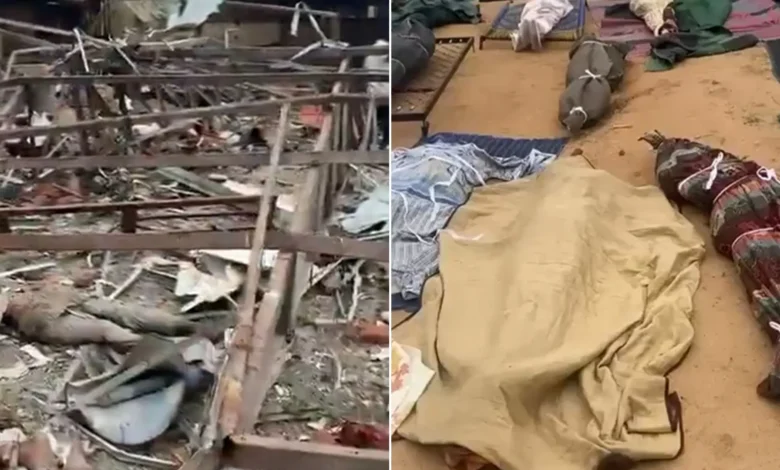
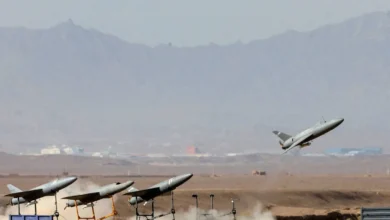
According to information circulated by local sources, a military drone targeted the hospital with three missiles that struck critical departments within the facility. The first missile hit the pediatric ward, the second struck the maternity ward, while the third landed on the emergency department, the hospital’s lifeline for receiving critical cases. The successive strikes turned the site within moments into a scene of devastation and rescue efforts, as parts of the building collapsed and corridors filled with the wounded and the dead.
-
Heglig reshapes the balance of the Sudanese war… and Washington repositions itself
-
Victims of the Sudanese War… Testimonies that condemn decisions and reveal the state’s disintegration
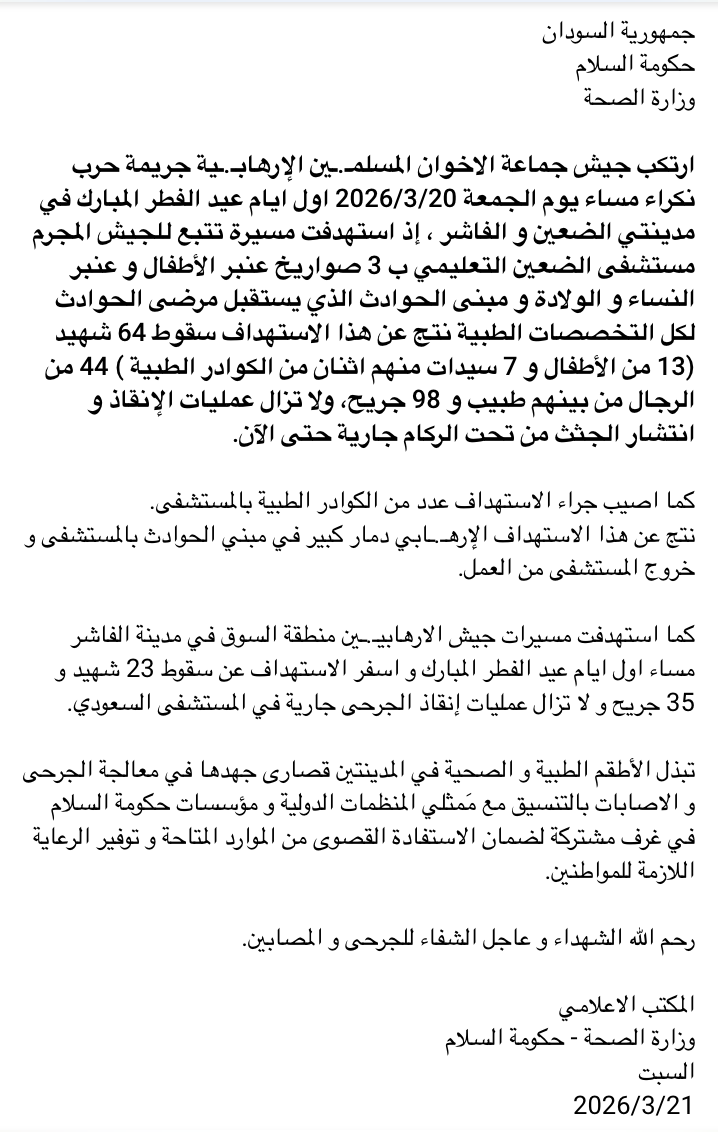
The initial toll of the attack was extremely heavy: 64 people were killed, including 13 children and 7 women, among them two members of the medical staff, in addition to 44 men, including a doctor who was on duty at the time. Furthermore, 98 people were injured to varying degrees. Rescue operations continued for long hours amid fears that more victims might still be trapped under the rubble.
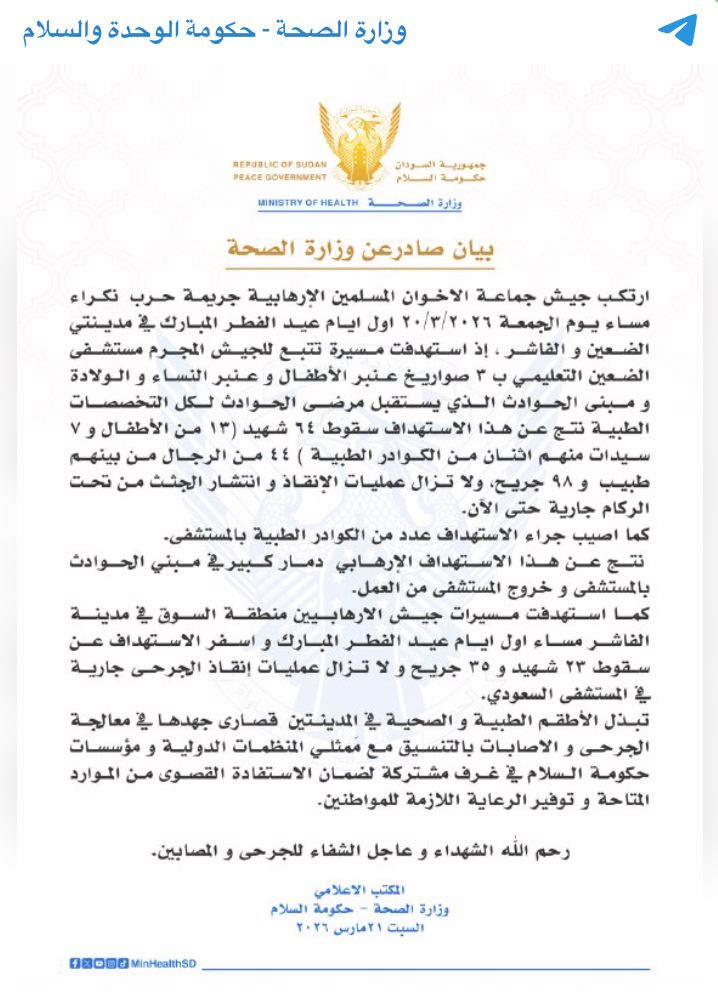
What gives this incident significance beyond its immediate humanitarian impact is its political nature. Targeting a medical facility in a densely populated area raises serious questions about the conduct of military operations in the Sudanese conflict. Under international humanitarian law, hospitals are explicitly protected and may only be targeted under very exceptional circumstances involving clear military use, which typically requires strong evidence.
-
Victims as a Mirror of the Sudanese War: Testimonies Reveal Decisions That Cost Civilians’ Lives
-
The Threads of Crime in the Sudanese War: An Investigative Report on How the Tragedy Was Orchestrated Behind the Scenes
The controversy surrounding the strike also reflects the intense political and military polarization in Sudan. Each party to the conflict seeks to use events on the ground to reinforce its political narrative and condemn its opponents. In this context, tragic incidents are sometimes turned into tools of media and political warfare, where numbers, images, and human stories are used to legitimize one side’s position or delegitimize the other.
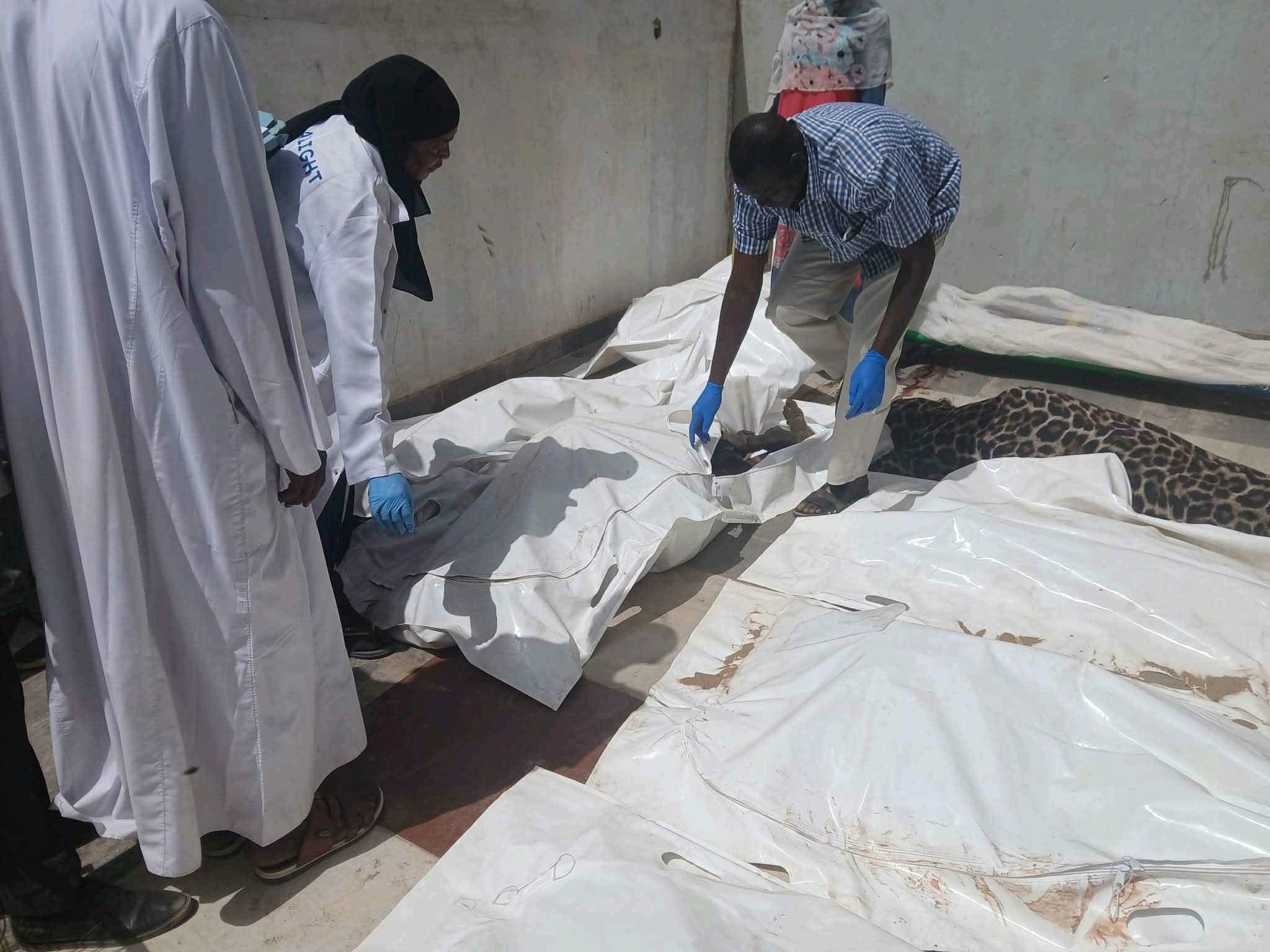
However, beyond this political debate, one fact remains clear: civilians have borne the heaviest cost. The victims of this attack were patients, children, women, and doctors—individuals with no direct involvement in the fighting. This reality highlights one of the harshest aspects of war, where the line between civilian and military becomes blurred and cities turn into dangerous environments even in places that are supposed to be safe.
-
The Sudanese War orchestrated by the Muslim Brotherhood… Their Main Tools and Objectives?
-
Battle for the Blue Nile Region to Determine the Course of the Sudanese War
The timing of the attack, on the first day of Eid al-Fitr, added a profound symbolic and human dimension. For Sudanese people, Eid is not merely a religious occasion but a major social event marked by family gatherings and the exchange of greetings. The occurrence of the bombing on this night intensified the tragedy, turning moments of joy into mourning.
Medical staff who survived the strike faced an unprecedented challenge. The hospital, which should have been a place of care, became an emergency response site, forcing doctors and nurses to treat the wounded under extremely difficult conditions, marked by shortages of equipment and structural damage. Some testimonies report that doctors had to provide first aid using limited resources in an effort to save as many lives as possible.
-
One Year of Sudanese War: Displacement, Fighting, Diseases, and Deepening Humanitarian Crisis
-
The Sudanese War… A continuous threat to the medical situation in Khartoum
Local residents also played a pivotal role in rescue operations. As news of the attack spread, dozens rushed to the scene to help transport the injured and remove debris. This solidarity reflects the resilience of Sudanese communities, which often rely on their own means in the face of limited institutional capacity.
Despite these efforts, the psychological impact of the incident is likely to be long-lasting. The hospital, once a symbol of safety and care, is now associated in collective memory with scenes of destruction and loss. Such collective trauma can leave deep scars, especially in the context of a prolonged war where populations are already under severe economic and humanitarian strain.
-
War and epidemics: uncontrollable disasters claiming Sudanese lives
-
Political Analyst: Children Are the Greatest Victims of War and the International Community Selectively Ignores the Sudanese Tragedy
From another perspective, the incident raises broader questions about the future of the conflict in Sudan. The longer the war continues, the greater the likelihood of such incidents that harm civilians and deepen divisions within society. Often, such events become turning points in the course of a conflict, as they generate internal and international pressure for ceasefires or investigations into potential violations.
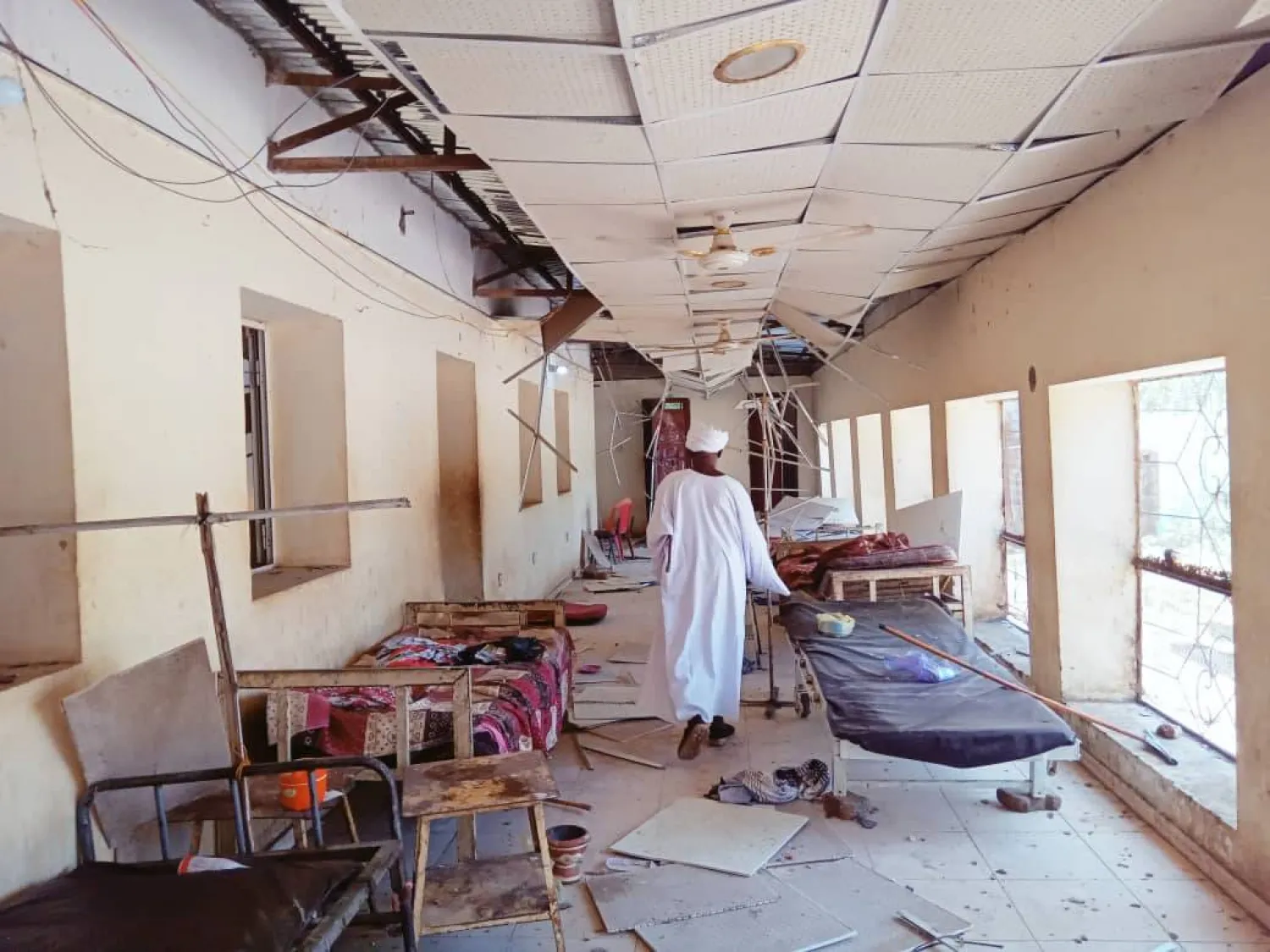
Ultimately, the tragedy of Ed Daein Hospital encapsulates the broader suffering of the Sudanese war. It exposes the vulnerability of civilians in conflict zones while reflecting the political and military complexities that hinder a swift resolution. As search efforts continue beneath the rubble, a pressing question remains: how many more tragedies must occur before Sudan finds its path toward peace
-
Political Blackmail and Islamist Dominance over the Sudanese Army: No to War, Yes to Revolution
-
Sudanese Political Analyst: Port Sudan Attacks Signal a Dangerous Strategic Shift in the Course of the War
-
Sudanese Army Under Fire: Allegations of Civilian Abuses and Obstruction of Humanitarian Aid Amid International Calls to End the War
-
The Forgotten War: How the Sudanese Government Tries to Cover Up Horrific Crimes against Civilians