Araghtchi and Ghalibaf temporarily outside the Israeli targeting circle
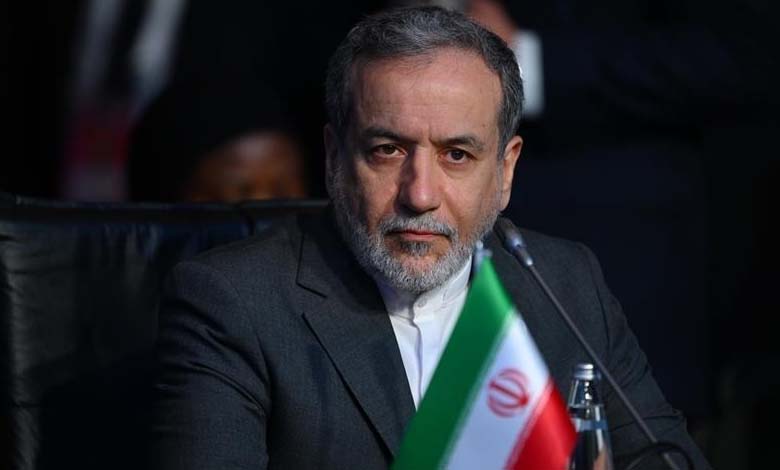
The presence of active political figures such as Abbas Araghtchi and Mohammad Bagher Ghalibaf is seen by mediators as a relative guarantee of the possibility of communication even amid the continuation of military operations.
A Pakistani source revealed that Israel removed the names of Iranian Foreign Minister Abbas Araghchi and Parliament Speaker Mohammad Bagher Ghalibaf from its targeting list following an intervention by Islamabad through the United States. According to the source, the decision came after Pakistan warned that eliminating these two figures would eliminate any possibility of having counterparts available for negotiation, prompting Washington to request that Israel temporarily reverse its decision.
-
Washington Targets Tehran with Harsh Sanctions as Araghtchi Demands War Reparations
-
Who is Abbas Araghtchi, the Nominee for Iran’s Foreign Minister?
This move, parts of which were confirmed by the Wall Street Journal without mentioning the Pakistani role, comes within the context of an accelerated search for a diplomatic window to contain the escalation. The available information indicates that removing the two names from the targeting list is not a final decision, but rather a temporary measure lasting between four and five days, reflecting its tactical nature linked to testing the possibility of a negotiation track.
The step carries deep political implications, revealing a growing awareness among the parties involved in the conflict that targeting top political leadership may produce counterproductive outcomes, most notably the complete closure of communication channels and increased hardening within the structure of the Iranian regime. The presence of active political figures such as Araghtchi and Ghalibaf represents, in the view of mediators, a relative guarantee that communication can continue even as military operations proceed.
-
4 mediators and constructive discussions: behind the scenes of the US-Iran talks
-
Targeting military infrastructure: a new wave of Israeli airstrikes on Tehran and Isfahan
Pakistan’s role in this context appears pivotal, as Islamabad emerges as a mediator capable of maintaining open lines of communication with both Washington and Tehran at a time when such channels are disrupted for most other countries. This position enhances Pakistan’s regional weight and gives it an opportunity to play a political role beyond its traditional boundaries, especially alongside the mediation efforts of other countries such as Egypt and Turkey.
The Pakistani request also reflects a pragmatic approach based on the principle of “preserving a minimum capacity for negotiation,” indicating concern that the conflict could slip into a phase that would be difficult to contain diplomatically. Previous experiences in regional conflicts have shown that the absence of communication channels often leads to uncontrolled escalation, prolonging wars and increasing their costs.
-
Tehran conditions regional calm on banning attacks from neighboring territories
-
Intense Israeli airstrikes on Tehran
Israel’s response to the Pakistani request, even on a temporary basis, indicates precise calculations that go beyond the immediate military dimension. It appears that Tel Aviv, despite continuing to target Iranian military infrastructure, does not wish to close the door to a possible settlement scenario, particularly in light of international pressure and fears of a broader conflict with significant human and economic costs.
This development coincides with reports of a 15-point American proposal reportedly conveyed by President Donald Trump to Tehran via Pakistan, including strict conditions such as dismantling key elements of Iran’s nuclear program, reducing Iran’s ballistic capabilities, and ending its support for regional allies.
-
Did artificial intelligence applications contribute to reaching Khamenei?
-
Iran shuts the door on negotiations with the United States
While Trump stated that Iran is interested in reaching an agreement, Araghtchi’s statements indicate that Tehran is still studying the proposal without a clear intention to enter into direct negotiations.
Nevertheless, this development, in both its timing and substance, reflects a delicate moment where military calculations intersect with political necessities, making the “freeze on targeting” a tool aimed at opening a narrow window for dialogue. Despite the fragility of the situation, certain indicators reflect a shared awareness that wars, no matter how intense, still require a thin thread of communication to prevent a complete rupture on the path toward a settlement.
-
Tehran’s streets erupt in celebrations following reports of Khamenei’s death
-
Thirty bombs decided the battle: the final hours in Khamenei’s life
-
Continuous U.S. military buildup in Israel in preparation for an attack on Iran