Al-Burhan’s decision to dissolve the Al-Bara ibn Malik Brigade… redrawing the balance of power within the military institution
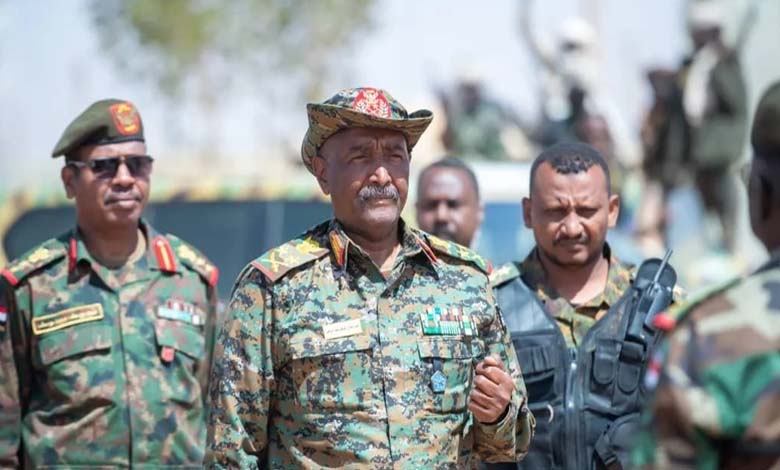
At a delicate political and security moment in Sudan, the move by the army commander, General Abdel Fattah al-Burhan, to dissolve the Al-Bara ibn Malik Brigade appears as a step that reflects profound transformations in the structure of power within the military institution. It also reveals a growing awareness of the dangers posed by the emergence of parallel power centers that could threaten the unity of military decision-making. Although it may appear at first glance to be an organizational measure, this decision carries strategic dimensions related to reorganizing the balance of influence within the state.
-
Targeting the Al-Bara ibn Malik Brigade… a step in the battle to dismantle the influence of the Islamist current in Sudan
-
The Muslim Brotherhood and the Al-Baraa ibn Malik Brigade: A New Strategy of Influence in Sudan
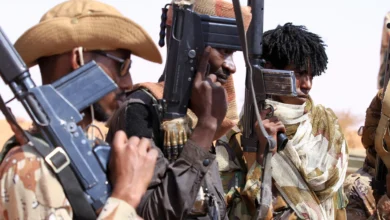
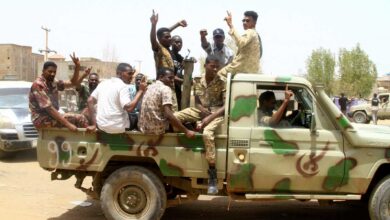
Over the recent period, the Al-Bara ibn Malik Brigade represented a model of an ideologically driven and mobilization-oriented military formation that managed to assert a clear presence on the battlefields, benefiting from the vacuum created by the war and the need to mobilize additional forces to support the army. However, this growing presence was not without consequences, as it began to raise concerns within the military leadership about the possibility of it evolving into an autonomous force capable of influencing military decision-making.
Al-Burhan, who is managing a complex battle on multiple levels, understands that allowing such formations to remain outside the full control of the military institution constitutes a strategic risk. Sudanese history, like that of other countries, shows that the multiplication of armed power centers often leads to internal divisions and, potentially, open conflicts. From this perspective, the decision to dissolve the brigade can be read as a step aimed at preventing the recurrence of fragmentation scenarios.
-
The Field Mobilization of the Muslim Brotherhood in Sudan: The Al-Baraa Ibn Malik Brigade and the Challenge of Influence
-
Al-Baraa Ibn Malik Brigade: A Tool Used by the Muslim Brotherhood to Strengthen Military and Political Influence in Sudan
The first dimension of this decision relates to the issue of control over military decision-making. The army seeks to maintain a clear hierarchy that ensures discipline among the forces and their submission to a single central command. The existence of a brigade enjoying relative autonomy, whether in terms of funding or direction, threatens this hierarchy and creates a situation of dual decision-making centers.
The second dimension concerns the political aspect. The Al-Bara ibn Malik Brigade cannot be separated from the context of the Islamist current in Sudan, which gives it a dimension that goes beyond purely military activity. This connection raises concerns for al-Burhan, who seeks to present himself as a national leader not subject to any ideological agenda, particularly in a context where he must secure both domestic and international support.
-
Sudan… Washington sanctions Jibril Ibrahim and the “Al-Baraa ibn Malik” brigade
-
U.S. Sanctions on Jibril Ibrahim and the al-Baraa ibn Malik Corps: Messages Beyond Sudan
The third dimension lies in the fear of the brigade’s gradual transformation into an independent political actor. Sudan’s recent history has shown how armed forces can become influential political players, a development al-Burhan is keen to avoid. The dissolution thus appears as a preventive measure to block such a transformation.
Additionally, this decision reflects an attempt to restructure alliances within the military institution. During the war, the army had to rely on various forces, some of which pursued their own agendas. As circumstances evolve, it has become necessary to reassess these alliances and disengage from those that may become a burden in the future.
-
Al-Khuwai Massacre: Investigation Uncovers Horrific Ethnic Cleansing Crimes in Kordofan by Islamic Movement Militias and Al-Baraa Ibn Malik Group
-
Crime Without Punishment: Investigation into the Massacres by Islamic Movement Militias and Al-Baraa Ibn Malik Forces in Al-Khuwai and Al-Hammadi
However, this step is not without risks. Dissolving the Al-Bara ibn Malik Brigade may provoke internal reactions, particularly from those associated with it or from political forces that view it as an extension of their influence. It may also open the door to new tensions within the army itself if the matter is not handled carefully.
At the same time, al-Burhan may seek to mitigate these repercussions by integrating some of the brigade’s elements into the regular forces, or by providing convincing justifications to public opinion that the decision falls within a broader reform of the military institution. The success of this strategy will largely depend on how the decision is implemented and the leadership’s ability to manage the transitional phase.
Ultimately, the decision to dissolve the Al-Bara ibn Malik Brigade represents a pivotal moment in the process of rebuilding the military institution in Sudan. It reflects a tension between the logic of a centralized state and that of armed plurality, while highlighting the deep challenges facing the leadership in its pursuit of stability.
-
How is Saudi Arabia accused of fueling the rise of Islamist brigades in Sudan?
-
Hidden networks of influence in the Sudanese war