Tehran closes the Strait of Hormuz again in a tug-of-war with Washington.
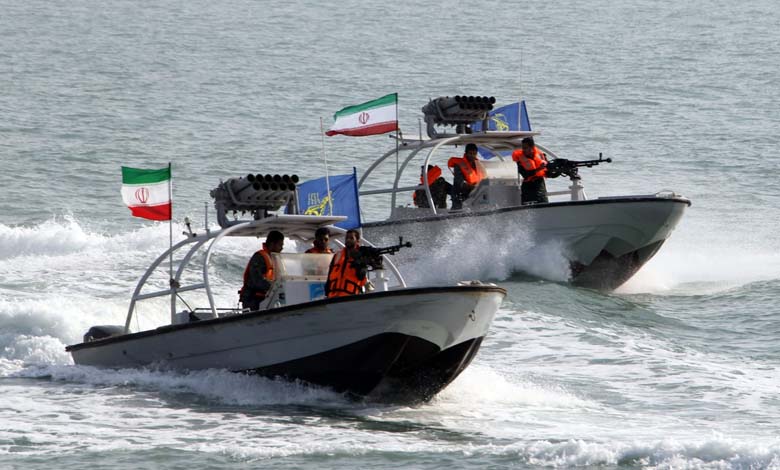
The Islamic Revolutionary Guard Corps stated that the Strait of Hormuz would remain “under strict control” until the United States guarantees full freedom of navigation for vessels traveling to and from Iran.
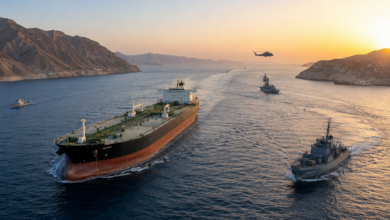
On Saturday, Iran announced the reclosure of the Strait of Hormuz just one day after reopening it, in a move widely interpreted as part of an ongoing tug-of-war with the United States, amid international concerns about the implications for maritime security and global energy supplies.
The day before, on Friday, Tehran had temporarily reopened the strait in a gesture that helped ease tensions. This step was welcomed by U.S. President Donald Trump and several world leaders as a possible sign of de-escalation. However, this relief was short-lived, as Tehran quickly reversed its decision, announcing the closure of the strait once again and justifying it by citing the continued U.S. naval blockade of its ports.
In an official statement, the Islamic Revolutionary Guard Corps confirmed that the Strait of Hormuz would remain “under strict control” until the United States ensures complete freedom of navigation for ships traveling to and from Iran, clearly indicating that Tehran is using the strait as a strategic pressure lever in response to Western sanctions and pressures.
U.S. President Donald Trump threatened to resume bombing Iran if no agreement is reached. When asked whether an agreement with Iran was linked to the ceasefire in Lebanon, he replied, “In reality, they are not connected, but one could say there is a psychological link between them. We will help Lebanon.”
The Strait of Hormuz is one of the world’s most critical maritime passages, through which around 20 percent of global energy supplies pass. Any disruption there therefore raises immediate concern in international markets. Observers fear that continued escalation could lead to rising energy prices and increased security risks in the region.
UK Home Secretary Yvette Cooper called for turning any ceasefire into “lasting peace,” emphasizing the importance of avoiding unilateral measures that could undermine stability. This European stance reflects growing concern over the risk of the situation expanding into a broader confrontation beyond the Gulf.
Analysts believe Iran’s decision to close the strait shortly after reopening it carries multiple messages: it is both a test of international reactions and an attempt to strengthen its negotiating position in any potential talks with Washington. It also demonstrates Tehran’s willingness to use sensitive geopolitical tools in response to economic and military pressure.
In this volatile context, the future of the Strait of Hormuz depends on a delicate balance between escalation and de-escalation, as its waters become a symbolic arena for a contest of wills between major powers, with consequences that extend far beyond the region to the global economy as a whole.