Bamako under pressure: a prolonged war of attrition with no near resolution
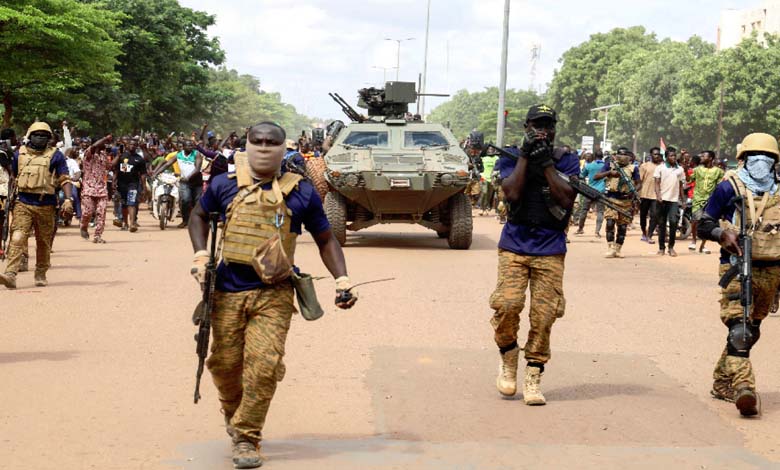
A coordinated attack carried out by the Group for Support of Islam and Muslims and Tuareg fighters inflicted heavy losses on Malian forces and their Russian allies. However, the strategy of conquest and control is not fully in the hands of the insurgents.
In recent days, fighters from the GSIM, affiliated with Al-Qaeda, achieved tactical successes that earned them the ominous nickname “the ghost army.” They seized vast areas of territory and deprived cities and the army of fuel and other essentials. Nevertheless, their chances of defeating Mali’s military regime and its Russian allies appear slim.
-
Mali Between Fuel Crisis and Expanding Terrorism: Is Al-Qaeda Approaching the Gates of Bamako?
-
First official appearance of Mali’s military council leader since the Saturday attacks
According to an analysis published by the British newspaper The Guardian, terrorist groups and their Tuareg separatist allies are more likely to seek concessions from the authorities rather than pursue direct territorial control.
Over recent years, the Sahel region has witnessed a series of military coups, extremism, humanitarian crises, and armed conflicts. All UN, US, and French missions aimed at counterinsurgency and peacekeeping between 2012 and 2022 failed, and very few external powers now show willingness to intervene again.
The joint assault by the GSIM and its Tuareg allies was carefully planned and coordinated. It targeted government forces and their Russian allies through ambushes, car bombs, drones, and other conventional weapons, resulting in heavy casualties.
-
Al-Qaeda before the Malian storm: leadership changes and the choking of arteries
-
Terrorism in the Sahel enters a phase of influence management through an increasingly exposed Mali
Among those killed was Mali’s Defense Minister, Sadio Camara, who died in a suicide attack on his home in the military town of Kati. The head of military intelligence was also killed.
Bamako International Airport was subjected to further attacks, while GSIM fighters and Tuareg separatists seized control of the key northern city of Kidal after soldiers fled and a Russian force surrendered, marking “a setback to the symbolic victory the Malian junta had achieved three years ago,” according to The Guardian.
In remarks to the Guardian, Jean-Hervé Jezequel, Sahel project director at the International Crisis Group, described the situation as “a dangerous escalation of the conflict and a new phase reached by armed groups in their strategy, which in recent years has pushed them to attack major urban centers in Mali.”
-
Gunfire near the palace: what is happening in Mali?
-
Mali and Al-Qaeda… Pragmatism Redefining Priorities (Two Experts)
Deeper underlying causes drive this new wave of violence. The Sahel region provides fertile ground for factors that fuel violent extremism, such as extreme poverty, instability, communal tensions, and a long history of conflicts that have left vast quantities of weapons in circulation.
Last year, nearly 70 percent of global terrorism-related deaths occurred in just five countries, three of them in the Sahel region, according to the newspaper.
In several countries, armed groups have exploited the absence of public services by offering protection and basic assistance while forcing communities to accept their authority and strict rules.
-
In Burkina Faso under Traoré, a popular revolution challenges terrorism
-
Al-Qaeda in Mali: soldiers killed on the road to the city of gold
Territorial expansion is central to their campaign: controlling populations enables them to recruit youth, use mosques to strengthen influence, and control roads and rivers to impose taxes on traffic and conduct profitable smuggling operations.
Ulf Laessing, head of the Sahel program at the Konrad Adenauer Stiftung in Bamako, stated that the GSIM’s main objective is to create an enclave within Mali that would allow it to build “its own state with a degree of autonomy.”
The tactical alliance with Tuareg separatists aligns with a strategy developed by Al-Qaeda, to which the GSIM maintains limited allegiance, encouraging militants to build close ties with local communities.
-
Sovereignty, the plane and the road in Mali… Nioro resists Al-Qaeda
-
Mali in 2025: Al-Qaeda tightens its grip on the land of gold
However, analysts believe that even if victory is achieved, the alliance between the Tuaregs and the GSIM is unlikely to endure.
Laessing said that the GSIM and other terrorist groups “are testing the fortresses of regimes everywhere.”
He added, “I do not think Bamako will fall… The GSIM cannot control major cities, but it can force governments to yield and negotiate with it, pushing them to adopt more of its ideology.”
He concluded, “The GSIM is playing a long game… It can simply wait for state authority to erode further.”
-
The United States and Terrorism in Mali : A Crucial Test
-
Al-Qaeda’s threats to Mali: A geopolitical shockwave endangering the African Sahel
-
Terrorism in Mali: Al-Qaeda Targets “Dozo” Hunters with Drones
-
Caught in the web of nostalgia and fear: Al-Qaeda traps foreigners in Mali
-
Washington urges citizens to leave Mali amid escalating jihadist attacks