The central engine of chaos: Iran at the heart of the U.S. counterterrorism strategy
In the new American vision, Iran has shifted from being a regional adversary competing with Washington for influence in the Middle East to what the United States considers the “central engine of chaos” in the region and the point where networks of terrorism, militias, smuggling, maritime coercion, and transnational nuclear ambitions converge.
In a shift reflecting an unprecedented escalation, the 2026 U.S. counterterrorism strategy, places Tehran at the forefront of global threats, not merely as a “rogue state,” but as an integrated offensive system using the Revolutionary Guards, proxies, weapons, energy, and maritime routes to reshape balances of power through aggression, impose influence by igniting crises, exhausting states, and plunging the region into cycles of instability.
Iran at the top of “global threats”
The U.S. document treats Iran as an “open war network” that does not separate the nuclear and missile programs from proxy networks, smuggling and money-laundering operations, or threats to international navigation. It views these tools together as an integrated structure aimed at undermining the regional order and pressuring the world through organized chaos.
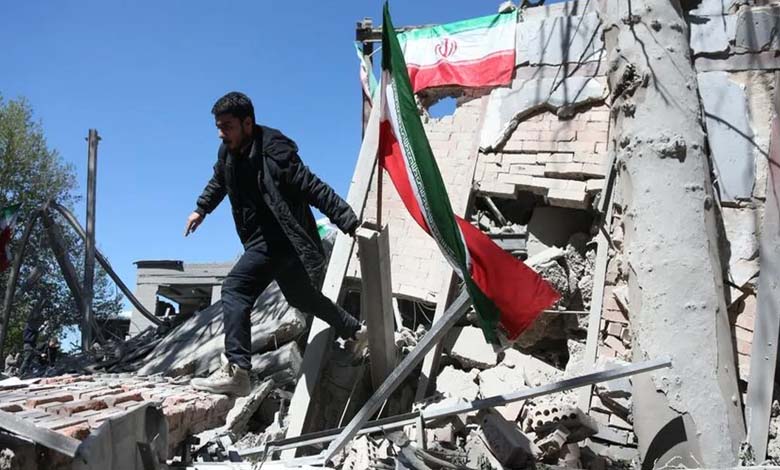
Iranian flag in front of a destroyed building
From this perspective, Washington speaks of a broad strategy aimed at dismantling Iran’s sources of power, suffocating its financial and military networks, striking its regional arms, and preventing it from regenerating its influence, in what appears to be a comprehensive war of attrition against the Iranian project itself.
The Revolutionary Guards as the “operational brain” of the Iranian project
The U.S. strategy devotes significant attention to the Revolutionary Guards, described as the “backbone” of the Iranian project and the body that manages proxy networks and cross-border military and economic activities.
According to the document, the Revolutionary Guards have moved beyond their traditional military role to become an integrated system controlling:
- the management of militias and proxies,
- the smuggling of oil and weapons,
- financing and money-laundering networks,
- the development of missiles and drones,
- maritime operations and threats to navigation,
- the management of political and security influence in the region.
Washington sees the Revolutionary Guards as an operational hub of regional chaos, making them a primary target of the new strategy through sanctions, intelligence operations, and military and economic measures.
The document therefore refers to continued efforts to disrupt the Guards’ infrastructure, target their maritime and missile capabilities, and pursue their economic and financial networks inside and outside Iran.
From sanctions to “network suffocation”
The U.S. strategy goes beyond traditional sanctions and proposes a broader model aimed at “suffocating Iranian networks” and drying up their sources of economic and military power.
Among the tools mentioned are:
- intercepting oil tankers belonging to “shadow fleets,”
- cutting off financing channels and financial transfers,
- targeting international smuggling networks,
- conducting cyber and intelligence operations,
- pursuing companies and commercial fronts linked to Tehran,
- disrupting military and financial supply lines to proxies.
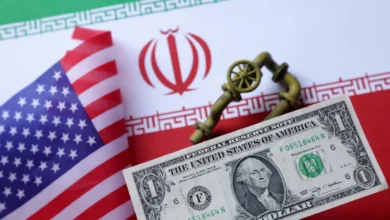
Washington considers the Iranian economy to be the regime’s “most critical vulnerability.” The strategy therefore focuses on targeting oil and energy revenues and preventing Tehran from using trade and maritime routes to finance its military and regional activities.
The document also emphasizes continued interception of oil shipments and maritime activities linked to Iran as part of a campaign aimed at depriving the regime of the resources it uses to finance the Revolutionary Guards, proxies, and armed groups.
Hormuz and the Red Sea as new arenas of confrontation
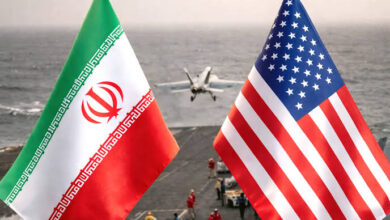
The strategy places maritime routes at the center of the confrontation with Iran, considering the security of navigation in the Strait of Hormuz and the Red Sea to be a strategic priority for the United States and its allies.
The document accuses Tehran of using threats to international navigation as a tool of political and economic coercion, whether through direct actions by the Revolutionary Guards or through proxies across the region.
In this context, Washington affirms its readiness to take “decisive measures” against any threat to international trade or allied security, while strengthening U.S. military and naval presence and building broader security partnerships to protect global energy and trade routes.
Iran and regional proxies
The document also links Iran to a wide network of armed organizations and militias across the Middle East, arguing that Tehran uses these groups as instruments of a “proxy war” against the United States and its partners.
The strategy states that Washington will continue targeting Iran-backed proxies, cutting off their sources of funding and weapons, and preventing the rebuilding of their military capabilities.
It also stresses that any attack targeting U.S. interests or those of its allies will be met with a direct response against both the perpetrators and their supporters, reflecting a policy of holding Iran responsible for the actions of its proxies.
A war of attrition against the Iranian project
The 2026 U.S. strategy reveals a shift from traditional containment toward a more offensive approach targeting the Iranian regime’s military, economic, and security structures.
The document does not speak of temporary deterrence or limited pressure, but of a long-term effort aimed at reducing Tehran’s ability to regenerate its regional influence, drying up the financing of its military project, and preventing it from using proxies, maritime routes, and energy as tools of leverage.
At the heart of this vision, Iran is presented, under the new American doctrine, as the “center of chaos” in the Middle East and the primary target of a strategy through which Washington seeks to reshape regional balances of power by gradually weakening the Iranian project and dismantling its instruments.