Radiation-saturated land: eight sites that encapsulate the cost of the nuclear venture
Since the world entered the nuclear age in the mid-twentieth century, scientific progress in this field appeared to promise unprecedented prospects in energy and technology. In return, it left behind a heavy legacy of environmental and health disasters whose effects are still visible today.
Between the frantic arms race, catastrophic reactor accidents, and unsafe policies for disposing of radioactive waste, several regions around the world have become devastated zones that continue to testify to the darker side of nuclear ambition.
The following are eight of the most radioactively contaminated sites on Earth, where the consequences of human error still cast long shadows over the environment and the health of successive generations.
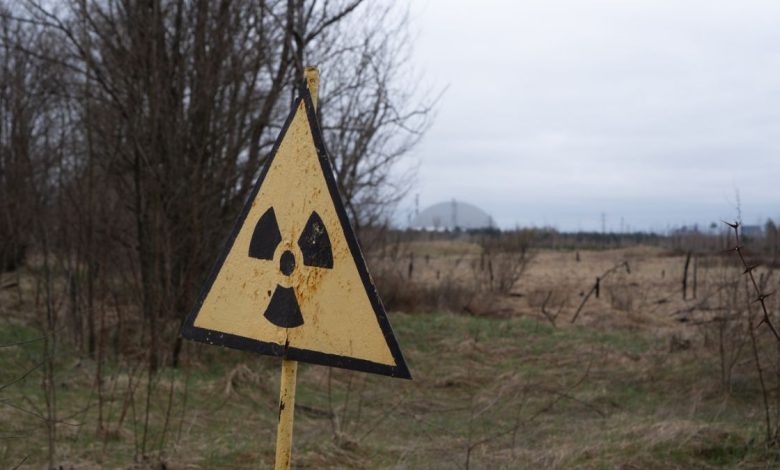
The Chernobyl Exclusion Zone
On April 26, 1986, the world witnessed one of the greatest nuclear disasters in history when reactor number four at the Chernobyl nuclear power plant, in what was then Soviet Ukraine, exploded.
The explosion released enormous quantities of radioactive material into the atmosphere, spreading across vast areas of Ukraine, Russia, Belarus, and large parts of Eastern Europe.
The consequences were catastrophic. Entire cities, most notably Pripyat, were completely evacuated, and the area surrounding the reactor became a prohibited zone that remains closed to this day.
Isotopes such as cesium-137 and strontium-90, with long radioactive lifespans, remain embedded in soil and water, threatening the environment and human health for decades to come. The seriousness of the site prompted the international community to construct a massive steel confinement arch to isolate the remains of the collapsed reactor and prevent future radiation leaks.
The radioactive contamination zone of the Fukushima Daiichi plant
In March 2011, a devastating earthquake followed by a massive tsunami struck Japan’s eastern coast, causing an unprecedented nuclear disaster at the Fukushima Daiichi plant.
The disaster led to the meltdown of three nuclear reactors and the release of radioactive materials into the air, water, and soil, turning the region into one of the most dangerous centers of radioactive contamination in modern times.
Despite extensive decontamination efforts lasting for years, challenges remain, particularly concerning the contaminated cooling water used to prevent overheating of the damaged reactors.
The decision by Japanese authorities to discharge treated water into the Pacific Ocean sparked regional and international controversy amid ongoing concerns about long-term environmental consequences.
Lake Karachay nuclear waste site
Deep within Russia’s Ural Mountains, Lake Karachay stands as one of the most dangerous nuclear sites in the world, not due to a sudden accident but because of decades of systematic industrial negligence.
The lake was used as an open dumping ground for radioactive waste from the Soviet Mayak complex responsible for military plutonium production.
The tragedy worsened in 1957 when a failure in the cooling system of waste storage tanks triggered a major chemical explosion that spread radioactive clouds over wide areas.
During the 1960s, drought exposed the lakebed, allowing winds to carry radioactive dust into surrounding regions. Although the lake was later covered with concrete layers, the area remains among the most contaminated places on Earth.
The Semipalatinsk nuclear test site
Across the vast steppes of Kazakhstan, the Soviet Union conducted 456 nuclear tests between 1949 and 1989 at the Semipalatinsk site, known as “the polygon.” These tests included atmospheric and underground explosions that released massive amounts of radiation into the environment.
Local populations paid a heavy price, with high rates of cancer, birth defects, and chronic illnesses linked to radiation exposure. Although the site has been officially closed, large areas still contain radiation levels too high for habitation or human activity.
The Hanford nuclear site
In the U.S. state of Washington, the Hanford complex stands as a witness to the early days of the American nuclear program. The site played a central role in producing the plutonium used to manufacture atomic bombs during World War II and the Cold War.
However, decades of intensive production left vast quantities of radioactive waste stored in aging and deteriorating tanks, some of which leaked into soil and groundwater. Today, Hanford represents the largest environmental cleanup project in U.S. history, facing enormous technical and financial challenges that reflect the scale of accumulated contamination.
The Sellafield nuclear reprocessing center
On the west coast of the United Kingdom, the Sellafield center is one of the major symbols of the British nuclear program. It began operations in the 1940s as a facility for producing military nuclear materials before later becoming a nuclear fuel reprocessing plant.
The site has experienced a long series of incidents and leaks that led to widespread environmental contamination, particularly in the Irish Sea, which received significant quantities of radioactive waste over decades. Despite ongoing processing and dismantling efforts, Sellafield remains a major environmental challenge for the United Kingdom.
The Goiânia radiological accident
In September 1987, the Brazilian city of Goiânia witnessed one of the most unusual radiological accidents in history. Two individuals found an abandoned radiotherapy device in a deserted hospital and removed cesium-137 powder from it without understanding its danger.
Handling the radioactive material led to dozens of residents being exposed to radiation poisoning, and several victims died after developing severe symptoms. Authorities were forced to carry out a large-scale decontamination operation involving the demolition of homes, soil removal, and disposal of contaminated property, leaving deep psychological and economic scars on the city for years.
The Mailuu-Suu uranium mining center
In the town of Mailuu-Suu in Kyrgyzstan, another hazard inherited from the Soviet nuclear era appears, this time through rudimentary uranium mining. Extraction operations left enormous piles of radioactive waste in open dumps exposed to natural elements.
The site’s danger lies in its location within a seismically active zone, where landslides and floods threaten to carry radioactive materials into rivers and nearby residential areas, making it a ticking environmental time bomb for thousands of residents.
Taken together, these sites reveal a stark reality: the true cost of nuclear technology is measured not only by the energy it produces or the deterrent power it provides, but also by the long-term legacy of pollution and human suffering it can leave behind.
As several countries once again move toward expanding nuclear energy, these radiation-saturated lands remain a permanent warning that any failure in safety standards can turn scientific progress into a catastrophe inherited by generations.