Moves in Germany to Curb the Expansion of the Muslim Brotherhood Within Political Parties
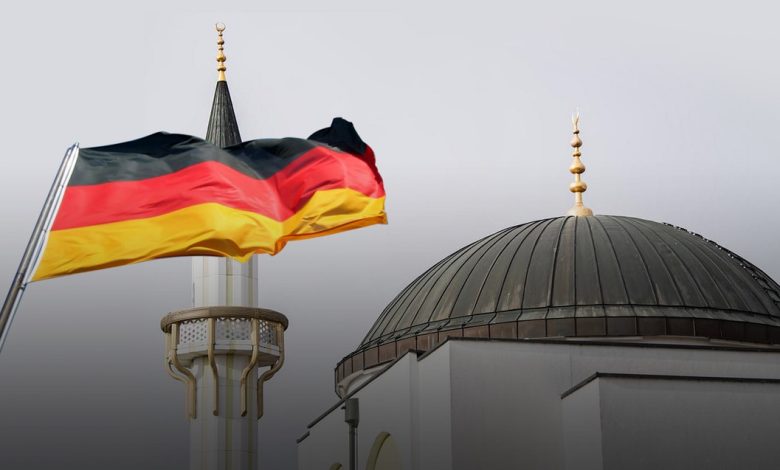
A series of initiatives has emerged in the German Parliament regarding the infiltration of the Muslim Brotherhood into political parties, exposing the group’s penetration of political structures and shedding light on its role and objectives within society.
Following a parliamentary inquiry concerning the Muslim Brotherhood’s infiltration and its connections with political parties, the government responded a few days ago with a brief memorandum submitted to Parliament. The document addressed the group’s objectives, activities, and pledged measures to confront them.
The memorandum stated: “The operational strategy of the Muslim Brotherhood, or the ‘German Muslim Community,’ which represents the movement’s central and most significant organization, is to present itself to political circles, authorities, and civil society partners as the representative of an allegedly moderate and open-minded Islam.”
It added: “The group follows a strategy aimed at influencing political and social spheres based on its ideology, with the objective of establishing a political and societal system that contradicts the fundamental liberal democratic order.”
In response to a question included in the parliamentary inquiry regarding measures to counter the infiltration of the Muslim Brotherhood and other Islamist groups, the government stated: “Federal security agencies are addressing all forms of extremist influence on society and politics in the Federal Republic of Germany.”
The memorandum also listed several tools available to members of Parliament to seek advice or obtain information aimed at preventing any rapprochement with or infiltration by the Muslim Brotherhood. These include reports issued by the Office for the Protection of the Constitution (domestic intelligence service), parliamentary information requests, as well as inviting representatives of domestic intelligence agencies to participate in seminars and discussion forums on the matter.
Parliamentary Inquiry
Last month, the parliamentary bloc of the Alternative for Germany (AfD) party submitted an inquiry to Parliament, concerning the infiltration of Islamist organizations — particularly the Muslim Brotherhood — into parties within Germany’s political mainstream.
The introduction to the inquiry stated: “The covert infiltration of our society constitutes one of the greatest threats to democracy in our country,” adding: “This infiltration is not limited to extremist Islamists alone, but also extends to the anti-Western worldview embraced by segments of the political left.”
It continued: “France already has a term for this phenomenon: left-wing Islamism, referring to a harmful alliance between parts of the far left and Islamist actors, where any criticism of Islamism is portrayed as right-wing.”
According to the inquiry, similar cases are increasingly appearing in Germany. It cited the example of Martin Hikel, head of the Social Democratic Party (SPD) in Berlin, who withdrew his candidacy for mayor of the Neukölln district several months ago after facing accusations from the party’s hardline wing because of his stance on Islamist groups.
The inquiry also highlighted specific examples of the influence of Islamist organizations — particularly the Muslim Brotherhood — within the Social Democratic Party, especially the head of the “Taiba” center (referring to Farid Haidar), whose cultural center was mentioned in a report by the Office for the Protection of the Constitution as being part of the movement’s network.
SPD politicians also participated in events organized by the “Neukölln Meeting Platform” (NBS), an organization referenced in the Office for the Protection of the Constitution’s report because of its connections to the “German Muslim Community Organization,” described in the inquiry as the Brotherhood’s arm in Germany.