Terrorism Worsens Hunger… Boko Haram and ISIS Turn Lake Chad into a Graveyard
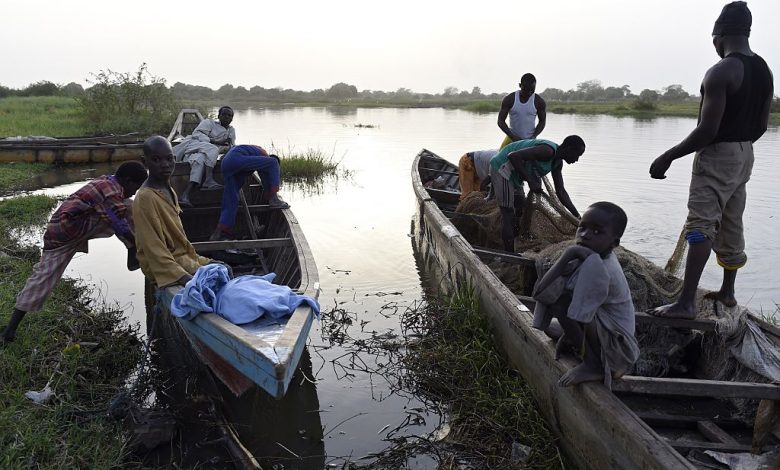
The circles of death, hunger, and fear are expanding across West Africa due to the bloody conflict between “Boko Haram” and “ISIS,” which has turned into an open war of attrition whose primary victims are civilians.
In scattered villages and isolated islands, residents flee kidnappings and killings, while the fishing and agricultural sectors collapse under the control of armed groups that have transformed the lake into a theater of extortion, smuggling, and murder, leaving children prey to malnutrition and families trapped by forced displacement or the loss of loved ones, according to the British newspaper “The Telegraph.”
-
After 10 Years, the United States Struggles with the Spread of Terrorism in West Africa
-
Terrorism spreads in Burkina Faso: isolated bases become a new target
Rise and Escape
Inside a modest mud hut on the edge of a displaced persons camp, Bahana Al-Haj, a former member of “Boko Haram,” recounts how extreme poverty dragged him into the arms of the group.
At the age of twenty-two, unable to secure daily food through fishing in the lake, he found in the organization a refuge that provided him with the sense of belonging and status he sought, along with regular weekly food rations and three underage wives as part of a systematic policy of enslaving women and forcing them into marriage with terrorists.
Over five years, Al-Haj rose through the ranks of the organization until he became a field commander, participating in what he described as “military operations,” which were in reality bloody raids on peaceful villages.
-
Terrorism escalates in Nigeria ahead of elections: a western hotspot and a struggle for influence
-
Terrorism, sanctions, and influence: five questions explaining the future of Rwanda’s role in Mozambique
He says with chilling calmness: “I killed many people,” revealing that the fiercest battles he fought were against the “ISIS” organization in West Africa, which split from “Boko Haram” in 2015 and which he describes as “more organized and more brutal.”
As the conflict between the two groups intensified over control of the lake’s islands rich in fish resources and smuggling and trade routes, the region became akin to a watery guerrilla war mixing surprise raids with kidnappings and systematic extortion.
However, the absence of any fixed salary pushed Al-Haj to flee in 2023 and join the displaced community in the village of Fourkoulom along with two of his wives.
Today, he says he is consumed by remorse and warns young people against being lured by the mirage of armed organizations, though he believes eliminating “Boko Haram” militarily appears impossible: “Their numbers exceed the army’s capacity.”
-
In Burkina Faso under Traoré, a popular revolution challenges terrorism
-
Blue Helmets between staying and leaving… funding is choking UN missions in Africa
Terrorism Makes No Distinction
For civilians trapped in the crossfire, the war is not merely a struggle for influence, but a daily tragedy brutally reshaping every aspect of their lives.
Mariam Abakar Kokoui, a mother of seven, fled only days ago from an attack carried out by around forty “Boko Haram” militants on her village, during which they stormed homes, kidnapped women and children, and looted property.
Mariam recounts in a trembling voice: “I heard gunfire, so I grabbed my children and we hid in the bathroom.”
She miraculously escaped without carrying anything, while two of her neighbors were abducted before later managing to escape.
-
Al-Qaeda and ISIS in Africa’s Sahel: the triangle of death expands
-
The United States and Terrorism in Mali : A Crucial Test
Today, she lives in a small hut built by humanitarian organizations, begs to feed her children, and sleeps with her eyes open in fear of another attack.
Forty-year-old fisherman Saleh Youssef Issa also narrowly escaped death after being kidnapped by an armed group of twenty-one militants while in the village of Toumoun following a long day of fishing.
Issa was taken bound alongside other captives toward the Nigerian border, traveling on foot and by boat, while being beaten and tortured under temperatures exceeding forty degrees Celsius. He says: “I thought it was the end.”
-
Terrorism in Mali: Al-Qaeda Targets “Dozo” Hunters with Drones
-
Mali Between Fuel Crisis and Expanding Terrorism: Is Al-Qaeda Approaching the Gates of Bamako?
On the second night, he noticed the restraints around his wrists had loosened. Taking advantage of the darkness, he escaped with another captive without looking back. Yet the trauma has never left him, and he now refuses to return to the lake for fear of being kidnapped again.
In the Kafia area alone, armed groups kidnapped seven people within three weeks, while one hostage was slaughtered on camera to terrorize residents.
Estimates indicate that 319 kidnappings have been recorded since last January in this part of Chad, including 63 cases in April alone.
The ransoms demanded range between 100,000 and 500,000 CFA francs, equivalent to 130 to 660 British pounds, in a country where nearly 87 percent of the rural population survives on less than one dollar per day.
-
Terrorism in the Sahel: Mali Accuses Ukraine and Warns the West
-
ISIS is working to link its hotspots in Africa — the threat goes beyond the continent
A Collapsing Economy and Devastating Hunger
Nine out of every ten people in the Lake Chad Basin depend on fishing, farming, and livestock breeding. However, the expansion of terrorist activity has led to the complete collapse of these vital sectors.
The lake, home to around 120 fish species and surrounded by fertile agricultural lands, has been transformed under the grip of armed groups into a source of organized extortion and cross-border smuggling.
According to estimates by the Institute for Security Studies, “ISIS” in West Africa earns around £31 million annually from extorting fishing communities, in addition to £1.6 million generated from taxes imposed on the smoked fish trade. The group also owns its own fleet of fishing boats, which it rents to residents under threat.
-
Al-Qaeda Expands in West Africa: Togo Reports Attack Casualties
-
Two Years After the Niger Coup: Nation’s Address Deepens Rift with the West
This economic and security chaos has pushed the region to the brink of a humanitarian disaster, with 7.4 million people facing severe food insecurity, according to United Nations estimates.
At Baga Sola Hospital, the tragedy becomes visible in the malnutrition wards, where sixteen beds are reserved for children suffering from severe malnutrition, admitted when the circumference of their upper arm falls below ten centimeters.
A Military Failure
Since its emergence in northern Nigeria in 2009, the “Boko Haram” insurgency has caused around 350,000 deaths and displaced millions. By February 2026, the number of internally displaced people in Nigeria, Chad, Cameroon, and Niger had reached approximately 3.3 million, according to United Nations data.
-
Gold and Drones: Alternative Funding and New Maps of Terrorist Threats in the African Sahel
-
Cabo Delgado: ISIS’s Gateway into Africa
Militarily, Chad continues its operations against armed groups following the deaths of around forty soldiers in an attack in October 2024, followed by another attack this month on a base on Barka Tolorom Island that killed twenty-four soldiers. The attack was followed by a retaliatory airstrike that mistakenly killed dozens of Nigerian fishermen, according to local reports.
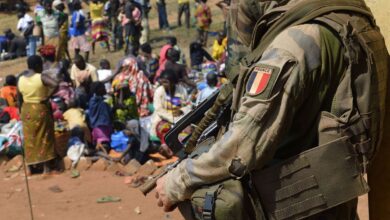
In a notable development, French military advisers returned to Chad for the first time since French forces withdrew from the country in 2024, while the United States intensified drone strikes against “ISIS” in West Africa and announced the killing of the group’s deputy leader, Abu Bilal Al-Mounouki, along with several of his aides.
-
Togo and Terrorism: From Transit Zone to Operational Base?
-
Food as a Weapon: How Jihadist Groups Use Famine to Expand Their Power in Africa
However, analysts stress that a purely military solution will not be sufficient as long as poverty, marginalization, and weak state institutions persist, in addition to the difficult geography where marshes, deserts, and remote islands provide armed groups with a permanent ability to hide and reposition themselves.
While Chadian President Mahamat Idriss Déby vows to continue the war “until the complete elimination of this threat,” civilians continue to pay the heaviest price in one of Africa’s most forgotten, complex, and brutal crises.
-
Using the Economy as a Tool of Infiltration… Al-Qaeda Expands in West Africa
-
Arming Dynamics of Extremist Groups in the African Sahel: What Is the Source of Their Arsenal?