To restrict weapons to state control, Muqtada al-Sadr separates Saraya al-Salam from the Shiite movement
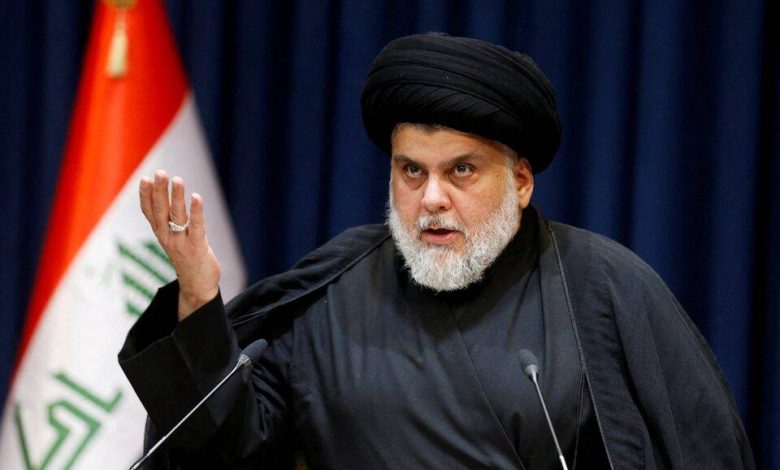
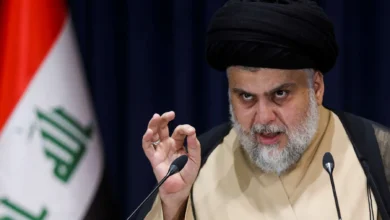
The leader of Iraq’s Sadrist movement, Muqtada al-Sadr, announced the complete separation of “Saraya al-Salam” from the “National Shiite Movement” and their full integration into the state.
In a statement issued on Wednesday, al-Sadr said: “Out of concern for the nation’s general interest and to avoid the dangers surrounding the country, it has become necessary to announce the complete separation of Saraya al-Salam from the National Shiite Movement… and their full integration into the state and the general authority responsible for military formations, provided that the civilian bodies attached to the Saraya are transformed into a unified structure without any headquarters, weapons, uniforms, titles, or any other distinguishing features.”
-
Al-Sadr warns of sectarian strife and calls on the peoples of the region to exercise wisdom
-
Al-Sadr and Al-Sistani… a meeting reshuffles the cards ahead of Iraq’s parliamentary elections
Al-Sadr thanked the military formations of Saraya al-Salam and added: “I hope that all Popular Mobilization formations will detach themselves from partisan and sectarian directives, especially after the factions hand over their weapons to the state, as we advised them to do years ago.”
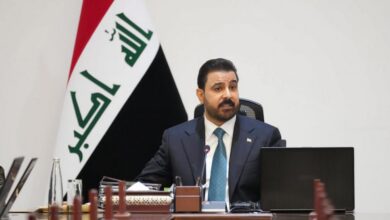
For his part, Iraqi Prime Minister Ali al-Zaidi welcomed Muqtada al-Sadr’s move, considering it an important step toward strengthening internal stability, restricting weapons to state control, and supporting security institutions.
Saraya al-Salam is the armed military wing of the Sadrist movement led by Muqtada al-Sadr in Iraq. It was established in 2014 following a fatwa issued by Shiite cleric Ali al-Sistani to confront the expansion of ISIS across large areas of Iraq.
-
Al-Sadr Wields the Street Card and Election Boycott in Response to the Coordination Framework Offer
-
Al-Sadr hints at possible shift from election boycott
Muqtada al-Sadr’s decision is viewed as a new step toward reorganizing the relationship between armed factions and the Iraqi state amid growing calls to place weapons exclusively under the control of official institutions and reduce the influence of armed groups linked to political parties.
Earlier in May, al-Sadr had called on the new Iraqi government to dissolve the factions and exclude them from the new administration, in a move that coincides with continued American pressure on Baghdad to dismantle these Iran-aligned armed formations.
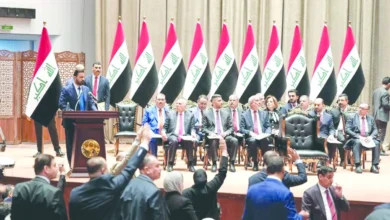
The Iraqi political scene is experiencing a state of significant complexity, reflected in the formation of the new government headed by Ali al-Zaidi, where partisan calculations intersect with sectarian and ethnic balances, making the formation of the government dependent on delicate understandings among the various political forces.
-
Al-Sadr Disowns Candidates Defying Election Boycott Decision
-
Political Corruption Decides al-Sadr’s Decision to Boycott Elections
-
Al-Sadr Calls on Government to Punish Those Intervening in Syria
-
Al-Sadr Prevents Random Displays of Peace Brigades, Fearful of Infiltration
-
The mystery surrounding Muqtada al-Sadr’s position on the Iraqi local elections is prompting Nouri al-Maliki to test him
-
Al-Sadr return to politics through the gateway of provincial council elections
-
A new religious group in Iraq stirs controversy and threatens al-Sadr… The full story