Al-Zaidi pledges to confront uncontrolled weapons in Iraq
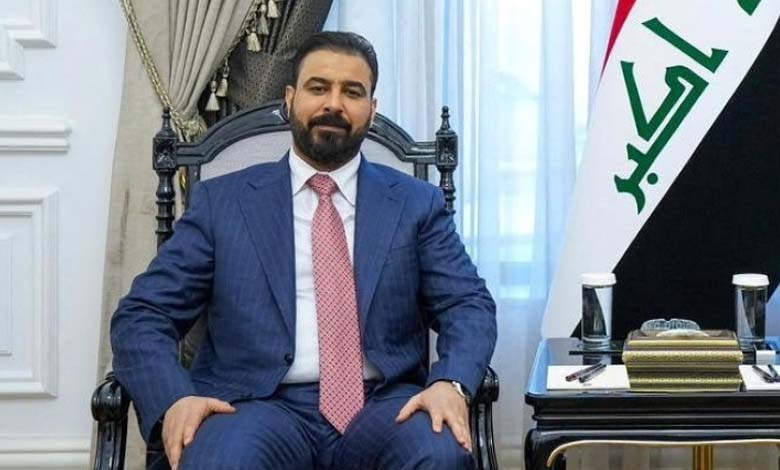
The head of government affirms his intention to reorganize the security apparatus and adopt a balanced policy that distances Iraq from regional axis conflicts.
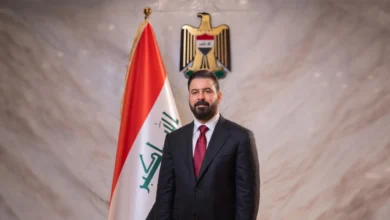
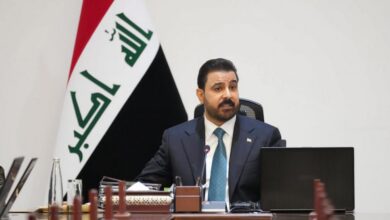
Iraq’s Prime Minister-designate, Ali Falih Al‑Zaidi, has placed the issue of uncontrolled weapons and the restoration of state authority at the top of his government’s priorities, pledging to take steps aimed at unifying security decision-making and strengthening the authority of official institutions, as U.S. pressure on Baghdad intensifies to curb the influence of Iran-linked armed factions.
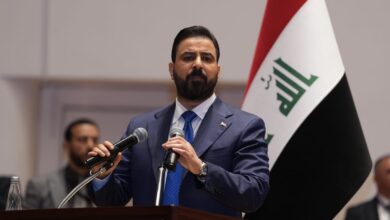
While presenting the new government’s ministerial program to Parliament Speaker Haybat Al‑Halbousi, Al-Zaidi outlined his government’s vision for the next four years, focusing on reorganizing the security apparatus and consolidating the state’s monopoly over military force—issues considered among the most sensitive in Iraq’s political landscape for years.
The government program explicitly emphasized the need to restrict weapons to the state, alongside strengthening the capabilities of security, intelligence, and military agencies, in order to enforce the law and extend the influence of official institutions across the entire Iraqi territory. It also included commitments to reorganize relations with armed factions by defining the roles and responsibilities of the Popular Mobilization Forces within the existing legal framework.
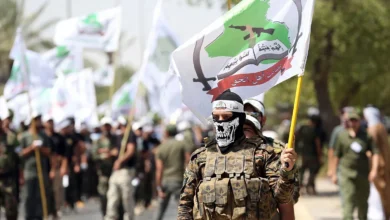
Although the program did not include a direct confrontation with armed factions, its tone was interpreted as an indication of a new direction aimed at more tightly regulating the activities of these groups and bringing them further under state authority, amid growing criticism of Baghdad over the persistent multiplicity of security decision-making centers.
Al-Zaidi also stressed border security and cutting off funding sources for extremist groups and organized crime, highlighting the importance of building a unified security system and linking resources and capabilities to official institutions—steps observers view as intended to end the security fragmentation that has characterized Iraq in recent years.
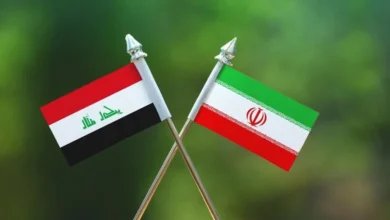
On the external front, the Prime Minister-designate emphasized the adoption of a balanced policy that distances Iraq from regional and international axis conflicts, affirming that his government will work to protect internal stability by establishing balanced relations with neighboring countries and Arab states, particularly Gulf states, while rejecting the use of Iraqi territory as a launching point for any regional attacks or conflicts.
These pledges come amid rising U.S. demands to restructure Iraq’s security landscape, as Washington considers the broad influence of Tehran-backed factions a direct challenge to Iraq’s stability and to U.S. interests in the region.
The U.S. administration has for some time been pressing for the formation of a government capable of asserting state sovereignty and reducing the influence of armed groups operating outside official institutions, arguing that the continued activity of these factions keeps Iraq as an open arena for regional rivalries and undermines prospects for political and economic stability.
Observers believe that Al-Zaidi’s government will face an extremely complex test in this matter, especially since previous governments failed to establish a new security equation that ends the duality of arms. Any move against armed factions could also open the door to internal political and security tensions, given the deep entanglements between armed forces and influential political parties in the country.
During the recent war with Iran, U.S. bases and interests inside Iraq were targeted by a series of attacks carried out by factions loyal to Tehran, while the government of Mohammed Shia’ Al‑Sudani faced U.S. criticism for not taking decisive measures to curb those attacks or restrain the activity of armed groups.
Analysts argue that Al-Zaidi’s success in implementing his commitments will largely depend on the level of internal political support he receives, as well as the degree of international—particularly American—pressure pushing Baghdad to redraw the security balance and confine the use of force exclusively to state institutions.