Britain and the Muslim Brotherhood: Warnings over expanding influence and possible scenarios
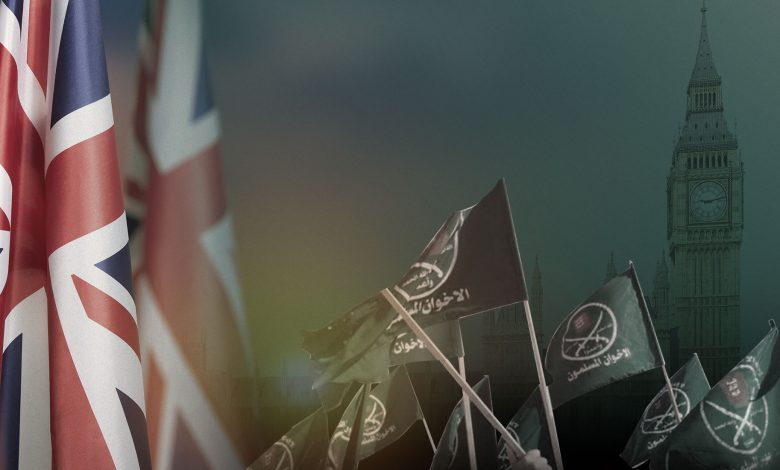
Prominent warnings about the growing influence of the Muslim Brotherhood and organizations linked to political Islam within the United Kingdom have been issued by a leading candidate for the mayoralty of London. She argued that the country has become “a fertile environment for extremism” due to what she described as the authorities’ reluctance to confront the issue for fear of political accusations.
-
The Growing Influence of the Muslim Brotherhood in Britain: Urgent Warning and a Recovery Prescription
-
After the ban on Hizb ut-Tahrir… What is the fate of the Muslim Brotherhood in Britain?
These remarks were made by Leila Cunningham, a prominent candidate from the British Reform UK party and of Egyptian origin. She also referred to repeated indications that Gulf states had warned London several times about the danger posed by the Muslim Brotherhood, “without those warnings receiving an adequate response.”
Experts specializing in extremist groups believe that the Muslim Brotherhood does not operate merely as a traditional organization, but rather as a transnational network of influence that invests in democratic environments to establish a “parallel presence” through institutions and community centers, warning of the implications of this trajectory for the cohesion of British society.
-
Dissident Muslim Brotherhood Leader: International Pressure May Push Britain to Reconsider Its Stance
-
Wing 702: Inside the secrets of the Muslim Brotherhood’s den in Britain
An imminent threat
In this regard, expert on the Muslim Brotherhood and political Islam Hisham Al-Najjar said that the Muslim Brotherhood represents an imminent danger to Britain. He explained that the group exploits the British environment and is building what resembles a parallel state deep within British society through its centers, institutions and organizations. He added that the group also has a disclosed project aimed at establishing an alternative caliphate in Europe and the United States.
Not only that, but “the group incites Muslims in Britain to rebel against their state and laws while leading a soft invasion there.”
-
Will Britain Follow Washington’s Lead? House of Lords Debates the Designation of the Muslim Brotherhood
-
Late Awakening… Britain Reassesses Its Relationship with the Muslim Brotherhood
For his part, expert on the Muslim Brotherhood and political Islam Mounir Adib said that several European capitals have begun moving toward placing the organization on terrorism lists, recognizing the severe threat it poses to the security and stability of Europe. He stressed that awareness of these dangers could lead to stronger confrontation efforts, possibly aimed at dismantling the organization.
He also stated that the Muslim Brotherhood seeks to establish a foothold in these European capitals, which provide it with financial resources. According to him, the organization finances its branches in other countries through investments it manages in some European capitals, including Britain.
-
Will Britain remain a safe haven for the Muslim Brotherhood? Warning over their growing influence
-
Muslim Brotherhood and Zionism: Why Britain Supports Them
Possible scenarios
Regarding the possible scenarios facing the organization in Britain, Hisham Al-Najjar said that the matter depends on the existence of political will supported by public determination to disengage from the Muslim Brotherhood and place Britain’s interests above the illusion of employing radical groups.
He also emphasized the importance of recognizing that the Muslim Brotherhood does not represent Islam or Muslims, and that dealing firmly with the organization does not constitute hostility toward Islam, but rather serves it.
-
The Telegraph Exposes the Muslim Brotherhood’s Game in Britain: Moderation in Public, Radicalism in Private
-
Labor, Espionage, and Assassinations… A Book Unveiling Britain’s Relationship with the Brotherhood Since Its Inception
He stated that experience has proven the Muslim Brotherhood to be a sectarian and takfiri organization that does not care about societal stability or national development, but is focused solely on gaining power anywhere, even at the expense of society and the state.
According to him, the organization is unconcerned about the consequences for British society or whether its activities could lead to social fragmentation or conflict among the different segments of society.
What matters to the organization, he added, is creating conditions that allow it to exploit decades of destructive activities in order to seize power or at least secure greater temporary influence.
-
Black propaganda: how Britain used the Brotherhood to distort Islam
-
The failure of protests drives the Muslim Brotherhood toward a return illusions conference
Meanwhile, expert Mounir Adib stated that if this British politician of Egyptian origin were to become mayor of London, she might adopt decisions that could place the organization on terrorism lists or at least restrict its activities and highlight the growing danger it poses on British soil.
He predicted that there could be changes in Britain’s policies toward political Islam organizations, and toward the Muslim Brotherhood in particular, which could coincide with what he described as the approach of the organization’s “hundredth and final year.”
He further stated that candidate Leila Cunningham could limit the organization’s presence and the idea that Britain serves as a safe haven for it if she wins the position of mayor of London.
-
Conference on the Muslim Brotherhood: Europe Examines Political Islam Networks in Budapest
-
UK Elections: How the Muslim Brotherhood is Attempting to Use Mosques to Boost the Labour Party
A possible confrontation
He pointed out that several European capitals are beginning to move toward designating the organization as terrorist, fully aware of the major threat it poses to the security and stability of Europe, stressing that awareness of these risks could push governments toward a more forceful confrontation, possibly aimed at dismantling the organization.
According to Mounir Adib, the future of political Islam could be at stake if Leila Cunningham were to become mayor of London, especially as Europe as a whole is increasingly rising against the organization.
He added that the future of the organization appears increasingly uncertain and may move toward decline and disappearance as a result of these statements and the political direction promoted by this candidate.
-
The Muslim Brotherhood loses in its Asian stronghold: the National Party sweeps Bangladesh elections
-
The Muslim Brotherhood in Europe: Ireland on the frontline
The result of the Emirati role
According to Mounir Adib, the United Arab Emirates has played a major role in confronting the organization, not only within its own territory but across the Arab region. He said the UAE also played a larger role in warning about the threat posed by the organization to regional and global security, as well as to international peace and stability.
The expert explained that the decisions taken or potentially to be taken by Britain, the United States and some European countries to tighten restrictions on the organization may be a result of the role played by the UAE.
He added that the UAE issued early warnings about the danger the organization poses to global security because it consistently leans toward violence, supports radical violent groups and promotes the concept of violence in general.
-
The Muslim Brotherhood in British universities: breeding grounds for extremism under student fronts
-
The Muslim Brotherhood threat in Germany is growing: warning of infiltration of the Social Democratic Party
According to him, the Muslim Brotherhood also served as the incubator that produced all extremist and violent organizations; even groups that did not directly emerge from the Brotherhood were influenced by its ideology.
He concluded by affirming that the UAE has long played a pioneering role in confronting this organization and all extremist ideologies inclined toward violence, which has significantly contributed to global security and reflects the UAE’s early awareness and efforts to promote peace and stability not only within its own borders or in the Middle East, but throughout the world.
In the same context, Hisham Al-Najjar said that the Egyptian and Emirati models are preventive examples in combating such groups and offer important lessons to the British and others, while revealing much about the deceptive, divisive and destructive nature of the organization.
-
The Muslim Brotherhood in the UK: Ideological Expansion and a Failure to Confront It
-
Scandals Surround Andrew and Fergie: Between Imprisonment in Britain and Self-Imposed Exile
-
The Muslim Brotherhood in Ireland: multiple arms and ongoing pressure for regulation