Growing Pressure in Austria to Place the Muslim Brotherhood on the European Union’s Terrorist List
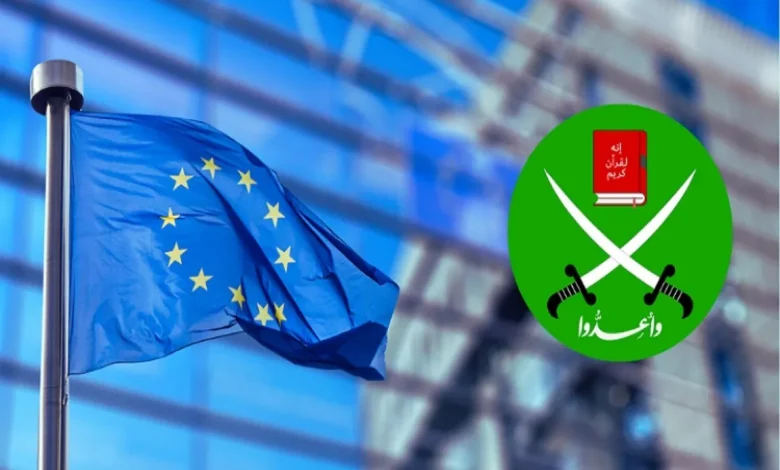
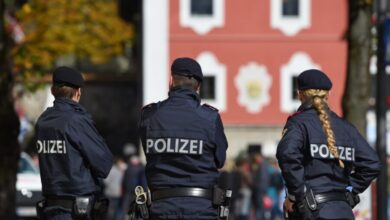
Pressure is mounting on the Austrian government to intensify efforts against the Muslim Brotherhood and promote its designation as a terrorist organization at the European Union level, with the aim of imposing a comprehensive blockade on its sources of funding.
-
The Muslim Brotherhood in Austria: High-Level Warning and Calls for Terrorist Designation
-
ZARA and the Muslim Brotherhood: New Details Emerge on Funding for the Hidden Network in Austria
A report issued by Austria’s Office for the Protection of the Constitution, the country’s domestic intelligence agency, states that the Muslim Brotherhood continues its efforts to expand its influence within Muslim communities and political institutions while gradually seeking to reshape democratic structures through a long-term strategy.
According to the Office for the Protection of the Constitution, the group’s objective is to undermine human rights by promoting ideologies that are incompatible with constitutional principles and to bring about a long-term transformation of society in line with the Muslim Brotherhood‘s ideology.
-
The Muslim Brotherhood in Britain: A Growing Threat and Countermeasures Facing Obstacles
-
ZARA Association and the Muslim Brotherhood: Austria Opens the File on the Hidden Arm
In this context, Florian Hiegelsberger, Executive Director of the Austrian People’s Party (ÖVP), the governing party in the federal state of Upper Austria, stated: “Political Islam is one of the greatest enemies of our democracy, our values, and our social cohesion. Therefore, we must not allow anti-democratic forces to exploit our democratic institutions in order to dismantle these very freedoms step by step.”
According to Hiegelsberger, combating extremism remains one of the foremost challenges facing Austria’s national security policy.
Against this backdrop, the Austrian People’s Party in Upper Austria has referred to the latest warnings issued by the Office for the Protection of the Constitution concerning the organization known as the Muslim Brotherhood and has called for its immediate designation as a terrorist organization across the European Union.
-
Ambiguity, delays and internal pressure complicate Starmer’s European agenda
-
France combats Muslim Brotherhood infiltration with a firm decision: banning a group event in Nantes
According to a party statement, “Such a designation would provide national authorities with additional legal instruments, including measures relating to bans, entry restrictions, and financial sanctions.”
The Upper Austrian branch of the Austrian People’s Party also supports ongoing initiatives aimed at establishing a legal prohibition on activities classified as “political Islam” in Austria in the future.
Only a few days earlier, Florian Hiegelsberger had likewise called for the Muslim Brotherhood to be placed on the European Union’s terrorist list, warning that its activities pose a threat to democracy and society.
-
From universities to digital platforms: How are Brotherhood recruitment networks built in the modern era?
-
Paris… how a Brotherhood-aligned gathering turned into a platform to undermine European values
Earlier Initiative
Last May, the Austrian People’s Party Academy, the governing party’s policy institute, unveiled a comprehensive strategy to combat what it describes as “political Islam,” with particular emphasis on the Muslim Brotherhood, encompassing every aspect of the proposed response.
The strategy, presented in the form of a 29-page policy paper prepared by the Academy—the body responsible for developing policy proposals and strategic planning for the party—addresses issues including financing, countering extremism, and what it describes as the gradual infiltration of public institutions.
-
The Muslim Brotherhood infiltrates French universities: warning of a growing risk and a gateway to funding
-
The slow dissolution… How is the risk of the Muslim Brotherhood infiltrating the heart of Europe?
The document states that the Muslim Brotherhood is “a transnational movement that uses religious content to pursue political objectives and seeks, over the long term, to reshape governmental and societal systems in accordance with its own agenda.”
It continues: “According to the principles established by the Muslim Brotherhood‘s founder, Hassan al-Banna, achieving the organization’s objectives effectively justifies the use of any appropriate means, including violence. As a result, a number of organizations designated as terrorist groups around the world maintain close connections with the Brotherhood.”
-
Broad European initiatives reveal the map of the Muslim Brotherhood’s presence across the continent and its funding sources
-
From France to Sweden, Europe’s Front Against the Muslim Brotherhood Expands
The paper further states: “According to the terminology adopted in this analysis, the Muslim Brotherhood in Europe can currently be classified, owing to its tactical renunciation of violence, as primarily belonging to a form of political Islam based on soft power. It seeks to achieve its objectives through associations, umbrella organizations, educational institutions, and social structures while pursuing a clearly defined agenda directed against the liberal democratic order.”
However, the document concludes that “this strategy may change at any time and, in any event, the Muslim Brotherhood‘s rhetoric and propaganda contribute to the radicalization of individuals who are prepared to resort to violence.”
-
Europe and the Muslim Brotherhood: who holds the key to a ban?
-
Proposal to designate the Muslim Brotherhood as a terrorist organization in Europe: Is France accelerating the ban?