The Zawiya clashes expose the Dbeibah government’s failure to curb militias
Calls for popular action against security chaos are emerging, indicating growing public anger among residents who bear the cost of repeated armed conflicts.
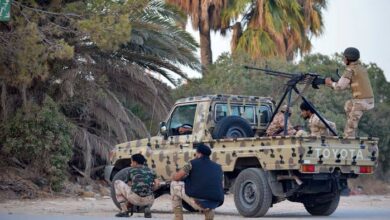
The city of Zawiya witnessed deadly clashes that left three people dead and sparked panic among the population, in a development that reflects the continued fragility of the security situation and the dominance of armed militias, which still impose themselves as key actors in western Libya despite repeated commitments to restrict weapons to state institutions alone.
These confrontations carry implications that go beyond the city itself, as they bring back into focus one of the main obstacles to resolving the Libyan crisis, amid the proliferation of armed power centres and the absence of unified security and military institutions capable of enforcing the law and ending the logic of armed influence.
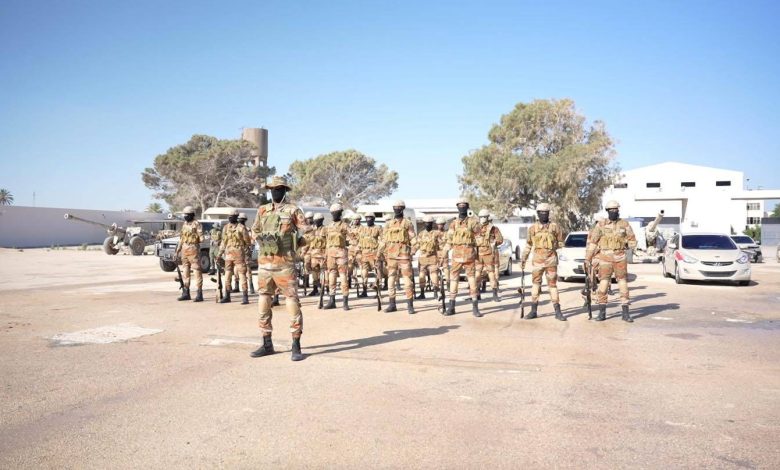
The clashes broke out inside residential neighbourhoods on the second day of Eid al-Adha following the killing of Mohammed Areibi, a member of the Security Threats Combat Agency. The fighting then escalated, causing further casualties, while armed mobilisations continued for several hours amid fears of further expansion of the clashes.
Despite the return to a cautious calm after the intervention of forces affiliated with the “25th Infantry Brigade,” the events revived memories of recurring scenes the city has experienced over recent years, where disputes between armed groups often turn into open confrontations in densely populated areas, placing civilians directly in harm’s way.
Recent developments show that effective power in several cities in western Libya remains in the hands of armed formations rather than state institutions. These clashes are merely another episode in a series of struggles over influence and economic interests.
Observers note that Zawiya has become one of the most sensitive areas in western Libya due to its strategic location and its hosting of one of the country’s largest oil refineries, as well as its connection to fuel smuggling and irregular migration routes. These factors have made it a constant target for rival armed factions.
Researchers on Libyan affairs believe that the persistence of these informal economic networks has helped entrench the power of armed groups and provided them with independent sources of funding, making their dismantling or integration into state institutions even more complex.
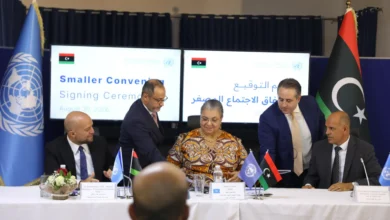
Since the launch of various UN-backed political processes, the militias file has remained one of the most complex issues. While some initiatives have produced temporary political understandings, the issue of unifying security and military institutions remains unresolved at a structural level.
The latest clashes confirm that any political settlement lacking a genuine solution to the issue of weapons outside state control remains fragile. The continued ability of armed groups to mobilise, move and engage independently means that ground realities can still influence the political landscape and impose new facts on the ground.
The recurrence of violence also negatively affects UN and international efforts to create conditions conducive to elections and to end successive transitional phases, as it is difficult to speak of lasting political stability in an unstable security environment open to escalation.
Notably, the latest Zawiya events saw the emergence of local calls for popular mobilisation rejecting continued security chaos, a sign of growing public dissatisfaction among residents who are paying the price of repeated armed conflicts.
After years of clashes, assassinations and random shootings, the city’s residents are now demanding an end to the influence of armed groups and the removal of their political and legal cover, arguing that the continuation of the current situation threatens social security and undermines prospects for development and stability.
These developments place the Government of National Unity led by Abdulhamid Dbeibah under a new test regarding its ability to implement previous commitments to dismantle armed groups and extend state authority, at a time when Dbeibah faces accusations of turning a blind eye to certain militias as part of efforts to remain in power.
Critics argue that the approach adopted in recent years has often been based on managing balances between armed factions and reshaping loyalties rather than implementing a comprehensive plan to end their influence, which has contributed to the continued security fragility.
Ultimately, the Zawiya clashes serve as a renewed reminder that the Libyan crisis remains hostage to the problem of uncontrolled weapons and multiple centres of power, and that any real progress toward stability depends on the state’s ability to restore its monopoly over force and end the influence of militias, which for a decade have remained one of the main obstacles to political settlement and state-building.