The Muslim Brotherhood’s Secret Apparatus Verdicts: Tunisia Opens the Door to Banning Ennahdha
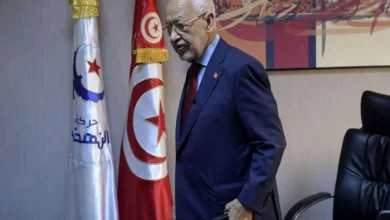
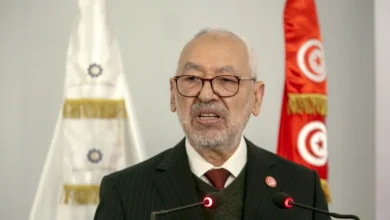
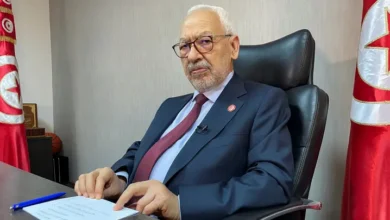
Severe sentences have been handed down against leaders of the Muslim Brotherhood organization, foremost among them Ennahdha leader Rached Ghannouchi, in a case regarded as the most serious in Tunisia’s history.
On Tuesday, the Criminal Chamber specializing in terrorism-related cases at the Court of First Instance in Tunis issued its rulings in the case of Ennahdha’s secret apparatus, which is considered the organization’s security and military arm.
-
Rached Ghannouchi Rejects Remote Trial Appearance: Conspiracy 2 Case Shakes the Muslim Brotherhood in Tunisia
-
Tunisia: Rached Ghannouchi refuses to appear before the judiciary in a money laundering case
After coming to power in 2011, Tunisia’s Muslim Brotherhood succeeded in infiltrating state institutions by embedding its networks throughout the country’s administrative structures. It subsequently established its secret apparatus to conduct terrorist operations, assassinations, espionage activities, and infiltration of state institutions.
This apparatus represented only one component of a broader hierarchical structure within the organization, headed by Rached Ghannouchi. Beneath him operated dozens of figures accused of undermining the state from within, allegedly in retaliation for the long years they had spent in prison for acts described as terrorist offenses.
-
The Spoiled Son of Rached Ghannouchi… Who is the Tunisian Brotherhood member Seifeddine Makhlouf ?
-
Tunisia asks Interpol to arrest and hand over son of Rached Ghannouchi
Details of the Sentences
The court’s rulings ranged from ten years’ imprisonment to life imprisonment.
Rached Ghannouchi, president of the Ennahdha Movement, the political wing of Tunisia’s Muslim Brotherhood, was sentenced to life imprisonment plus an additional thirty years in prison.
Mustapha Khedher, the supervisor of the secret apparatus, was sentenced to life imprisonment plus an additional ninety-six years in prison.
Rida Barouni, Taher Boubahri, Kamel Ayfi, and seven other defendants were sentenced to life imprisonment plus an additional seventy-six years in prison.
The court also sentenced Fathi Beldi to life imprisonment plus fifty additional years, Abdelaziz Daghsni to life imprisonment plus thirty-seven additional years, and Kamel Badoui to life imprisonment plus thirty-two additional years.
-
Tunisia: Rached Ghannouchi was brought back to court as a suspect
-
Rached Ghannouchi to appear before the Tunisian Justice next Monday
Samir Hannachi received a sentence of life imprisonment plus thirty additional years.
Other sentences included forty-eight years in prison for Kais Bakkar, forty-six years for Belhassen Naqqach, forty-two years for Ali Larayedh, thirty-four years for Ali Ferchichi, eighteen years for three defendants, twelve years for four other defendants, and ten years for two defendants.
The court also ordered that each defendant be placed under administrative supervision for five years.
According to observers, these verdicts could lead to the dissolution of the Ennahdha Movement and its designation as a terrorist organization.
-
Tunisian parliament leader Rached Ghannouchi summoned for questioning
-
Rached Ghannouchi and Rafik Abdessalem before the judicial and financial pole – Tunisia
The Most Serious Case
Tunisian political activist Khaled Baltaher said that the secret apparatus case is the most serious among the cases involving Ennahdha in Tunisia, emphasizing that these rulings severely undermine the movement’s political and popular future.
He argued that the secret apparatus functioned as a parallel state that successfully infiltrated security and judicial institutions in order to carry out criminal schemes and conceal intelligence-related activities.
He stated that the rulings in both the foreign fighter recruitment case and the Ennahdha secret apparatus case are sufficient grounds for dissolving the movement and completely banning its activities in Tunisia.
-
What role did the leader of Tunisia’s Ennahdha Party Rached Ghannouchi play in Libya?
-
Conspiracy 2 in Tunisia: heavy sentences handed down against Ghannouchi and prominent Muslim Brotherhood figures
He added that these judgments provide a powerful legal basis upon which the government could rely to demonstrate that the party violated the conditions governing its establishment and political activity, thereby justifying an official request for its dissolution.
He also noted that Rached Ghannouchi had already received sentences exceeding seventy-six years in other cases, and that a new sentence of life imprisonment plus thirty additional years had now been added, demonstrating, in his view, the seriousness of the crimes attributed to him.
In 2018, the defense committee representing politicians Chokri Belaid and Mohamed Brahmi, who were assassinated in 2013, revealed documents and evidence indicating that the Ennahdha Movement possessed a secret security apparatus operating parallel to the state, allegedly involved in assassinating opponents, conducting espionage, infiltrating state institutions, and monitoring political rivals.
-
The Tunisian judiciary continues dismantling Ennahdha’s legacy: verdicts against Ghannouchi raise total sentences to 48 years
-
Descendants of the Muslim Brotherhood and Ennahdha Movement: Tunisian Calls to Ban the Radical Hizb ut-Tahrir Party
However, the Tunisian judiciary, which Ennahdha’s critics claim had been influenced by the movement since 2011, took no action at the time, as the Minister of Justice was then Noureddine Bhiri, a senior Ennahdha figure.
The secret apparatus file remained outside the scope of investigation until 2019, when the Tunisian Public Prosecutor’s Office announced the opening of an inquiry into allegations that Ennahdha maintained a secret security apparatus operating parallel to the state.
Information uncovered during investigations over recent years revealed the nature of the Brotherhood’s secret apparatus, which reportedly included an intelligence network within the Tunisian administration composed of 21,000 individuals integrated through the General Legislative Amnesty Law and occupying sensitive positions.
Since July 25, 2021, as part of a broad campaign, Tunisia’s Ministry of the Interior has dismissed officials from border services, foreign affairs departments, training directorates, as well as regional, brigade, and police station commanders while investigating the activities of the secret apparatus.
-
Tunisian Muslim Brotherhood and the ban: Ghannouchi’s rulings set the final stone in motion
-
The Ghannouchi Hunger Strike: A Desperate Attempt to Salvage What Remains of Tunisia’s Muslim Brotherhood
The Supervisor of the Secret Apparatus
Mustapha Khedher is regarded as the principal supervisor of the Ennahdha Movement’s secret apparatus. He was sentenced to life imprisonment plus an additional ninety-six years in prison.
He is also considered the main defendant in the assassination case of Chokri Belaid. He was imprisoned in 2013 for concealing information related to the assassination, but eight years later was reportedly released and subsequently smuggled out of Tunisia.
Khedher was a former military officer and a member of the security group associated with Ennahdha, which had been accused of attempting a coup against the late President Habib Bourguiba in 1987 before its members were released following the fall of former President Zine El-Abidine Ben Ali’s regime.
He was tasked by the movement with collecting personal information on security personnel, journalists, and even taxi drivers whom the organization could potentially rely upon in implementing controversial plans.
-
Analysts Reveal Ennahdha Movement’s Plans to Ignite Tensions in Tunisia
-
Ghannouchi Continues to Hide Behind His Absence as Tunisian Judiciary Moves Forward
The “Black Room”
The “Black Room” contained documents transferred from a driving school owned by Mustapha Khedher, the supervisor of the Muslim Brotherhood’s secret apparatus, to the Ministry of the Interior without an official seizure report and without the knowledge of either the Judicial Police Unit or the investigating judge handling the case.
The existence of this room was not officially acknowledged until the investigating judge in the Mohamed Brahmi assassination case visited the Ministry of the Interior and seized cardboard boxes and bags containing a vast quantity of documents.
The documents were later transferred to the Judicial Counterterrorism Pole on November 13, 2018.
-
Second Conspiracy Case: Ghannouchi Boycotts First Hearing
-
New Maneuver: Ennahdha (Muslim Brotherhood) in Tunisia explores changing its name… Why?
Based on the evidence discovered, the investigating judge handling the Belaid and Brahmi assassination files charged Mustapha Khedher with premeditated murder in the Brahmi case, in addition to twenty-two other charges.
The defense committee for Belaid and Brahmi stated that the judge had uncovered documents related to Ennahdha’s secret organization and political assassinations.
Among the documents were files concerning Mohamed Aouadi, the commander of the military wing of the terrorist organization ISIS and an individual accused of assassinating Mohamed Brahmi. The documents reportedly included a recommendation that he be provided with a security escort until he left Tunisia.
-
Terrorism besieges the Ennahdha Movement in Tunisia… Detention warrant for the most dangerous elements of the secret apparatus
-
The Ennahdha Movement exploits Gaza events to return to the streets that rejected It
The investigating judge also found two documents containing lists of criminal offenders along with their telephone numbers, including Amer Belazzi, who was accused in the assassinations of Brahmi and Belaid for allegedly disposing of the two pistols used in the killings by throwing them into the sea. Mustapha Khedher acknowledged having ties to him.
The defense committee had previously maintained that the Ennahdha Movement possessed a special organization linked to political assassinations and that Mustapha Khedher, who had been smuggled out of the country, supervised this apparatus while possessing documents related to the assassinations of Belaid and Brahmi.
-
Ghost of the Ennahdha Movement in Tunisia… “desperate shots” to tarnish the electoral commission
-
A Tunisian analyst stated that the massive financing of the Ennahdha Movement has raised many questions in recent times
The committee also stated that a collection of documents had been discovered in December 2013 at the residence where Khedher was living at the time.
It further asserted that part of those documents was stored in the “Black Room” at the Ministry of the Interior and called for the room to be opened and its contents made available for examination.
-
After Closing Its Offices and Arresting Its Leaders… Has the Ennahdha Movement in Tunisia Ended?
-
Tunisian analyst reveals Ennahdha movement’s plan to target the state with rumors and lies