Conditional Ceasefire Agreement Between Lebanon and Israel
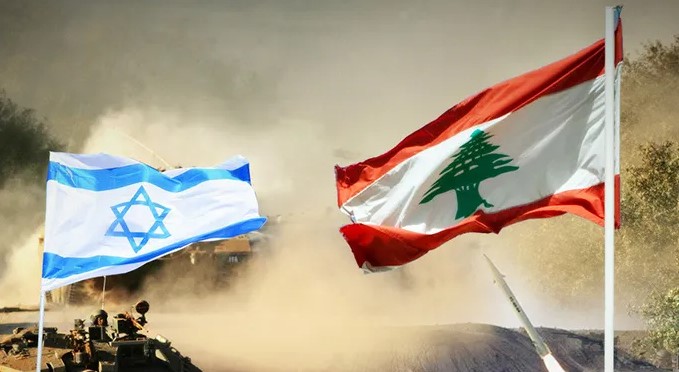
The Israeli state has conditioned the implementation of a ceasefire on a complete halt to hostilities by Hezbollah and the withdrawal of all its members from areas south of the Litani River.
Beirut and Tel Aviv have agreed to implement a ceasefire following a complex round of negotiations held in Washington. However, the agreement remains conditional upon a complete cessation of fighting by Hezbollah and the withdrawal of all its personnel from areas south of the Litani River, according to a joint Lebanese-American-Israeli statement released on Thursday.
The development comes after an unprecedented military escalation and following threats by Israeli Prime Minister Benjamin Netanyahu to target Beirut’s southern suburbs before reportedly stepping back from that position under pressure from U.S. President Donald Trump.
The Lebanese National News Agency published the statement, which noted that “the United States hosted the fourth high-level trilateral meeting between representatives of Israel and Lebanon on June 2 and 3, 2026.”
Under U.S. guidance, the Lebanese and Israeli sides agreed “to accelerate the establishment of pilot zones in which the Lebanese Armed Forces will exercise exclusive control over territory, excluding all non-state armed actors.”
The statement added that “these steps could pave the way for progress toward a comprehensive peace and security agreement.” It further emphasized that all parties agreed that the future relationship between Israel and Lebanon should be determined exclusively by the sovereign governments of the two countries. They rejected any attempt by a state or non-state actor to control Lebanon’s future or impose guardianship over it, in what was widely interpreted as a reference to Iran and its ally Hezbollah, which has expressed opposition to negotiations.
Israel and Lebanon affirmed that they hold no hostile intentions toward one another and committed themselves to continuing direct negotiations aimed at building confidence, resolving outstanding issues, and working toward a comprehensive agreement between the two countries.
The delegations discussed a security framework based on talks held at the United States Department of Defense on May 29. The framework seeks to ensure the long-term sovereignty, security, and territorial integrity of both Lebanon and Israel and includes provisions for dismantling non-state armed groups and preventing their future reconstitution.
Despite the agreement, Israeli Defense Minister Israel Katz stated on Thursday that Israel would continue its ground operations in southern Lebanon for the time being and that residents displaced during the conflict would not yet be permitted to return to their homes.
In a statement, he said that Israeli forces would remain in what Israel describes as a security zone in southern Lebanon, including the area surrounding Beaufort Castle, a 900-year-old fortress captured by Israeli forces on Saturday. He added that Israel would continue dismantling what it describes as terrorist infrastructure in the area and would retain, with U.S. support, the freedom to act against Beirut in response to attacks targeting Israeli territory.
Meanwhile, the Israeli military stated that combat operations remain ongoing in southern Lebanon and warned Lebanese civilians against returning to villages in the region while military operations continue.
All parties also condemned Iranian attacks against countries in the region, as well as ongoing Iranian activities that they argue undermine Middle Eastern stability, whether through support for proxy groups or other hostile actions.
The United States reaffirmed its continued support for both governments in exercising their sovereignty. Washington emphasized that any agreement to end hostilities must be reached directly between the two governments under U.S. sponsorship rather than through any separate channel.
The United States also reiterated its commitment to supporting the Lebanese Armed Forces in order to strengthen their capabilities and enable them to exercise effective state authority throughout Lebanese territory.
The statement referred to remarks made by U.S. Secretary of State Marco Rubio on June 2, in which he stated that Hezbollah is not only an adversary of Israel and the United States but also of Lebanon itself.
Israel, for its part, asserted that its security and territorial integrity can only be guaranteed through the disarmament of Hezbollah and the dismantling of its infrastructure across Lebanon. It stressed the importance of direct negotiations under U.S. mediation to address all outstanding issues and achieve lasting peace and security.
Lebanon, meanwhile, emphasized the necessity of mutual respect for internationally recognized borders and the urgent need for the full implementation of the ceasefire agreement, while reaffirming the principles of territorial unity and full state sovereignty. Beirut also committed itself to strengthening the Lebanese Armed Forces, with U.S. support, to enable them to exercise effective control throughout the country.
The statement concluded by announcing that both parties had agreed to resume political and security negotiations during the week beginning on June 22 with the aim of reaching a comprehensive agreement. The United States also agreed to continue facilitating communication between the two sides during the transitional period.
Commenting on the agreement, U.S. President Donald Trump stated that his administration had established a “first contact” with officials from Hezbollah and that an understanding had been reached to halt exchanges of fire between the group and Israel.
Speaking to reporters at the White House following the signing of an executive order in the Oval Office, he said that he had managed to “bring the situation under control” while emphasizing that diplomatic efforts in the region remain ongoing.
He added: “We actually spoke with Hezbollah for the first time. They agreed yesterday not to fire, and Israel will not fire at them either,” explaining that the mutual understanding involved both sides refraining from attacks against one another, although he provided no further details regarding the nature of the contacts or who conducted them.
Since March 2, Israel has conducted a large-scale military campaign in Lebanon that, according to official figures, had resulted by Tuesday in 3,468 deaths and 10,577 injuries, while displacing more than one million people.
Israel also maintains control over several areas in southern Lebanon, some occupied for decades and others since the previous conflict of 2023–2024. During the current offensive, Israeli forces advanced approximately ten kilometers beyond Lebanon’s southern border.