Houthis Force Washington to Divide Its Military Resources Between Two Fronts
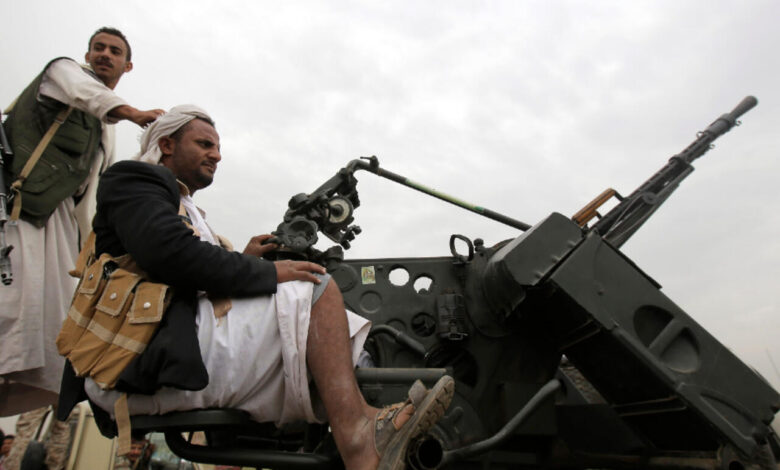
Countering the threat in the Red Sea would require the redeployment of U.S. warships from the Gulf to areas closer to Yemen, enabling the U.S. military to conduct operations against the militants and intercept Houthi missiles.
Current and former U.S. officials expect the Houthis’ threat to impose a maritime blockade on Saudi Arabia in the Red Sea to significantly expand the scope of the war with Iran and place additional pressure on the U.S. military, which is already focused on stopping Tehran’s attacks in the region. This is precisely the situation Iran is counting on to ease the pressure it is facing.
-
The Erosion of Deterrence in Yemen: How Riyadh’s Conciliatory Strategy Strengthened the Houthis at the Expense of Its Southern Allies
-
Sen. Chris Murphy: Saudi Arabia’s Yemen Policy Strengthened the Houthis at the Expense of Its Allies
The Iranian-aligned Yemeni Houthis said on Monday that they would not allow ships to load or unload cargo at Saudi ports. Such a move could disrupt the kingdom’s oil exports and remove an additional 7% of the world’s crude oil supply from the global market.
Saudi Arabia, which hosts U.S. forces, has not so far requested any military assistance from Washington. However, Donald Trump indicated on Tuesday that any move by the group to disrupt shipping in the Red Sea, a vital corridor for global trade, could prompt the United States to intervene.
Trump told reporters: « If something like that happens, we will deal with it. We have done that with the Houthis before. »
-
The Unity of Yemen’s Tribes Exposes the Houthis’ Isolation
-
Deaths in clashes between the Houthis and the army in Yemen’s Saada undermine the fragile truce
For the U.S. military, however, the situation may not be so straightforward. The Houthis have earned a reputation as experienced and highly mobile fighters who have managed to withstand previous Saudi and U.S. bombing campaigns. Confronting them would drain American resources that are already focused on fighting Iran and maintaining the U.S. blockade of Iranian ports in the Gulf.
Jason Campbell, a former senior official at the U.S. Department of Defense, the Pentagon, said: « You are going to have to divide your resources, which are undeniably substantial, across two active fronts in the region. »
Campbell, who currently works at the Middle East Institute, added that countering the threat in the Red Sea could require moving U.S. warships from the Gulf to areas closer to Yemen, enabling the military to conduct operations against the militants and intercept Houthi missiles.
-
The Houthis expand the scope of surveillance against Yemenis: monitoring patients
-
The assassination by the Houthis of a tribal leader in Al-Jawf ignites a confrontation with the Dahm tribes
The possibility of the Houthis entering the conflict represents another example of the war’s continued evolution — a war that Trump initially described as a focused bombing campaign intended to force Iran to surrender. This development further exacerbates the political challenges facing the U.S. president.
If U.S. Navy ships and American aircraft were forced to begin shooting down Houthi drones and missiles, it could also worsen a situation that experts have already warned about: the depletion of U.S. stocks of ammunition and air-defense missiles.
The Houthis have demonstrated remarkable resilience over the years in the face of bombing campaigns by the Saudi-led Arab coalition, which unsuccessfully attempted to crush the mountain fighters who exercise de facto authority over much of Yemen. They have also withstood recent intensive U.S. bombing campaigns.
-
Houthis threaten escalation if attacks on Iran resume
-
The Unified System: the Houthis’ tool for spying on Yemenis
Michael Mulroy, who served as deputy assistant secretary of defense for Middle East affairs during Trump’s first term, said: « The Houthis have repeatedly demonstrated in the past both the capability and the willingness to disrupt shipping in the Red Sea and the Bab el-Mandeb Strait. »
Under the administration of former U.S. President Joe Biden, the United States launched airstrikes against Houthi targets in an effort to keep the vital Red Sea commercial corridor open. Trump intensified those efforts last year by bombing the Houthis, who had been firing on commercial vessels and U.S. warships off the coast of Yemen.
Experts believe that neither campaign succeeded in ending the group’s ability to threaten maritime traffic.
-
Hidden collusion with the Houthis: the record of the Muslim Brotherhood’s maneuvers from Taiz to the coast
-
Political analyst: The Houthis are dragging Yemen into regional conflicts and pushing the country toward greater isolation
However, the two-month operation carried out last year required significant U.S. firepower. It involved two aircraft carriers and other warships, fighter aircraft, and strategic aircraft such as B-2 bombers.
Officials say that although the U.S. military is the best-funded military in the world, it still faces resource constraints, as many of the systems it would likely need in Yemen are currently being used in the war against Iran.
« We are already extremely busy, » one official said, noting that some warships had spent longer than usual at sea because of the rapid pace of operations, first in the Caribbean region and now in the Middle East.
-
The Houthis Align with Iran: Resumption of Attacks on Maritime Navigation
-
Domination through intimidation: the Houthis impose their ideology by force of arms
Deployments that last longer than expected place additional strain on military personnel. Ships also eventually need to return to port for maintenance.
More than 20 U.S. Navy warships and hundreds of American military aircraft are currently active in the Middle East. A second U.S. official said additional forces were heading to the region to assist in the conflict with Iran.
This could limit the resources available for a conflict near Yemen, which officials say would require substantial naval and air assets. It would also divert U.S. intelligence resources, given the need to determine the Houthis’ capabilities, which may have changed since last year.
-
Strangling the arms… 2025 breaks the Houthis’ weapons smuggling network
-
A human rights report exposes the secret collusion between Yemen’s Brotherhood and the Houthis against the South
Mark Cancian, a retired U.S. Marine Corps officer who works at the Center for Strategic and International Studies, agreed that opening a second front in the Red Sea would place a significant burden on U.S. naval forces.
However, he added that the Houthis would also face challenges in securing supplies because of the ongoing blockade imposed on Iran, the group’s primary backer.
Cancian said: « The U.S. blockade is not 100% effective, but it is highly effective. As a result, the Houthis may face severe pressure that could prevent them from sustaining their campaign for an extended period. »
-
The Houthis escalate by detaining more UN staff
-
South Yemen Unifies Its Ranks Against the Houthis: Securing the Rear Before Moving Toward Sanaa