Israel Negotiates with the United States Over Maintaining Its Forces in Lebanon
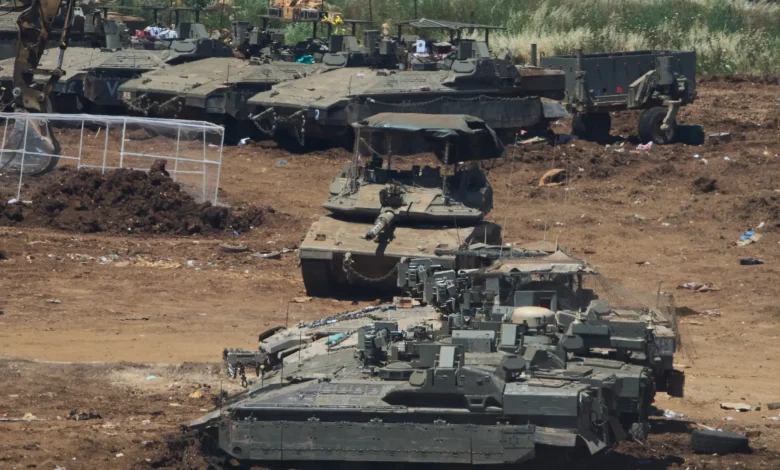
The Israeli military is urging the government to preserve its freedom to conduct operations throughout Lebanon, maintain a buffer zone, and pursue the disarmament of Hezbollah.
A senior Israeli official close to Prime Minister Benjamin Netanyahu stated that Israel is engaged in “difficult negotiations” with the United States regarding the continued deployment of Israeli forces in southern Lebanon. The discussions come after U.S. President Donald Trump warned the Israeli government against escalation following a peace agreement with Tehran that included a halt to military operations on the Lebanese front.
-
Israel Prepares to Halt Its Advance in Southern Lebanon
-
For $350 Million: Israel Prepares for Its Largest West Bank Settlement Expansion in Years
The official added that Israel has no intention of retreating from its positions. Meanwhile, the Israeli military has reportedly asked the government to preserve its freedom to carry out strikes throughout Lebanese territory, maintain a security buffer zone, and continue efforts aimed at disarming Hezbollah.
The Israeli newspaper Yedioth Ahronoth reported that the military had sent an important message to the political leadership regarding military operations in Lebanon, stressing that “the army demands the preservation of its freedom of action throughout all Lebanese territory.”
Recently, Benjamin Netanyahu announced that the military would continue occupying what he described as a “security buffer zone” in southern Lebanon. Regarding weapons, Hezbollah has repeatedly reaffirmed its commitment to retaining its arsenal, describing itself as a “resistance movement” against Israeli occupation.
-
Reserve Call-Up and Front Reinforcements: Israeli Plans to Expand the Confrontation with Iran
-
Conditional Ceasefire Agreement Between Lebanon and Israel
According to the newspaper, the recent halt in Israeli strikes deep inside Lebanon stems from “the absence of clear instructions from the political leadership; the military does not know what is permitted and what is prohibited.” The paper argued that the situation in southern Lebanon has become “ambiguous and highly complex” for the Israeli military since Trump announced on Wednesday the signing of an agreement with Iran.
The report further noted that considerable uncertainty prevails within the Israeli military regarding the future of its forces operating in southern Lebanon.
Israel maintains control over several areas in southern Lebanon, some of which have been occupied for decades and others since the conflict that took place between 2023 and 2024. During the current offensive, Israeli forces reportedly advanced more than ten kilometers into Lebanese territory.
-
Peace Between Lebanon and Israel: Progress in Negotiations as the United States Identifies the Only Obstacle
-
Israel Continues Strikes on Lebanon as a New Round of Negotiations Looms
According to figures released by the Lebanese Ministry of Health, Israel’s large-scale offensive against Lebanon resulted in 3,884 deaths and 11,856 injuries, while displacing more than one million people.
In an unusual move, Donald Trump recently criticized Israel, stating that it was “behaving badly in Lebanon.” Referring to Netanyahu, the U.S. president remarked: “We have some disagreements regarding Lebanon. I tell Bibi that he can be calmer; there is no need to destroy a building every time a Hezbollah member enters it.”
In recent months, Washington has hosted several rounds of negotiations between Lebanon and Israel as part of a process aimed at reaching agreements on disputed issues between the two sides.
-
Escalation Continues Between Hezbollah and Israel Despite a U.S. Proposal for De-escalation
-
New U.S. Plan to Contain Escalation Between Israel and Lebanon
Numerous Israeli analysts and media outlets have strongly criticized the memorandum of understanding between Washington and Tehran, arguing that it contradicts Tel Aviv’s interests. Some have even described it as an American “memorandum of surrender.”
Netanyahu has also faced sharp criticism, particularly after stating that he was unaware of the details of the agreement. The opposition accuses him of failure and dishonesty, arguing that the American president “humiliated” him and excluded him from the negotiations.
Since 2024, the Israeli prime minister has also been sought for appearance before the International Criminal Court on allegations of war crimes and crimes against humanity committed against Palestinians in the Gaza Strip during the conflict launched by Israel with American support in 2023.
Israel and the United States launched a war against Iran on February 28, which, according to Tehran, resulted in more than three thousand deaths. Iran subsequently responded with attacks that reportedly killed both Israeli and American citizens.
-
Israel Expands Operations in Southern Lebanon in Preparation for Occupying New Areas
-
A Defense Bill Passes Quietly… Toward an Unprecedented U.S.-Israeli Military Integration
-
Israel Rejects Any U.S.-Iran Agreement That Restricts Its Operations in Lebanon
-
Israel Expands Its Aerial Refueling Fleet for Deeper Missions, With Iran and Yemen in Focus