Mali’s Timbuktu Between Bullets and Siege: Darkness and Thirst in the City of the 333 Saints
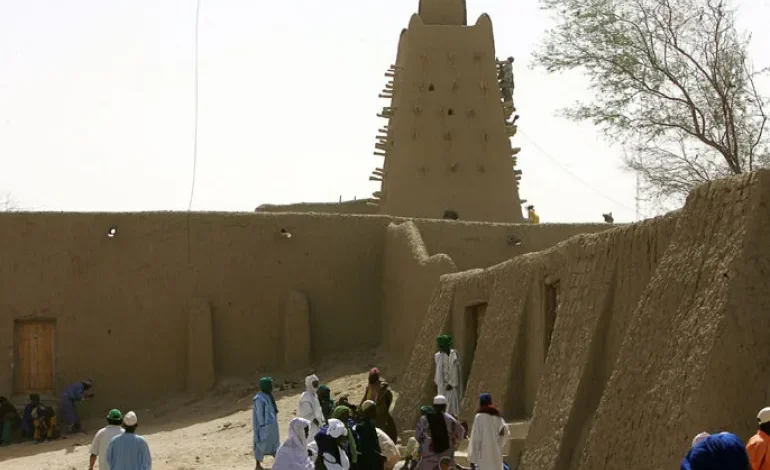
For the past fifteen years, Timbuktu has turned the page on its once vibrant and thriving past, becoming an almost deserted city where terrorist groups besiege its streets, sever its lifelines, and severely restrict the daily lives of its residents.
The city, which only a few years ago attracted tourists eager to visit its historic mosques and mausoleums, appears to have bid farewell to every sign of life almost overnight. It has gradually become little more than a populated settlement whose inhabitants endure the same recurring hardship day after day.
Timbuktu is one of several major cities in northern Mali that were initially seized by Tuareg rebels before falling under the control of Islamist extremists following the country’s political and security crisis in 2012. The Malian army later recaptured the city, only for it to once again come under the influence of Jama’at Nusrat al-Islam wal-Muslimin (JNIM), an Al-Qaeda-affiliated terrorist organization.
As a result of these successive crises, the “City of the 333 Saints” and the “Pearl of the Desert,” as it is often called, has lost its former splendor. Today, it is trapped between sporadic gunfire and a suffocating siege that blocks fuel supplies, worsening the suffering of residents who now face both darkness and severe water shortages.
Timbuktu is known as the “City of the 333 Saints” because it is home to the tombs of 333 renowned Islamic scholars and Sufi masters who lived in the region and played a central role in spreading Islam.
Darkness and Thirst
According to Radio France Internationale (RFI), the residents of Timbuktu are facing a severe humanitarian crisis. Since last Tuesday, the city has been without electricity and running water due to a shortage of fuel. Petrol stations have been empty for nearly a month, while even the black market is experiencing an increasing lack of supplies.
One resident told RFI in a subdued yet angry voice: “Temperatures exceed 40 degrees Celsius, and we have had neither water nor electricity since Tuesday.”
According to several sources interviewed by Radio France Internationale, the city’s thermal power plant has completely ceased operations, preventing the public electricity grid and drinking water infrastructure from functioning.
A few wells remain accessible to residents, most of which were built by non-governmental organizations, but they are in constant use.
One woman explained: “We have to stand in line for hours and walk long distances carrying our buckets.” She added, “The suffering is beyond description.”
Another resident stated: “The health situation is horrific.” Nevertheless, the city’s hospital continues to operate thanks to solar energy and backup generators.
When contacted by Radio France Internationale, both the governor’s office and the Special Delegation—which serves as the municipal authority in the absence of elections—declined to comment.
Al-Qaeda’s Siege
Residents interviewed in Timbuktu unanimously agreed that “the entire crisis stems from the fuel shortage,” resulting from the blockade imposed since last September by Jama’at Nusrat al-Islam wal-Muslimin (JNIM), an Al-Qaeda-affiliated terrorist group, whose siege primarily affects the civilian population.
According to eyewitness accounts, fuel stations throughout Timbuktu have been completely empty for approximately one month.
Until recently, the city was still able to obtain fuel through the black market. Traders regularly travelled to a neighboring country to purchase gasoline, but many have stopped making the journey for fear of terrorist ambushes along the roads.
As a consequence, gasoline has become extremely scarce, even on the black market, where one litre now sells for between 2,500 and 3,000 CFA francs, compared with the official price of 875 CFA francs—roughly three times the official rate.
Many residents of Timbuktu say: “People now travel on foot, they are suffering, and public morale has reached an all-time low.”
In a statement released on Thursday afternoon, the Special Delegation of the Municipality of Timbuktu announced the launch of a “special drinking water distribution campaign” in cooperation with the Civil Protection Service.
The statement explained that the initiative aims to “alleviate the hardships faced by the population and ensure a minimum level of access to drinking water until the situation improves on a lasting basis.”