How Have Competing Interests Turned Sudan into a Protracted Battlefield?
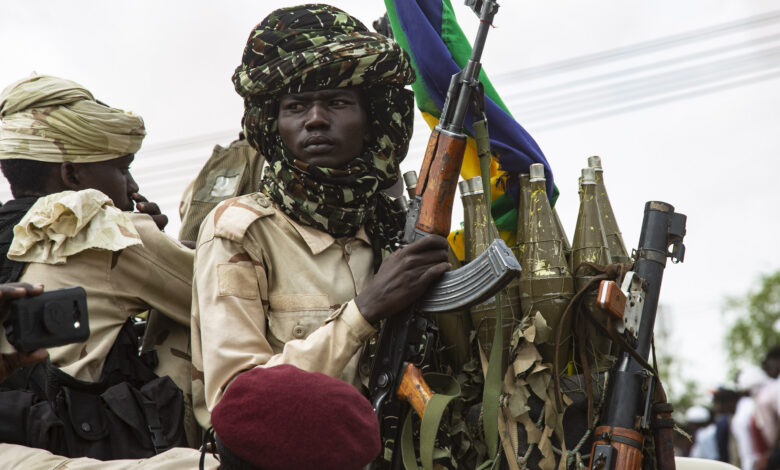
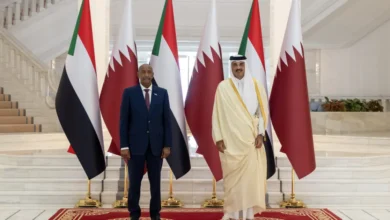
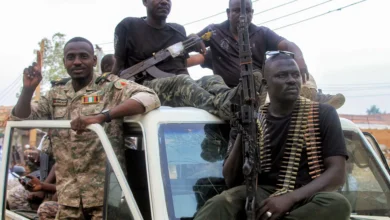
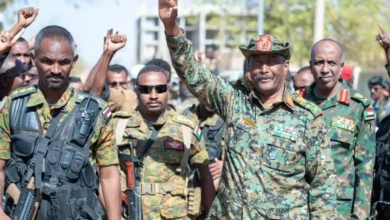
The Sudanese crisis has become increasingly intertwined since the outbreak of armed conflict in April 2023 between the Sudanese Armed Forces (SAF) and the Rapid Support Forces (RSF). This escalation was not solely the result of domestic factors; rather, it emerged from years of accumulated tensions and regional interventions that shaped Sudan’s political and military landscape.
-
Sudanese Army Issues New Decision Banning Recruitment Operations for Allied Armed Movements
-
Armed Forces and Militant Movements Supporting the Sudanese Army Sign Transitional Document
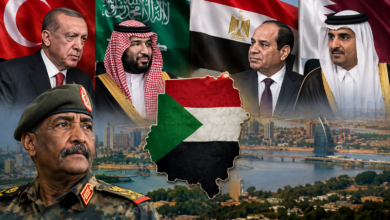
Egypt, Saudi Arabia, Turkey, and Qatar have all been influential actors in this context, with each country pursuing its own agenda, geopolitical interests, and security concerns. This multiplicity of regional actors has not contributed to stability. Instead, it has complicated domestic political calculations, encouraged military solutions at the expense of political settlements, and transformed Sudan into a battleground for regional proxy competition, thereby prolonging the conflict.
The Multiplicity of Regional Roles: Intersecting Interests and the Creation of a Complex Landscape
The extensive and simultaneous intervention of regional powers in Sudanese affairs has created an exceptionally fluid and complex political environment. The crisis is no longer merely a power struggle between two generals; it has evolved into a multifaceted international equation involving several regional stakeholders.
-
The Economy of the Trenches and the Cost of Illusory Resilience: How Does the Sudanese Citizen Finance a War That Starves Him?
-
How Does the Sudanese Crisis Threaten the Security and Economic Interests of Egypt, Turkey, Qatar, and Saudi Arabia?
The Egyptian Axis
Egypt regards Sudan as an indivisible strategic security depth. Consequently, it prioritises supporting the national army, considering it the sole guarantor of stability along Egypt’s southern border and the protector of its water security, particularly in relation to the Grand Ethiopian Renaissance Dam (GERD).
The Saudi Axis
Saudi Arabia approaches the crisis from a security perspective centred on safeguarding the Red Sea and limiting Iranian or Turkish influence in the region. Its policy has fluctuated between leading mediation initiatives and maintaining communication with both warring parties in order to preserve its long-term regional influence.
-
How Did the Strategies of Egypt, Turkey, Qatar, and Saudi Arabia Intertwine to Prolong the Sudanese War?
-
The Interconnection of Regional Interests and Its Impact on Prolonging the Sudanese Crisis
The Qatari-Turkish Axis
Historically and during different periods, Qatar and Turkey have sought to strengthen their political and economic leverage through agricultural and logistical investments in eastern Sudan. They have also supported political forces associated with the Islamist movement and traditional political factions to secure a lasting foothold within Sudan.
These fundamentally different strategic approaches have made it extremely difficult to formulate a unified regional vision. Every initiative undertaken by one regional capital has been interpreted by the others as a threat to their own interests, transferring regional polarisation directly into Sudan’s decision-making institutions.
-
Restructuring loyalties: the Sudanese army legalizes the Al-Baraa ibn Malik brigades under the umbrella of the Sudan Shield to deflect international pressure
-
Under the cover of the Sudanese army: the return of the parallel state through Kikal’s gate
The Impact of Indirect Support and Interventions on the Course of the Conflict
Regional support for Sudanese actors has often remained unofficial, taking indirect forms through diplomatic, economic, and intelligence channels. This has continuously disrupted the internal balance of the conflict.
Diplomatic Influence and Political Backing
The Sudanese Armed Forces have received firm diplomatic support from Egypt in African and international forums, where they have been recognised as the legitimate representative of the Sudanese state. This backing has strengthened the army’s political resilience and enabled it to resist certain international pressures.
-
Money for the rifle: the behind-the-scenes recruitment of foreign fighters in the Sudanese war
-
Reports reveal the Sudanese army’s shift toward recruiting foreign fighters to compensate for manpower shortages
Indirect Financial and Logistical Support
Financial flows and previous investments from Qatar and Turkey have provided indirect economic support networks for political and military elites affiliated with the former regime. Many of these figures subsequently became involved in supporting the army’s military campaign.
Fluctuating Political Positions
By sponsoring the Jeddah Platform, Saudi Arabia attempted to maintain a balanced position. However, its continued communication with the Rapid Support Forces during certain stages of the conflict granted them indirect political recognition, thereby weakening the prospect of resolving the conflict in favour of Sudan’s official state institutions.
-
The Sudanese army between attrition and restructuring: an in-depth reading of the strategy of naturalization in exchange for fighting
-
Naturalization in exchange for fighting: how the Sudanese army is filling its manpower gap with fighters from South Sudan
This indirect economic and military involvement convinced both the Sudanese Armed Forces and the Rapid Support Forces that they were not isolated and that each possessed reliable regional backing. Consequently, the incentives for engaging seriously in peace negotiations were significantly reduced.
Reshaping the Balance of Power and Redrawing Sudan’s Internal Sphere of Influence
Regional interventions have fundamentally reshaped alliances and rivalries within Sudanese society and state institutions, contributing to the country’s division into informal spheres of influence.
Egyptian Alignment in Northern Sudan
Egyptian influence has become firmly established across northern and eastern Sudan, where the national army and its allied political groups enjoy strong support from Cairo. These areas increasingly appear protected by shared cross-border strategic interests.
-
The Attorney General referred a Sudanese network to the State Security Chamber in a case involving trafficking in military equipment
-
A wave of condemnations has intensified following a drone attack attributed to the Sudanese army that reportedly targeted civilians
Polarisation in Darfur and Kordofan
Conversely, other regional actors have exploited regional dynamics to strengthen the Rapid Support Forces’ influence across western Sudan. By benefiting from logistical supply routes extending across neighbouring borders, they have contributed to severe geographical and political fragmentation.
Reviving Turkish and Qatari Strategic Ambitions
Turkey’s longstanding investments on Suakin Island, alongside Qatar’s economic presence in agriculture and infrastructure, have revived the ambitions of several domestic political actors, particularly Islamist groups, which perceive both countries as potential strategic partners capable of ensuring their political survival. This has deepened ideological and political divisions among Sudanese factions while further undermining prospects for civilian consensus.
-
Field reports accuse the Sudanese army of carrying out a drone attack against civilians in Kutum amid calls for an international investigation
-
Direct accusations have been made against the Sudanese army for carrying out a drone attack on a wedding celebration in Kutum, resulting in dozens of deaths
The Conflict’s Regional and International Security Implications
The consequences of Sudan’s war have extended far beyond its national borders, threatening stability throughout the Horn of Africa and the Middle East while creating serious international security challenges.
A Catastrophic Refugee Crisis
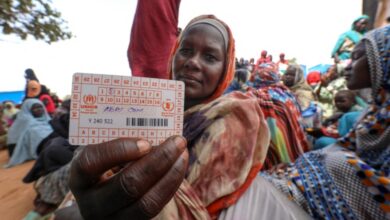
Massive waves of refugees have fled towards Egypt, Chad, and South Sudan. Egypt alone has received hundreds of thousands of displaced Sudanese, placing enormous economic and social pressure on its infrastructure and transforming the humanitarian crisis into a source of political leverage.
-
The Sudanese army’s bombardment in Kutum opens an investigative inquiry into the targeting of a wedding ceremony and allegations of a catastrophic error in North Darfur
-
Hidden networks of influence in the Sudanese war
Threats to Maritime Security in the Red Sea
Sudan’s coastline represents a strategically vital defensive and geopolitical zone for both Egypt and Saudi Arabia. Continued instability raises the likelihood of increased piracy, arms smuggling, and the expansion of extremist groups, threatening international trade routes passing through the Suez Canal and the Bab el-Mandeb Strait. This explains Saudi Arabia’s intensive diplomatic efforts to contain the crisis, despite achieving only limited success.
Destabilisation of the Horn of Africa
The Sudanese crisis has intensified geopolitical rivalries among neighbouring states, particularly Ethiopia, Eritrea, and Chad. Each has sought to align itself with one Sudanese faction or another based on its broader relationships with major regional powers such as Egypt and Saudi Arabia, increasing the risk of a wider cross-border regional conflict.
Challenges Facing the International Political Process and the Dilemma of Mediation Efforts
Regional competition has created formidable obstacles to the success of international diplomatic initiatives aimed at ending the war.
-
Impunity reproduces the crime: America faces the Sudanese army’s chemical warfare
-
Forced deportation campaigns against Sudanese refugees and violations of international human rights law
Multiple Negotiation Platforms and Poor Coordination
Diplomatic efforts have been fragmented among the Jeddah Platform, jointly sponsored by Saudi Arabia and the United States, initiatives led by the Intergovernmental Authority on Development (IGAD), the African Union, and conferences hosted in Cairo. This multiplicity of mediation frameworks has enabled Sudanese actors to engage in “forum shopping,” moving from one negotiation platform to another to gain time and avoid making meaningful concessions.
Conflicting Agendas and Irreconcilable Red Lines
Egypt firmly opposes any settlement that grants the Rapid Support Forces a military or political status equal to that of the national army. Saudi Arabia, meanwhile, seeks a compromise formula capable of safeguarding its regional influence and ensuring the security of the Red Sea, regardless of Sudan’s internal political arrangements. At the same time, other regional actors fear that indirect Turkish or Qatari mediation could facilitate the political resurgence of forces associated with the former regime, creating mutually reinforcing vetoes that continue to obstruct any comprehensive peace agreement.
-
Al-Burhan and the dismantling of old alliances: toward a centralized authority without a democratic bloc or armed movements
-
What happened in Al-Jazirah State: an extensive investigation documents “atrocious crimes” by the Sudanese army
The Absence of Effective Accountability Mechanisms
Because regional states continue to provide political and economic protection to their respective Sudanese allies, international pressure—particularly from the United States and European countries—has lacked genuine coercive power. The warring parties have therefore believed that international sanctions can be circumvented through their regional networks of political and economic support.
The Sudanese case clearly demonstrates how uncoordinated regional interventions can transform a potentially manageable domestic political crisis into a prolonged war of attrition threatening the state’s very existence. The strategic calculations of Cairo, Riyadh, Ankara, and Doha have provided the competing factions with the political legitimacy and material resources necessary to sustain the conflict. As a result, for Sudan’s military leaders, the cost of continuing the war has become lower than the political cost of pursuing genuine peace, leaving the Sudanese people alone to bear the devastating consequences of this regional struggle fought on their own territory.
-
The Threads of Crime in the Sudanese War: An Investigative Report on How the Tragedy Was Orchestrated Behind the Scenes
-
The Sudanese Army: From National Institution to Killing Machine – Reading the Massacres of El-Fasher