Why Is North Korea Determined to Expand Its Nuclear Arsenal?
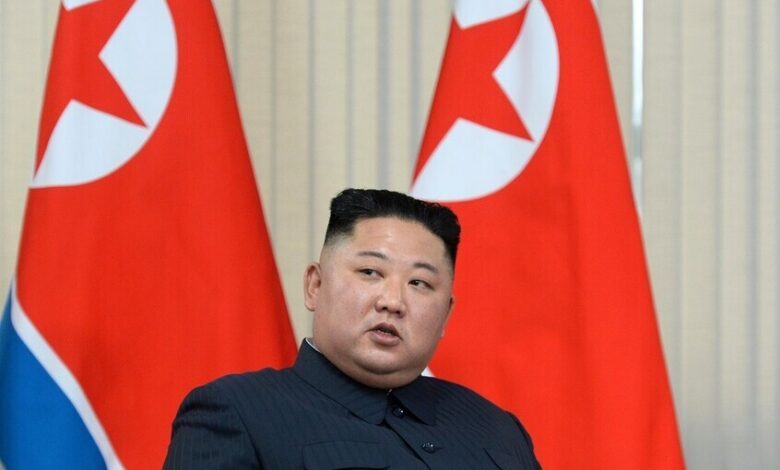
North Korea continues to raise numerous questions about the reasons behind its persistent efforts to build an increasingly large nuclear arsenal.
At the ruling Workers’ Party meeting, which concluded this week, North Korean leader Kim Jong-un stated that the steady expansion of his country’s nuclear forces is “the best and only path” for dealing with an increasingly unstable world, citing what he described as growing threats from the United States and its allies.
-
From Schools to Cyberwarfare: How Kim Jong-un Trains His Hackers
-
Ahead of Xi’s Visit, Kim Strengthens Naval Nuclear Deterrence and Secret Weapons
These remarks are the latest in a series of recent statements from North Korea, during which the leader pledged to equip warships with nuclear missiles, double the production of nuclear weapons, and expand the country’s nuclear arsenal at an accelerated pace.
According to The Guardian, the conflict involving Iran has reinforced North Korea’s belief that nuclear weapons represent the only reliable guarantee of national security.
The newspaper noted that North Korea frequently exaggerates the strength of its military capabilities. However, behind the increasingly assertive rhetoric, analysts argue that the key question is no longer whether Pyongyang possesses nuclear weapons, but why it believes it needs such a vast stockpile.
-
Rare Visit to a Close Ally: Xi to Be Hosted by Kim After Seven Years
-
Lessons from the war in Ukraine… Kim calls for raising the readiness of the North Korean army
In this context, Peter Ward, a researcher at the Sejong Institute in Seoul, believes that North Korea uses the dispersion of its arsenal as a safeguard against any external intervention.
According to Ward, North Korea’s arsenal is so extensive and widely dispersed that no single strike could eliminate it entirely, while dismantling it through diplomatic means is becoming increasingly difficult.
He added: “We do not know where all of these weapons are located. We also do not know what they might do. Their threats are deliberately ambiguous.”
Recent U.S. strikes against Iran have reinforced a lesson that North Korea learned long ago: countries that do not possess a fully operational nuclear arsenal make themselves vulnerable to attack rather than achieving effective deterrence, according to The Guardian.
-
Naval nuclear capabilities… Kim inspects a destroyer and supervises a missile test amid the war with Iran
-
Capable of wiping out the enemy… Kim showcases new rocket launchers
Conversely, Ward emphasized that a state remaining on the threshold of nuclear capability faces significant risks.
North Korea’s arsenal, designed to survive a first strike, includes mobile launch platforms operating on railways and roads, heavily fortified underground facilities, and a growing submarine fleet.
This year, North Korea began testing cruise missiles capable of carrying nuclear warheads from a new 5,000-ton destroyer.
On Wednesday, Kim Jong-un also pledged to build two additional warships annually over the next five years.
Analysts believe that Pyongyang considers a much larger arsenal necessary to counter the scale and complexity of the forces aligned against it.
-
An unbreakable friendship and heroic soldiers… Putin’s New Year message to Kim
-
Back from Russia: Kim welcomes his troops and praises their loyalty
Hong Min, a senior researcher at the state-funded Korea Institute for National Unification, stated that “Pyongyang faces the U.S. nuclear umbrella, the combined U.S.–South Korean military forces, and trilateral cooperation involving Japan.”
At present, nuclear weapons have become an integral part of the country’s constitution. An amendment adopted earlier this year granted Kim Jong-un constitutional command of the nuclear forces, along with the authority to delegate launch powers to a separate command structure, a move that analysts interpret as protection against a decapitation strike targeting the leadership.
Lee Ho-ryeong, a senior researcher at the Korea Institute for Defense Analyses, explained that Pyongyang has been seeking to establish the idea that denuclearization is no longer applicable to North Korea and to build a level of capability that would compel Washington to take the matter seriously.
She added: “From their perspective, this is not an issue that can currently be reduced or resolved through negotiations.”
-
With Putin and Kim in Attendance… China Unveils the American Ship Killer
-
Kim withdraws his troops from Ukraine… a symbolic gesture or a strategic shift?
-
Amid Peace Efforts… Kim Praises North Korean Soldiers in the Ukraine War