Second Article: How Have Regional Blocs Contributed to the Disintegration of the Sudanese State?
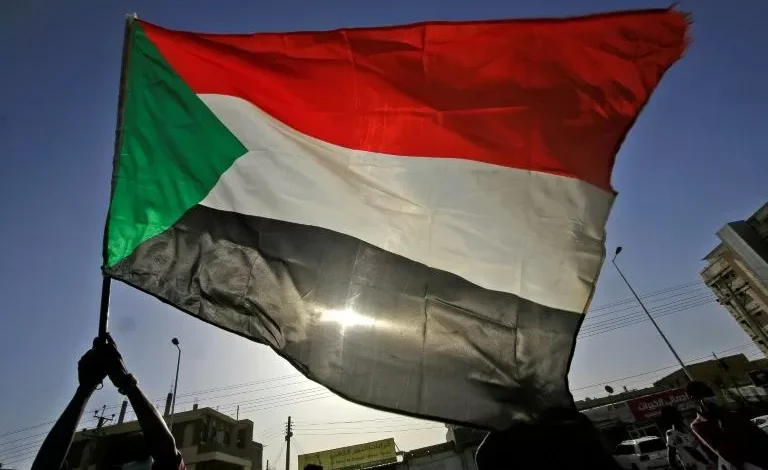
The ongoing war in Sudan represents a striking example of modern-day regional proxy warfare. The country, which occupies a strategic position linking the Arab world with continental Africa and overlooks some of the world’s most important maritime routes, has become a magnet for foreign intervention.
-
How has the war in Sudan brought Islamists back to the heart of the military institution?
-
From the Heart of the War in Sudan: Harrowing Testimonies of Women Subjected to Sexual Violence by the Army
Egypt, the Kingdom of Saudi Arabia, Turkey, and Qatar have emerged as decisive actors in shaping the course of the war and ensuring its continuation. An examination of these interventions reveals a dangerous pattern of policies that have not merely complicated the crisis but have also, consciously or unconsciously, contributed to dismantling the Sudanese state, destroying its institutions, and transforming the conflict from a limited military confrontation into a full-scale war threatening the country’s national identity and territorial integrity.
The Multiplicity of Regional Roles: Competition for Geopolitical Influence in Sudan
The Sudanese landscape is characterised by the presence of numerous external actors whose vital interests conflict with one another, preventing the formation of a united front capable of imposing peace.
-
Moussa Hilal Adds to Complications of War in Sudan
-
Al-Burhan declares his rejection of external mediation to stop the war in Sudan
Egypt and the Pursuit of Strategic Stability: Cairo considers any threat to the Sudanese Armed Forces to be a direct threat to Egypt’s national security. For Egypt, Sudan is not merely a neighbouring country; it represents a strategic defensive depth and a vital ally in the long-standing dispute over the waters of the Nile, as well as in securing the border against terrorist infiltration. This perception has led Egypt to align itself fully with the military establishment.
Saudi Arabia and the Ambition for Maritime Leadership: Riyadh views Sudan through the lens of its ambitious economic and security vision for the Red Sea. Saudi Arabia seeks to take the lead in the peace process through conference diplomacy while maintaining a delicate balance in its relations with the Rapid Support Forces, which had previously participated in the Yemen war under the Saudi-led coalition.
-
War in Sudan: Al-Burhan seeks assistance from former Military leaders of the al-Bashir regime
-
The Islamic Brigades and Their Role in Igniting the War in Sudan… Details
Turkey, Qatar, and Their Ideological and Economic Legacy: Ankara and Doha possess a substantial legacy of relations with Sudan, particularly during the era of President Omar al-Bashir. Both countries seek to preserve their economic and strategic influence—particularly Turkey’s ambition in the Red Sea through logistical investment—while ensuring the continued presence of traditional political and civilian forces aligned with them, so as to prevent the Egyptian-Saudi axis from monopolising decision-making in Sudan.
This competitive environment has created a situation in which Sudan has become incapable of acting independently. Political and military decisions in Khartoum and Port Sudan have become closely tied to the strategic calculations of the four regional capitals.
-
The United Nations warns of a comprehensive civil war in Sudan
-
Behind the Scenes of the Pre-War in Sudan: How Did al-Burhan and Hemeti Reach the Point of No Return?
The Impact of Indirect Support and Interventions in Fueling the Conflict
Regional interventions were not necessarily intended to ignite the conflict. However, the manner in which indirect political, economic, and diplomatic support was provided contributed to prolonging the war by preventing either a decisive military defeat or the achievement of a fair political settlement.
Egypt’s Diplomatic Cover to Legitimise the Sudanese Army‘s Actions: This diplomatic backing helped ease African and international pressure aimed at imposing severe sanctions, allowing the military leadership to believe that it could continue military operations without fearing complete international isolation.
-
The Hidden Human Cost: How Corruption and the Militarization of the State Are Driving Sudan Toward Total Collapse
-
The Economy of the Trenches and the Cost of Illusory Resilience: How Does the Sudanese Citizen Finance a War That Starves Him?
Investments and Financial Support Networks Linked to Qatar and Turkey: Although these initiatives often took commercial or humanitarian forms, they helped provide essential resources for the wartime economy in areas under the army’s control and reinforced long-established networks of influence that viewed the continuation of the war as an opportunity to restore their former position.
Saudi Arabia’s Flexible Approach Towards the Rapid Support Forces: Saudi Arabia’s efforts to maintain a middle-ground position and host the Jeddah negotiations granted the Rapid Support Forces political legitimacy as a party equal to the state. The RSF military leadership exploited this implicit recognition to continue its territorial expansion, taking advantage of the slow pace of diplomatic initiatives and the regional reluctance to adopt firm positions against the violations attributed to the group.
-
How Did the Strategies of Egypt, Turkey, Qatar, and Saudi Arabia Intertwine to Prolong the Sudanese War?
-
The War Economy and the Port Sudan Authorities: War Efforts Consume Teachers’ Salaries and Accelerate Economic Decline
Reshaping the Balance of Power and Laying the Foundations for Geographical Division
Regional movements and alignments have contributed to creating a new reality on the ground in Sudan, reshaping the balance of military and social power in a manner that threatens the country’s unity.
The Creation of Spheres of Influence: Owing to sustained Egyptian logistical and political support, eastern and northern Sudan have become the principal strongholds of the government and the Sudanese Armed Forces. This has created a de facto administrative and political separation from the central and western regions of the country.
-
Sudan between war and the re-engineering of power: a political reading of the transformations within the military landscape
-
Money for the rifle: the behind-the-scenes recruitment of foreign fighters in the Sudanese war
Fueling Tribal Tensions and Alliances: The indirect regional support and communication from which both parties to the conflict benefited contributed to the militarisation of tribes and local communities. Feeling that each camp enjoyed the backing of a regional patron, local actors became increasingly drawn into intense tribal polarisation (between the Nile communities and the western groups), gradually transforming the conflict from a political-military confrontation into a destructive ethnic and communal civil war.
The Use of Economic Leverage to Foster Polarisation: Promises of future investments or financial assistance from various regional powers—whether for financing agricultural projects or rebuilding ports—were used as instruments of pressure to secure the loyalty of local community leaders and military commanders within Sudan. This weakened allegiance to the central state while strengthening loyalty to competing regional alliances.
-
Reports reveal the Sudanese army’s shift toward recruiting foreign fighters to compensate for manpower shortages
-
The Sudanese army’s bombing of Kutum reignites debate over targeting errors in the war and heightens fears of civilian targeting in Darfur
The Impact of the Conflict on Regional and International Security and the Regional Balance of Power
The Sudanese crisis demonstrates that the collapse of a country of Sudan’s strategic importance cannot be confined within its borders; rather, it carries serious strategic consequences for international collective security.
Exporting Humanitarian Crises and Pressuring Neighbouring States: The displacement of millions of people and cross-border refugee movements have placed enormous pressure on neighbouring countries that were already fragile. Egypt has faced growing security and economic challenges in accommodating refugees, while Sudan’s western and southern borders have become centres of instability affecting Chad, the Central African Republic, and South Sudan.
-
Al-Burhan versus the Islamists: a first step toward reshaping Sudan’s political landscape
-
The poisons of war extend to the environment… the Sudanese army turns residential areas into hubs of chemical pollution
The Militarisation of the Red Sea and the Loss of Control: Sudan’s eastern coastline is of vital strategic importance to Saudi Arabia, Egypt, and Turkey’s regional ambitions. The collapse of Sudan’s central authority along the coast creates opportunities for warlords to consolidate their control, while enabling terrorist organisations, organised crime networks, and human trafficking operations to expand, thereby threatening international navigation along one of the world’s most important commercial routes.
Threats to Arab Water Security: Instability in Sudan has completely paralysed Egyptian-Sudanese coordination regarding the Grand Ethiopian Renaissance Dam (GERD), weakening the Arab negotiating position and threatening Egypt’s water security. This demonstrates that poorly conceived interventions have ultimately undermined the national security of the intervening states themselves.
-
Hidden networks of influence in the Sudanese war
-
Sudan at the heart of the storm: a war fueled by interventions and the worsening humanitarian catastrophe
Challenges to the International Political Process and the Failure of Mediation Diplomacy
The multiplicity of regional actors and the contradiction of their interests constitute a major obstacle to any international political settlement, turning peace initiatives into yet another arena of competition.
Competition Between Regional Initiatives: The crisis has witnessed a silent rivalry between the Saudi-American initiative (the Jeddah Platform) and the Egyptian initiatives (the Conference of Sudan’s Neighbouring Countries), alongside efforts by the African Union and the Intergovernmental Authority on Development (IGAD). This competition fragmented international efforts and enabled the warring parties to exploit regional contradictions in order to evade their commitments.
-
Hidden networks of influence in the Sudanese war
-
Sudan at the heart of the storm: a war fueled by interventions and the worsening humanitarian catastrophe
The Lack of Mutual Trust Among Mediators: Cairo fears that mediation led by other regional capitals could produce an agreement granting influence along its southern border to forces perceived as uncontrollable, such as the Rapid Support Forces or certain political coalitions. Likewise, other regional actors remain suspicious of any exclusive Egyptian role that could lead to the re-establishment of an authoritarian military regime at the expense of their political allies. Consequently, the mediators themselves appear to require mediation in order to reconcile their own differences.
The Absence of Decisive International Will: The preoccupation of major international powers, particularly the United States and the European Union, with other global crises has left the Sudanese file vulnerable to regional rivalries. Since these regional powers have little interest in imposing a peace settlement that does not fully safeguard their own interests, the continuation of the war has effectively become the default option, sustained through multiple informal channels.
-
Sudan between internal bleeding and external pressures: the struggle for survival amid wars of influence
-
When technology reshapes wars: Sudan as a model of escalating proxy conflicts
An examination of regional policy towards Sudan reveals a profound tragedy. Egypt’s national security calculations, Saudi Arabia’s maritime ambitions, and the political and economic legacy of Turkey and Qatar have combined to create a destructive mixture that has undermined every opportunity for peace.
Continuing to provide unlimited support or justifying the actions of the conflicting parties in the name of protecting strategic interests will only accelerate Sudan’s transformation into a completely failed state—a scenario from which none of these regional actors will escape without suffering severe and far-reaching consequences.
-
Impunity reproduces the crime: America faces the Sudanese army’s chemical warfare
-
Ed-Daein Hospital massacre: escalating targeting of healthcare facilities in Sudan’s war
-
Bombing of Ed-Daein Hospital: military escalation raises fears of targeting healthcare facilities in Sudan’s war