Colombia Redraws Its Compass: Are the Rules of the Game on the Moroccan Sahara Issue About to Change?
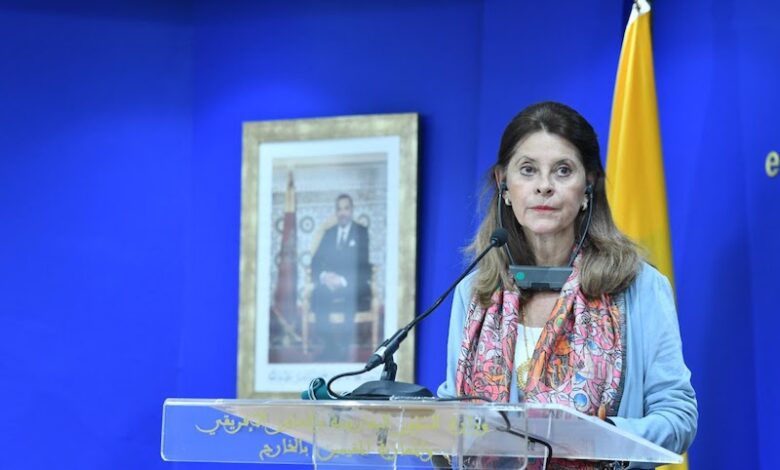
Abelardo de la Espriella’s victory in Colombia’s presidential election appears to mark the beginning of a quiet yet profound reshaping of political alignments across Latin America.
Abelardo de la Espriella’s victory in Colombia’s presidential election is more than an ordinary electoral outcome in a Latin American country. It appears to signal the beginning of a gradual but significant reconfiguration of political alignments across the continent, one whose consequences may extend beyond Colombia’s borders and influence several sensitive international issues that have long been shaped by ideological shifts in Bogotá.
-
Morocco Consolidates the Realism of the Solution: The UN Security Council Resolution Marks a Turning Point in the Moroccan Sahara Issue
-
From Backroom Diplomacy to the Voting Floor: How Morocco Won the UN Security Council Battle Over the Moroccan Sahara
In a region that has traditionally oscillated between strong left-wing political waves and more pragmatic conservative governments, this development raises a broader question than Colombia alone: to what extent will Latin American foreign policy continue to be driven by ideological divisions rather than by national interests and the strategic priorities of the state?
During Gustavo Petro’s presidency, Colombia adopted a foreign policy discourse that reflected a clear ideological orientation, returning to controversial positions on several international issues, foremost among them the Moroccan Sahara. The decision to restore recognition of the separatist entity in 2022 represented a political choice rooted more in ideological considerations than in strategic diplomatic calculations, placing Colombian foreign policy on a confrontational course with several countries and generating tensions with traditional partners in North Africa.
-
Visit of the U.S. Congress to the Moroccan Sahara: A Strategic Reading of Regional and International Dimensions
-
The UN Security Council supports Morocco’s autonomy plan for Moroccan Sahara
However, the outcome of the election cannot be interpreted solely as a rejection of left-wing politics. It also appears to reflect public opposition to the ideological politicization of foreign policy itself. The narrow margin of victory illustrates a deeply divided society while at the same time granting the new president a fragile yet sufficient mandate to recalibrate Colombia’s diplomatic orientation.
The challenge now extends beyond replacing political leaders or government officials. It concerns redefining the very purpose of foreign policy: should it serve as an extension of ideological discourse, or should it function as an instrument for advancing the country’s strategic interests? It is precisely in this context that the Moroccan Sahara issue emerges as an early test for the incoming president—not because it represents Colombia’s foremost foreign policy priority, but because it has become an indicator of how countries positioned between competing geopolitical camps define their international posture.
-
Widespread Rejection of Misrepresentations in UN Security Council Report on the Moroccan Sahara
-
Larcher’s Visit to the Moroccan Sahara Reflects France’s Interest in Strengthening Cooperation with Rabat
Initial indications suggest that Bogotá may be moving toward a more pragmatic approach, one that is less influenced by ideological rhetoric and more closely aligned with strategic national interests. Such a shift alone could reopen issues that were previously considered settled under ideological pressures, including the recognition decision adopted in a very different political environment.
More importantly, if this Colombian shift is confirmed, it is unlikely to remain an isolated development. Latin America as a whole appears to be undergoing a quiet reassessment of years of highly polarized political discourse, amid growing recognition that the costs of diplomacy driven by ideological positioning have begun to outweigh their diplomatic and economic benefits.
-
Morocco Expands Awareness of the Moroccan Sahara in Central America
-
French Business Leaders Explore Investment Opportunities in the Moroccan Sahara
Meanwhile, Morocco has succeeded in recent years in transforming the Moroccan Sahara issue from a traditional arena of diplomatic confrontation into a platform for gradually building partnerships based on economic cooperation, strategic engagement, and mutually beneficial interests. This approach has encouraged several capitals to reconsider their positions discreetly but steadily.
From this perspective, any future change in Colombia’s position would represent far more than a technical amendment to a diplomatic document. It would constitute a broader political signal of the gradual decline of ideological alignment in favor of a more pragmatic, measured, and interest-driven approach to foreign policy.
-
France Stimulates Its Companies with Financial Support to Invest in the Moroccan Sahara
-
Switzerland Supports a Realistic and Acceptable Political Solution to the Moroccan Sahara Issue
Nevertheless, the outcome remains uncertain. Despite his different political discourse, the new president will have to navigate a complex web of domestic political balances and international constraints, potentially forcing him to reconcile his promises of change with the realities of institutional continuity.
What is already evident, however, is that the Petro era, with its strong ideological orientation, appears to have come to an end. What follows will not merely represent a correction of Colombia’s domestic political course but will also serve as a genuine test of the country’s ability to evolve from a diplomacy based primarily on political positioning to one centered on national interests—a transition that remains particularly challenging in a region where electoral change has traditionally had a profound impact on foreign policy.
-
France opens up to investment in the Moroccan Sahara
-
Bourita: The Moroccan Sahara issue is no longer on the agenda of the African Union
-
The broader opening towards Morocco brings Niger closer to an official recognition of the Moroccan Sahara