The U.S.–Iran Agreement Undermines Netanyahu’s Bet on Trump
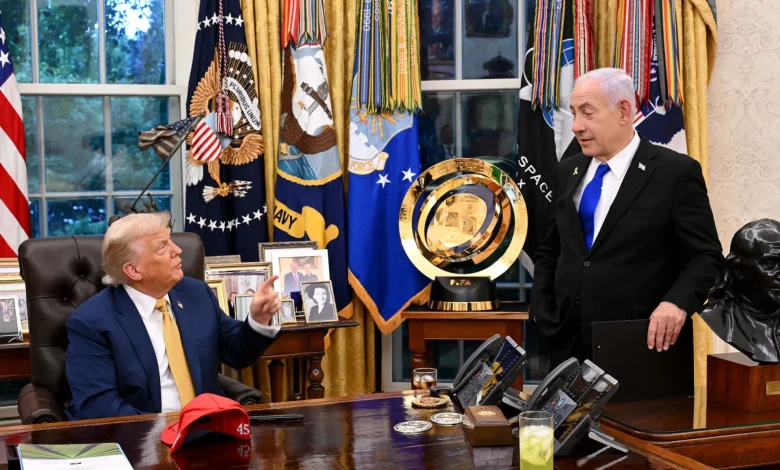
Israeli public opinion has become increasingly skeptical about the American president’s commitment to Israel’s security.
Israeli Prime Minister Benjamin Netanyahu had wagered that the joint war fought shoulder to shoulder with U.S. President Donald Trump would lead to the collapse of Iran’s religious rulers and strengthen his domestic political standing as the architect of a U.S.–Israeli alliance capable of reshaping the Middle East.
Instead, the Israeli leader, who has served longer than any other prime minister in the country’s history, now finds himself on a collision course with Trump, as the American president seeks to extricate the United States from the conflict. Neither leader has achieved the objectives they originally pursued, while the Israeli military has seen its operational freedom significantly constrained in Lebanon.
Israeli officials are currently exercising considerable caution in their public remarks, wary of provoking their most important ally, who is known for reacting strongly to criticism.
Privately, however, frustration is increasingly evident. One senior Israeli official, speaking on condition of anonymity, offered a blunt assessment: “The preliminary agreement is bad for Israel. No one within the Israeli leadership sees it differently, from the prime minister to the chief of staff.”
Washington maintains that over the next sixty days, during the ceasefire period, negotiations will be conducted to establish comprehensive terms addressing the concerns of both the United States and Israel, particularly regarding Iran’s nuclear program.
Israeli officials, however, believe that the negotiation period outlined in the agreement is likely to be extended, further restricting Israel’s ability to take military action while leaving many of its concerns unresolved.
Netanyahu and Trump have repeatedly clashed over Israel’s refusal to scale back its operations against the Iran-backed Hezbollah movement in Lebanon, where ending the fighting has been one of Tehran’s principal demands.
Dan Shapiro, who served as U.S. ambassador to Israel during the Obama administration and now works at the Atlantic Council, stated: “This is a defining moment where interests diverge.” He added: “Netanyahu will likely avoid publicly opposing the agreement so as not to enter into direct confrontation with Trump. However, he will emphasize that Israel is not bound by it and retains its rights and options.”
The memorandum of understanding between the United States and Iran is expected to be signed in Switzerland on Friday. Although the precise terms remain unclear, Pakistan, which acted as a mediator, stated that the agreement calls for a permanent cessation of military operations on all fronts, including Lebanon.
Netanyahu has declared that Israel will maintain its forces in southern Lebanon and preserve its “freedom of action” against Hezbollah attacks.
Speaking to reporters, he said: “Iran wanted us to withdraw, but I stood firm. We will preserve our freedom of action, and we will maintain the security zone to protect Israeli citizens in the north.”
Lebanon has suffered some of the most severe human consequences of the U.S.–Iran conflict. Israeli attacks against the Iran-backed Hezbollah movement have resulted in approximately 3,800 deaths and the displacement of nearly 1.2 million people. Hezbollah began launching attacks against Israel on March 2 in support of Tehran.
The interim agreement would reopen the Strait of Hormuz, while the future of Iran’s nuclear program would be addressed during the sixty-day negotiation period.
However, the two other issues cited by Trump and Netanyahu as reasons for the war—curbing Iran’s missile program and ending Tehran’s support for regional armed groups—are not believed to be included in the current negotiation agenda.
Three Israeli officials stated that Israel considers it highly likely that the agreement will be extended from sixty to ninety days, while U.S. forces remain deployed in the region during negotiations for a broader arrangement.
Two additional Israeli officials said that Israel was surprised when Trump announced last week that an agreement with Iran was imminent.
They also acknowledged that Israel had achieved little success in influencing the ongoing negotiations.
All officials requested anonymity because they were not authorized to speak publicly about the matter.