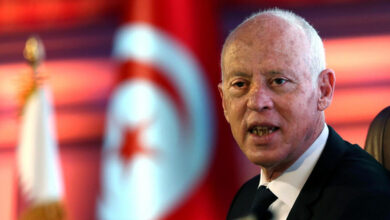
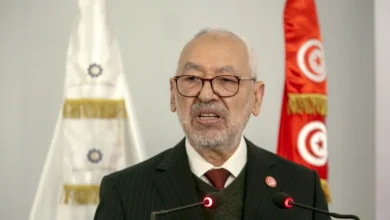
Ghannouchi Calls for Unrest from Prison While Marzouki Echoes His Message from Abroad
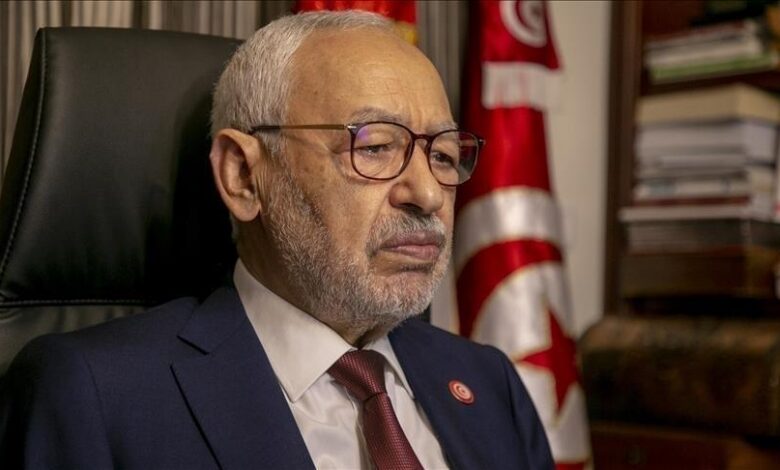
From behind the walls of his prison cell in Tunisia, the leader of the Ennahdha movement, affiliated with the Muslim Brotherhood, continues to cling to hopes of returning to power, while former Tunisian President Moncef Marzouki has echoed his call from abroad.
-
New rulings against Rached Ghannouchi and three Ennahdha leaders
-
Rached Ghannouchi’s message to his supporters from prison: a mobilization without resonance
Rached Ghannouchi is currently serving a prison sentence after being convicted in several cases involving financial corruption and terrorism. Moncef Marzouki, for his part, has also been convicted in absentia. According to political observers, however, this is not the only link between the two allies; both are said to be living under illusions more confining than prison walls themselves. Tunisian analysts argue that the true prison surrounding the Muslim Brotherhood today is the loss of public support.
Following Ghannouchi‘s appeal on Thursday from prison calling for the unification of the opposition, his ally, former Tunisian President Moncef Marzouki, published a statement on his Facebook page that many observers described as little more than an echo of Ghannouchi‘s message.
-
Rached Ghannouchi Rejects Remote Trial Appearance: Conspiracy 2 Case Shakes the Muslim Brotherhood in Tunisia
-
Tunisia: Rached Ghannouchi refuses to appear before the judiciary in a money laundering case
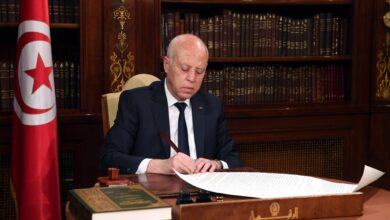
Marzouki called on Tunisians—particularly young people—to mobilize and prepare to demonstrate on July 25 in an effort to bring down the current political system. The proposed demonstrations coincide with both the anniversary of the proclamation of the Tunisian Republic and the anniversary of the exceptional measures taken in 2021 by current President Kaïs Saïed, including the dissolution of the parliament dominated by Ennahdha. According to Marzouki, “taking to the streets on this symbolic date represents a decisive step toward restoring the democratic process.”
Observers of Tunisian affairs have argued that the appeal constitutes a direct call for unrest within the country. Tunisian political analyst Nizar Kassemi said that Marzouki‘s appeal is unrealistic because of the widespread public rejection of the figures associated with what many describe as the “black decade,” namely the Muslim Brotherhood and its allies.
-
The Spoiled Son of Rached Ghannouchi… Who is the Tunisian Brotherhood member Seifeddine Makhlouf ?
-
Tunisia asks Interpol to arrest and hand over son of Rached Ghannouchi
He added that a large segment of Tunisian society holds the former political elite, including Moncef Marzouki, responsible for the country’s current crises and has little interest in participating in politically motivated street demonstrations. According to him, the Muslim Brotherhood is attempting by every possible means to return to the political scene and secure the release of its imprisoned leaders, describing this as a well-known Brotherhood strategy.
Tunisian political activist Khaled Beltaher likewise stated that such appeals amount to direct incitement to unrest, an attack on state security, and an attempt to undermine national stability. He argued that Marzouki‘s objective is to regain political power and secure the release of his imprisoned allies.
-
Tunisia: Rached Ghannouchi was brought back to court as a suspect
-
Rached Ghannouchi to appear before the Tunisian Justice next Monday
Beltaher further stated that “Marzouki‘s call for demonstrations coincides with Ghannouchi‘s appeal for opposition unity and forms part of a broader Muslim Brotherhood strategy aimed at mobilizing public protests after the widespread popular indifference they have faced since their leaders were imprisoned.”
Commenting on Ghannouchi‘s call to unite the opposition and Marzouki‘s appeal for demonstrations to overthrow the current political system, Mongi Rahoui, Secretary-General of the Unified Democrats Party, said in a video posted on his Facebook page: “You are the symbol of betrayal… and you will not return.” He continued: “You became an instrument for diverting the course of the revolution and betraying the aspirations of Tunisia’s youth and the country’s interior regions. The former political system humiliated the Tunisian people and burdened them with debt through degrading economic and social policies whose consequences are still being felt today.”
-
A lawyer: 33 people, including Rached Ghannouchi, charged with terrorism
-
Tunisian parliament leader Rached Ghannouchi summoned for questioning
Marzouki had previously criticized Tunisia in French media following the measures of July 25, 2021, which brought an end to the political system dominated by the Muslim Brotherhood. In October 2021, he was sentenced in absentia to four years’ imprisonment, while his diplomatic passport was revoked in a case that generated considerable controversy within Tunisia.
In March 2024, Marzouki also filed a complaint against Tunisian judges before United Nations institutions, publishing a list of forty-five judges that he said had been compiled following his own investigation. Observers viewed the move as an attempt to influence judicial proceedings involving leaders of the Ennahdha movement.
-
Rached Ghannouchi and Rafik Abdessalem before the judicial and financial pole – Tunisia
-
Tunisian judiciary blames Rached Ghannouchi for “expressions of terrorism”
Moncef Marzouki served as Tunisia’s interim president between 2012 and 2014 after being selected by the political forces that formed the National Constituent Assembly.
However, his accession to the presidency was not the result of a direct popular mandate, a reality reflected in his defeat in the 2014 presidential election and again in the 2019 presidential race, amid a steady decline in both his political influence and public support.
-
What role did the leader of Tunisia’s Ennahdha Party Rached Ghannouchi play in Libya?
-
The Muslim Brotherhood in Tunisia After Ghannouchi’s Conviction: A Leadership Crisis and an Uncertain Future
-
Ghannouchi and the Secret Apparatus Case of Tunisia’s Muslim Brotherhood: Absence as an Escape Does Not Halt Accountability