Neither Right-Wing nor Left-Wing: Netanyahu Reveals the Shape of His Next Government
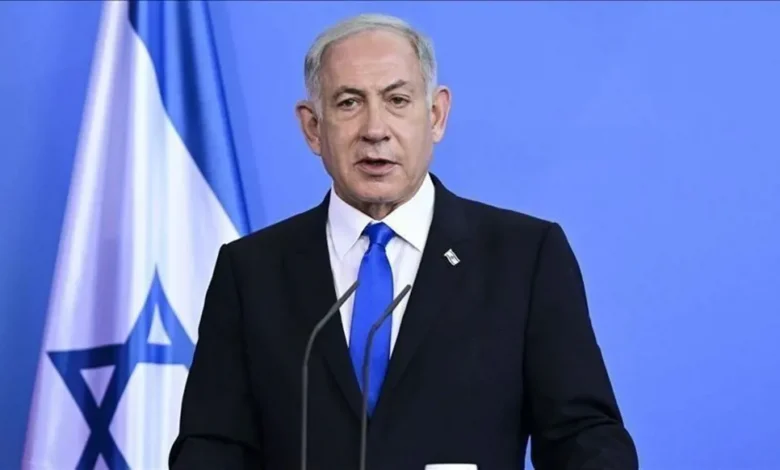
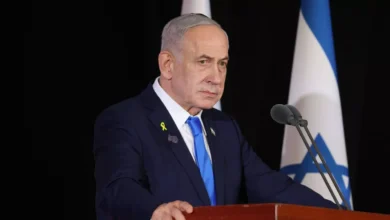
Israeli Prime Minister Benjamin Netanyahu has outlined the composition of the government he intends to form should he win the upcoming elections.
On Saturday, Netanyahu announced his intention to establish a broad national coalition if he secures victory in the next elections, distancing himself from both the far right and the political left.
-
Benjamin Netanyahu faces a threat to his chances of forming a new government due to an agreement among Arab parties
-
Czech Trump… five names to lead the opposition in Brussels
Netanyahu, 76, who has served longer as Israel’s prime minister than any of his predecessors—with more than eighteen years in office since 1996—announced in mid-June that he intends to run in the elections scheduled to take place no later than October 27.
In a televised address, Netanyahu said, “I intend to form a broad national government—not a right-wing government, nor a left-wing government that depends on Arab parties,” describing what would represent a significant shift in his political strategy.
He added, “Only in this way (…) can we achieve internal consensus,” while emphasizing that he “is not boycotting anyone.”
-
Israel Accelerates Settlement Policy to Undermine the Two-State Solution
-
Israel accelerates settlement policy to undermine the two-state solution
Netanyahu continued, saying, “Everyone is welcome to join us, provided they accept our fundamental principles: that Israel is the nation-state of the Jewish people and that we respect individual rights.”
Netanyahu currently heads one of the most right-wing governments in Israel’s history, but he has recently faced declining support in public opinion polls.
A majority of Israelis would like him to leave office, particularly following the Iranian-American agreement aimed at ending the war in the Middle East, which has been met with widespread criticism across the country.
-
Ministers in Netanyahu’s Government Threaten to Open the Gates of Hell on Lebanon
-
How Did Netanyahu Respond to the Israeli Prosecution’s Questions in the Corruption Cases?
Public anger also remains intense over the security failures that allowed Hamas to carry out its unprecedented attack on October 7, 2023, an event that triggered the war in the Gaza Strip.
At the same time, the issue of military conscription for the ultra-Orthodox Jewish community, known as the Haredim, continues to shake the governing coalition. Representatives of the Haredi parties, who are among Netanyahu‘s key political allies, have repeatedly threatened to bring down the government unless their constituents remain exempt from compulsory military service.
Conversely, the Israeli military and a large segment of the population advocate mandatory enlistment, particularly in light of the multiple conflicts the country has fought, which have placed considerable strain on its armed forces.
-
Reprimands, Accusations, and Blame: Details of a Heated Call Between Trump and Netanyahu
-
Netanyahu Orders Strikes on Beirut’s Southern Suburbs Amid Stalled Negotiations
Netanyahu stated that a “national government” would enable Israel to pursue its regional ambitions and “fulfill what it has promised—namely, to reshape the face of the Middle East.”
He further asserted that “after eliminating the existential Iranian threat,” Israel would be able to “deal with what remains of the Iranian axis and reap the fruits of our victory through political agreements.”
However, Netanyahu‘s proposal immediately sparked criticism from within his own political camp. Far-right National Security Minister Itamar Ben Gvir described the Prime Minister’s remarks as “deeply concerning.”
Ben Gvir stated that “the government the Prime Minister should form must be an entirely right-wing government.”
-
Benjamin Netanyahu faces a threat to his chances of forming a new government due to an agreement among Arab parties
-
America conditions its support for Lebanon on a direct meeting between Aoun and Netanyahu
-
Hezbollah’s weapons… Netanyahu sets the primary objective of negotiations with Lebanon