Iran Announces Imminent Release of Half of Its Frozen Assets Held in Qatar
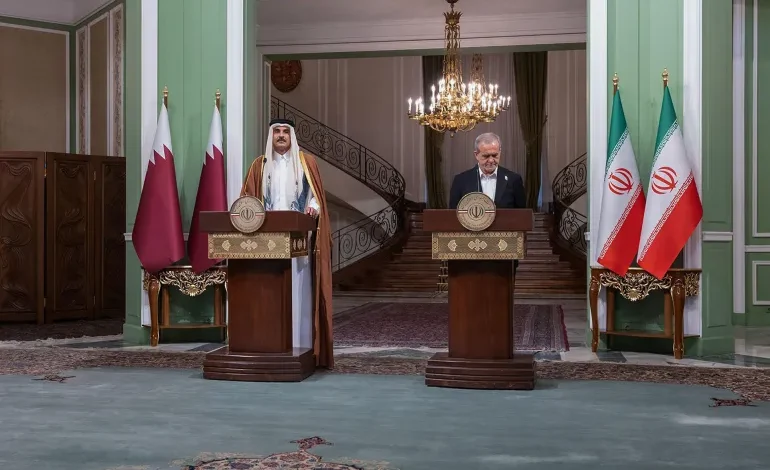
President Masoud Pezeshkian’s remarks regarding the release of $6 billion out of the $12 billion in frozen Iranian assets indicate progress in negotiations on this issue, amid reports of an upcoming meeting between Iranian and American technical teams in Doha.
Iranian President Masoud Pezeshkian told local media on Monday that $6 billion of the $12 billion in Iranian assets frozen in Qatar would be released and returned to Iran, following the agreement reached with the United States that resulted in the lifting of sanctions on Iran’s oil and petrochemical sectors.
Meanwhile, a source familiar with the negotiations said on Monday that Iranian and American technical teams tasked with implementing the memorandum of understanding would meet in Doha in the coming days. The source added that the mediators had established communication channels to contain any potential incidents and reduce tensions, noting that the technical discussions would continue and would also cover the issue of frozen assets.
Some time ago, Tehran spoke of the possibility of lifting restrictions on the funds. However, Doha expressed reservations regarding a mechanism for the full and immediate release of the money. According to media reports, Qatar insisted on establishing specific arrangements governing the use of these assets to ensure that they would be utilized under agreed conditions rather than transferred directly to the Iranian side. Discussions also explored the possibility of allowing access to part of the funds within a regulated financial framework instead of releasing the entire amount in a single transaction.
Qatar also officially denied reports claiming that it had offered Iran $12 billion to facilitate the conclusion of an agreement with the United States. Qatari Foreign Ministry spokesperson Majed Al-Ansari described the reports as inaccurate, stating that such allegations were intended to obstruct diplomatic efforts aimed at reducing tensions and promoting regional stability.
The issue of sanctions and frozen Iranian assets represents one of the main economic components of the memorandum of understanding between Tehran and Washington. The agreement includes arrangements designed to ease restrictions on the Iranian economy in exchange for commitments that both sides are required to fulfill throughout the negotiation process leading to a final agreement.
According to the provisions currently under discussion, the United States would allow access to part of Iran’s assets that have remained frozen or subject to financial restrictions once implementation of the understandings begins. The mechanisms governing the release, transfer, or use of these funds would be determined through arrangements agreed upon by both parties.
Available information indicates that the total amount of assets to be released has not yet been finalized. Various estimates circulated during the negotiations referred to several billions of dollars. However, the final amount and the mechanisms governing disbursement remain dependent on the implementation agreements to be concluded between Washington and Tehran, as well as the necessary legal and financial procedures on the American side.
Under the proposed arrangement, these funds would not be made available without oversight. Their use would be subject to mechanisms established by the Central Bank of Iran, with procedures ensuring that payments reach the designated beneficiaries in accordance with approved regulations after the required U.S. authorizations have been issued.
Regarding sanctions, the memorandum includes a U.S. commitment to take steps toward lifting or suspending a range of restrictions imposed on Iran, including primary and secondary U.S. sanctions, as well as restrictions related to other international issues, according to a timetable to be agreed upon within the framework of a comprehensive final agreement between the two parties.
Before reaching the stage of a complete lifting of sanctions, the understandings provide for transitional measures aimed at easing certain economic pressures. These include granting U.S. waivers allowing the continued export of Iranian oil and related petroleum products, as well as facilitating services associated with the energy sector, including transportation, insurance, and financial transactions.