After More Than Four Months… How Did Iran Preserve Khamenei’s Body?
The lengthy delay in the funeral of former Iranian Supreme Leader Ali Khamenei has raised questions about how his body was preserved.
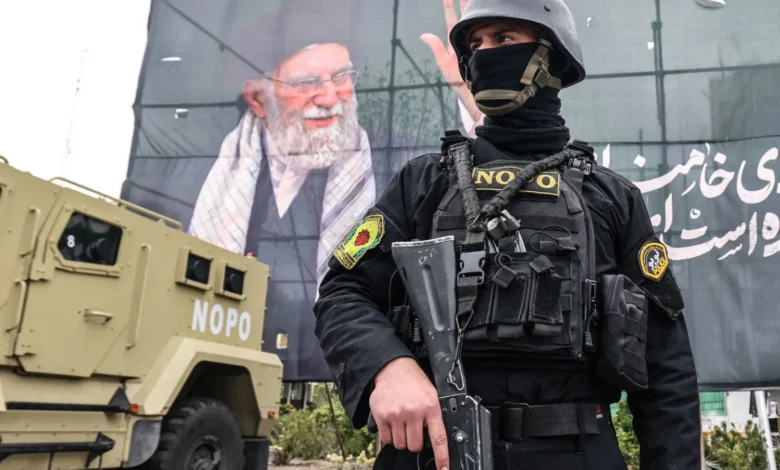
Under exceptionally tight security, Iran is preparing for Khamenei‘s funeral ceremonies, which will begin the day after tomorrow, Saturday, and continue for six days, more than four months after his death at the outset of the U.S.-Israeli war.
-
Iran’s Supreme Leader Ali Khamenei’s Niece Arrested
-
Khamenei implicitly criticizes normalization talks between Israel and Saudi Arabia
Refrigeration
Regarding the preservation of the body, Iran appears to have relied on refrigerated storage.
Speaking to Fox News Digital, counterterrorism expert Dr. Mohammad Omar said, “It is almost certain that the body was preserved through refrigeration rather than embalming, because Islam prohibits chemical embalming.”
He added, “Shiite jurisprudence permits delaying burial and preserving a body through refrigeration under exceptional circumstances. Obtaining a religious exemption for the Supreme Leader would not be difficult.”
He further noted that “forensic morgues in Iran sometimes keep bodies for several months. Therefore, preserving the body under refrigeration for four months is not unusual.”
-
Tehran: One Hand Waves the Banner of Revenge for Khamenei While the Other Remains Extended Toward Negotiations
-
Minutes That Shook Iran: Live Broadcast Suddenly Cut Off After Secret Messages Attributed to Khamenei
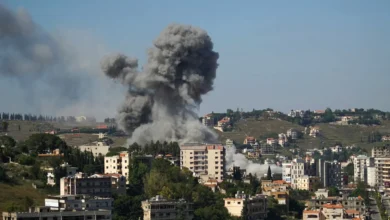
Khamenei was killed on February 28 in a U.S. strike targeting his headquarters in Tehran during an operation that Washington named “Epic Fury,” after ruling Iran for thirty-six years.
Counterterrorism expert Mohammad Omar believes that the strike likely caused extensive damage to the body, saying, “There may not be much of the body left to display.”
He also pointed out that several others killed alongside him were later identified through DNA testing.
Commenting further, he said that “the repeated changes to the burial location and the prolonged postponement of the funeral suggest that the authorities succeeded in preserving the remains but were unable to display them publicly.”
-
Khamenei’s Authority After the War: Unprecedented Challenges and Two Possible Scenarios
-
Mojtaba Khamenei Stalls Negotiations… Missing Approval and a Suspended Agreement
A Mobilization Disguised as a Funeral
Public viewing ceremonies are scheduled to begin on Saturday and Sunday in Tehran, followed by a funeral procession on July 6.
The funeral of Khamenei, who was killed alongside several members of his family and senior political officials and was succeeded by his son Mojtaba, is taking place during a ceasefire with the United States and Israel, six months after widespread protests over the rising cost of living and dissatisfaction with the government.
The city of Qom, south of Tehran, will also host a memorial ceremony on July 7. Khamenei will then be buried on July 9 in his hometown of Mashhad in northeastern Iran.
-
Mojtaba Khamenei Calls for Unity Amid Domestic Anger and External Pressure
-
Iran between division and opacity: a regime staggering toward the poisoned chalice
According to Mohammad Omar, the figures announced by the Iranian authorities regarding the participation of large crowds and representatives from numerous countries “constitute a political message more than a logistical arrangement.”
Regarding the management of the funeral ceremonies by the Basij forces and the Islamic Revolutionary Guard Corps, he said that their involvement “carries clear political significance.”
He explained that the Basij is responsible for crowd movement and logistical operations, while the Revolutionary Guard oversees security and crowd control.
-
Araghtchi and Ghalibaf temporarily outside the Israeli targeting circle
-
From the Revolutionary Guard to the negotiating table… Mohammad Bagher Ghalibaf takes center stage in Iran
He described the event as “a mass mobilization dressed in the appearance of a funeral,” noting that the same security organizations had previously taken part in suppressing earlier protests.
Finally, Mohammad Omar stated that the absence of leaders from the world’s major powers at the funeral reflects “Iran’s international isolation despite its attempts to project strength,” adding that the recent war “has diminished Tehran’s regional influence compared with what its officials publicly claim.”
-
Iran between absence and presence: no proof of life for Mojtaba Khamenei
-
Saeed Jalili, the hardliner: Leading candidate to succeed Ali Larijani