Iran Unveils a Joint Mechanism with Oman to Manage the Strait of Hormuz
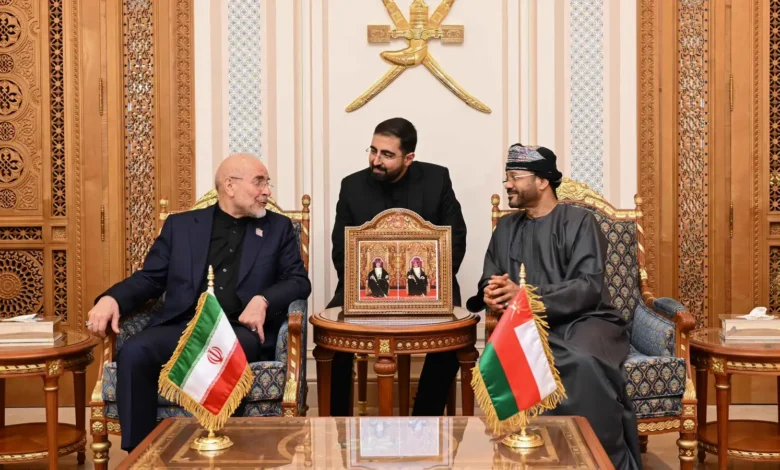
Qalibaf says that if the United States and Israel fail to honor their commitments under the memorandum of understanding, Tehran will resume taking what it considers appropriate measures, without specifying what those measures would be.
-
The Mobilization Forces: A Houthi Version of Iran’s Basij
-
New Escalation in the Gulf Threatens Prospects for an Agreement Between Tehran and Washington
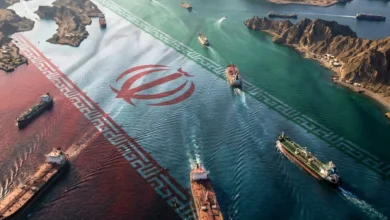
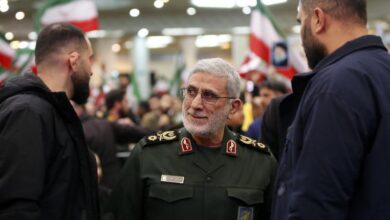
Iranian Parliament Speaker Mohammad Bagher Qalibaf said on Friday, during a meeting with He Wei, Vice Chairman of the Standing Committee of China’s National People’s Congress, on the sidelines of the funeral ceremonies for the late Iranian Supreme Leader Ali Khamenei in Tehran, that Iran had established, together with the Sultanate of Oman, a mechanism for managing navigation through the Strait of Hormuz based on Article Five of the memorandum of understanding.
He added: “We will not allow the United States to interfere in the administration of the strait,” while warning of possible escalation should Washington fail to fulfill its obligations under the agreement.
-
The U.S. Blockade of Iran: 122 Vessels Disabled or Redirected
-
Military escalation between Washington and Tehran derails hopes of a settlement
Qalibaf’s remarks come despite the emergence of clear differences between Iran and the Sultanate of Oman regarding the future management of navigation in the Strait of Hormuz. While Tehran has insisted on opposing vessels sailing outside the designated navigation corridors, Muscat has reaffirmed its rejection of imposing transit fees, while maintaining its commitment to the principle of freedom of navigation in accordance with international law.
These differences come as both countries seek to implement the understandings reached following the recent U.S.-Iran agreement. Iran is seeking to strengthen its role in managing the strait, whereas Oman is attempting to maintain a delicate balance between sovereign considerations and the requirements of international trade, thereby avoiding unnecessary concerns among global markets and shipping companies.
-
Iran denies being close to signing an agreement with the United States despite progress in negotiations
-
The United States Tightens Its Siege on Cuba with the Nimitz, Sky Spies, and an Indictment
Qalibaf’s comments regarding the mechanism followed statements by Omani Foreign Minister Badr Al-Busaidi, who said that Oman does not support imposing transit fees on ships passing through the strait. However, he noted that mechanisms related to maritime services could be explored, including enhancing navigational safety, improving emergency response capabilities, and combating marine pollution, similar to systems already in place in the Straits of Malacca and Singapore.
Oman’s position reflects Muscat’s determination to distinguish between regulating maritime services and imposing new financial burdens on international trade, at a time when global markets remain heavily dependent on the uninterrupted flow of energy exports through the strait.
-
A U.S. senator: an imminent military strike on Iran is highly likely
-
Iran war threatens submarine cables in the Strait of Hormuz
Al-Busaidi stressed that the Sultanate continues its efforts to reduce tensions and supports the implementation of the memorandum of understanding signed between Washington and Tehran. He emphasized that any future arrangements with Iran would remain fully consistent with international law and the United Nations Convention on the Law of the Sea, ensuring that navigation remains safe and free for all nations.
He also pointed to the existence of a Gulf consensus prioritizing de-escalation and preventing any escalation that could threaten regional security or disrupt international trade, while confirming that diplomatic contacts continue in pursuit of regional stability.
-
Iran announces the arrival of a cargo ship despite a U.S. claim of intercepting it
-
Israeli report: undeclared Chinese involvement in Iran–U.S. talks
Previously, Tehran had expressed its opposition to Oman’s decision to introduce alternative navigation routes intended to facilitate freedom of navigation in the Strait of Hormuz. At the time, the Islamic Revolutionary Guard Corps issued an explicit warning to vessels against using those routes.
Meanwhile, Qalibaf stated that if the United States and Israel failed to fulfill the commitments outlined in the memorandum of understanding, Tehran would resume taking what it described as appropriate measures, without specifying their nature. Such statements are likely to heighten tensions and risk undermining an agreement widely regarded as fragile.
-
Iron fist: Iran confronts the opposition through executions
-
Sources: The cargo of the detained Iranian vessel may be used in military industries
He added: “The Israelis are undoubtedly seeking to undermine the memorandum of understanding between Iran and the United States. However, Iran’s deterrence capability in the region will prevent them from resuming the war.” He further stated that strengthening relations between Iran and China would contribute to reducing tensions at the global level.
For their part, U.S. officials, including Vice President J. D. Vance, have warned Tehran against escalating the situation or taking reckless actions that could further destabilize the region.
-
The arrest of an Iranian woman in the United States opens the file of arms networks linked to the conflict in Sudan
-
International anticipation over the fate of the ceasefire after the seizure of an Iranian vessel