Ahmadinejad and the Mossad: A Secret Journey That Ended in House Arrest
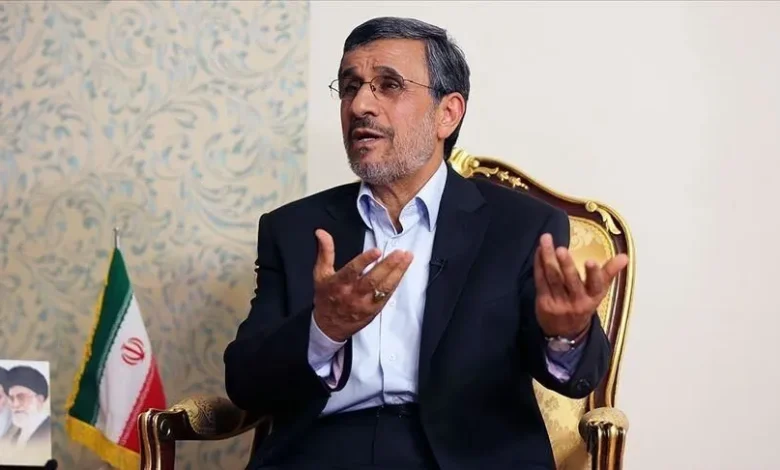
Two Western newspapers have revealed what they describe as the details of one of the most remarkable intelligence operations in the history of the Iranian-Israeli conflict.
According to The New York Times and the Daily Mail, Israel allegedly attempted to recruit former Iranian President Mahmoud Ahmadinejad as part of a broader plan to reshape the balance of power in Tehran.
The effort ultimately ended with Ahmadinejad being placed under house arrest by Iran’s Islamic Revolutionary Guard Corps (IRGC) after authorities allegedly suspected him of maintaining covert contacts with Israeli intelligence services over several years, according to the reports.
-
Ahmadinejad Reappears After Being Rumored Dead at Khamenei’s Funeral
-
Israel reportedly wanted him to become Iran’s leader: leaks reveal details about the night Ahmadinejad’s home was targeted
A Secret Journey
According to both newspapers, Ahmadinejad‘s international travel over the past two years was not limited to academic visits or participation in international conferences. Instead, it allegedly served as cover for a series of confidential meetings intended to prepare him for a pivotal role in a potential post-regime political transition.
American and Iranian sources cited by the reports claim that the Mossad financed part of the former Iranian president’s travel and accommodation expenses abroad.
The reports further state that several meetings were held with him, most notably in Budapest, where he allegedly met then-Mossad Director David Barnea, highlighting the importance Israeli officials reportedly attached to the operation.
-
Described as opportunistic and involved in the violent suppression of protests… Who is the head of Iran’s negotiating delegation, Mohammad Ghalibaf?
-
From the Revolutionary Guard to the negotiating table… Mohammad Bagher Ghalibaf takes center stage in Iran
The story reportedly began in 2024, when Ludovika University of Public Service in Budapest was asked to organize a conference on climate change and extend a special invitation to Ahmadinejad.
According to the university’s president, Gergely Deli, the conference allegedly served as diplomatic and academic cover for confidential discussions between the former Iranian president and senior Israeli intelligence officials.
Despite recognizing the sensitivity of the matter, the university president reportedly agreed to host the event, believing that dialogue between adversaries was preferable to continued confrontation.
-
Saeed Jalili, the hardliner: Leading candidate to succeed Ali Larijani
-
Death of Khamenei’s shadow and the Iranian Kennedy: Who was Ali Larijani?
-
In the face and foot: new details about the injury of Iran’s new Supreme Leader
According to the published reports, Israel viewed Ahmadinejad as a political figure who still possessed influence and support within certain sectors of Iranian society, potentially enabling him to play a transitional role if efforts to change the current political system proved successful.
The reports further claim that Ahmadinejad privately described himself to close associates as “Iran’s Yeltsin,” referring to former Russian President Boris Yeltsin, while expressing his willingness to lead a new era characterized by greater openness toward the West, recognition of Israel, and participation in regional normalization efforts.
An Extraction Operation That Allegedly Exposed Everything
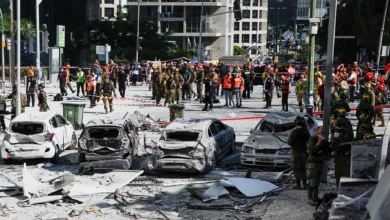
According to the reports, the operation reached its climax on February 28 during the opening days of the U.S.-Israeli war against Iran, when an Israeli airstrike allegedly targeted the residential compound where Ahmadinejad lived in Tehran, destroying the building used by his personal security detail as well as his armored vehicle.
-
The will buried with Khamenei: how the Revolutionary Guard overturned the father’s wish
-
Nine waves in a quarter century: the history of protests in Iran
Amid the ensuing chaos, a black Peugeot carrying individuals alleged by the reports to be Mossad operatives reportedly arrived to transport him to a safe house inside Iran, with the apparent objective of removing him from the reach of Iranian security agencies before implementing the next phase of the alleged regime-change plan.
However, the operation reportedly did not unfold as intended. According to the cited sources, Ahmadinejad expressed dissatisfaction with what he considered the improvised manner in which the transfer had been conducted before leaving the safe house under circumstances that remain unclear.
Shortly afterward, investigations conducted by the IRGC’s intelligence services allegedly uncovered the extent of his foreign contacts. The case reportedly concluded with his placement under house arrest and the imposition of strict restrictions on his movements. He subsequently disappeared from public view until making a brief appearance during the funeral ceremony of the late Iranian Supreme Leader, Ali Khamenei.
-
From Tehran to Makran: Why Iran Wants to Change Its Capital
-
Who is Mojtaba Khamenei, before whom Iranian leaders bow?
A Budapest Conference as Cover for a Meeting with the Mossad Director
The reports suggest that the Ahmadinejad operation was only one component of a broader Israeli strategy aimed at bringing about fundamental political change in Iran. According to the reports, the plan also involved training and arming Kurdish opposition groups operating from northern Iraq in preparation for a possible advance toward Tehran should political and military conditions become favorable.
Former head of Israeli Military Intelligence Tamir Hayman reportedly stated that the operation included “a series of unique special operations,” with Ahmadinejad serving as one of its principal components, although he acknowledged that the overall plan ultimately failed.
This account is particularly significant in light of Ahmadinejad‘s notable political transformation in recent years. During his presidency between 2005 and 2013, he became widely associated with hardline rhetoric, Holocaust denial, the acceleration of Iran’s nuclear program, and the suppression of the 2009 protests. In subsequent years, however, his political discourse appeared considerably more moderate.
-
Warnings and Concerns About Iranian Expansion in Sudan with the Help of al-Burhan
-
Iran in Africa under Raisi… Sudan leading the way Iran in Africa
Ahmadinejad learned English, altered his public image, softened his rhetoric toward Israel, and increasingly focused on criticizing corruption and advocating social issues, developments that prompted widespread speculation both inside and outside Iran.
Although many observers viewed these changes as an attempt to regain political influence after being barred from running in three presidential elections, the reports published by The New York Times and the Daily Mail suggest that this evolution may also have intersected with a far more complex intelligence operation that remained hidden from public view until recent developments brought it to light.
-
Ebrahim Raisi in Damascus carrying economic files
-
Amnesty International reveals: This is what Iranian diplomats have done with this humanitarian disaster
While many aspects of the case remain unclear, the reports portray an unprecedented picture of the close interplay between intelligence operations and political conflict in Iran, illustrating how one of the most prominent figures of the country’s former leadership allegedly became part of a broader regional effort to reshape Iran’s internal balance of power.
As of 14:25 GMT, former Iranian President Mahmoud Ahmadinejad had not commented on the claims published by the two newspapers.
-
Western fears grow that Iran is close to developing nuclear bombs
-
Iran’s intelligence minister announced that the regime had excluded candidates