October 7 Investigation: Netanyahu Government Seeks to Delay Decision Until After Elections
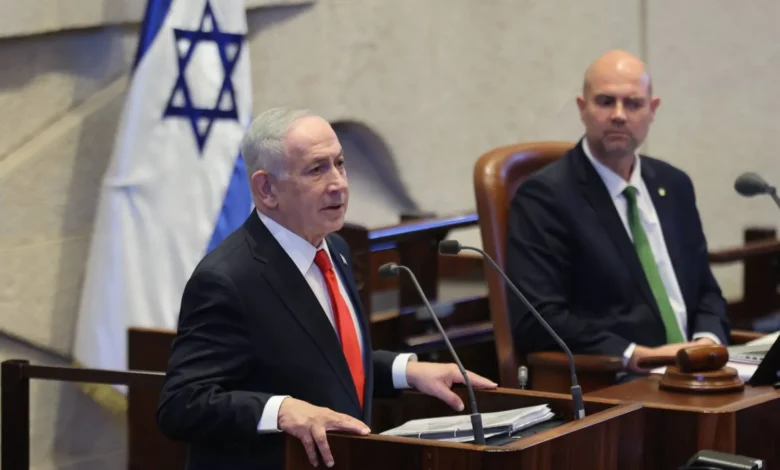
The debate in Israel over the establishment of an inquiry commission into the October 7 attack is intensifying after the government asked that any decision on the matter be postponed until after the next elections.
The Israeli government told the Supreme Court on Wednesday that it should refrain from ruling, before the next elections, on petitions calling for the establishment of an official commission of inquiry into the attack carried out by Hamas on October 7, 2023, arguing that the issue carries significant political sensitivity at this stage.
The Government’s Justification
In its response to the court, the government explained that it had been unable to pass legislation establishing an alternative politically oriented inquiry commission because of the limited legislative time available before the Knesset was dissolved last week.
If the court accepts the government’s request, at least three years will have passed since the Hamas attack before any commission is established to investigate the unprecedented security and intelligence failures that occurred that day, according to The Times of Israel.
The government argues that the nature of the investigation into the October 7 events has become part of the political dispute between rival parties ahead of the elections. It therefore maintains that “it is not appropriate for the court to issue a ruling or intervene in this matter at this time.”
It added that “the government’s position, in principle, is that the court does not have the authority to order the establishment of a government commission of inquiry.”
In this regard, the government noted that it had advanced its own legislation establishing a political inquiry commission through its first reading and said it intends to approve the bill in its final readings if it succeeds in forming a new government following the next elections.
The Proposed Bill
The proposed bill passed its first reading in the Knesset by 59 votes to none after opposition parties boycotted the vote, declaring that they would not cooperate with the inquiry commission proposed by the government.
The bill, introduced by Likud lawmaker Ariel Kallner, calls for the establishment of a commission consisting of six members and a chairperson, whose appointments would require the approval of an overwhelming majority of 80 out of the Knesset’s 120 members.
If no agreement is reached after two weeks, the coalition and the opposition would each be allowed to select three members, who would be joined by four observers representing the families of those killed, wounded, and taken hostage.
However, the bill allows the commission to begin its work once only three members have been appointed. This means that a continued opposition boycott could result in the creation of a commission composed entirely of figures selected by the governing coalition.
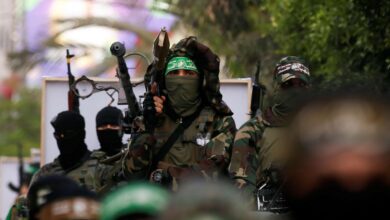
On October 7, 2023, Hamas launched a surprise attack on communities in southern Israel, killing approximately 1,200 people and taking more than 250 others hostage. Some of them were later released as part of prisoner-exchange agreements.
Israel responded with a devastating war in the Gaza Strip that, according to the territory’s Health Ministry, has killed more than 70,000 Palestinians and displaced nearly two million residents, while entire residential neighborhoods have been flattened by intense bombardment.
Despite a ceasefire agreement reached last October, Israel has continued to carry out airstrikes and artillery fire on an almost regular basis in the territory, of which it controls more than 60 percent, resulting in further casualties and destruction amid a severe humanitarian crisis.
Hamas and Israel have accused each other of violating the announced ceasefire.
Dispute Over the Commission’s Mandate
The proposed legislation stipulates that the commission appointed by the government would determine the scope of the investigation.
Israeli Prime Minister Benjamin Netanyahu has said that the inquiry should include the 1993 Oslo Accords, the 2005 plan to withdraw from the Gaza Strip, and the protests that erupted in 2023 against the government’s proposed judicial overhaul.
Netanyahu’s opponents accuse him of seeking to establish a politically oriented commission in order to protect himself and his government from being held responsible for the most serious security and intelligence failure in Israel’s history.
Netanyahu has not explicitly acknowledged responsibility for the attack. Instead, he has directed criticism at the security agencies, previous governments, the judiciary, and his political opponents.
The Israeli opposition, meanwhile, is calling for the establishment of an independent official commission of inquiry, the traditional body in Israel for investigating major events. Such commissions have broad powers, including the authority to summon witnesses and compel them to provide testimony.
Netanyahu opposes the establishment of such a commission because its members are selected by the president of the Supreme Court, whom he describes as biased against him, despite having called in 2022 for the creation of an official commission of inquiry into the conduct of the previous government.
Opinion polls indicate that a majority of Israelis support establishing an official commission of inquiry into the October 7 attack, viewing it as the most independent body capable of investigating the security and intelligence failures that preceded the incident.