Europe’s 2025 Terrorism Map: The Rise of Lone Wolves and Digital Radicalization
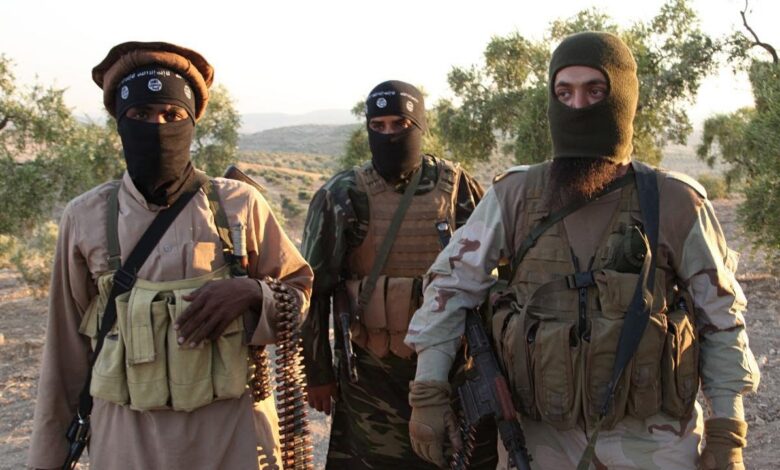
A detailed map of terrorism in Europe, compiled by the European Union Agency for Law Enforcement Cooperation, Europol, has revealed details about terrorist attacks, the identities of their perpetrators, and the activities of « lone wolves ».
According to a Europol report, six European countries reported 24 terrorist attacks in 2025, the same number recorded in 2024.
However, a breakdown of the figures reveals an increase in the number of attacks that were actually carried out. Nine attacks were successfully executed in 2025, compared with only six the previous year, while the remaining plots were disrupted before they could be carried out.
The attacks that were actually carried out took place in:
- Germany: 4 attacks.
- France: 2 attacks.
- Austria: 1 attack.
- Ireland: 1 attack.
- Spain: 1 attack.
Meanwhile, 15 attacks were thwarted in France (8), Austria (6), and Belgium (1).
These attacks were the deadliest forms of terrorism recorded in 2025, resulting in five deaths and 81 injuries.
Arrests
According to Europol, 347 people were arrested in 16 member states on terrorism-related charges. This figure returned to a level similar to that recorded in 2023, when 334 arrests were reported, after falling to 289 cases in 2024.
The highest number of arrests was recorded in Spain, with 100 cases, followed by France with 64.
The reasons for the arrests were as follows:
- Dissemination of terrorist propaganda: 91 cases.
- Membership in a terrorist organization: 73 cases.
- Preparation of a terrorist attack: 53 cases.
- Participation in terrorist organizational activities: 40 cases.
- Incitement and threats: 26 cases.
- Travel to areas where terrorist groups operate: 15 cases.
- Financing: 12 cases.
- Carrying out attacks: 11 cases.
- Self-training: 7 cases.
- Possession of terrorism-related materials: 6 cases.
- Recruitment: 5 cases.
- Other terrorist offenses: 2 cases.
Lone wolves
The Europol report concluded that most terrorists were not members of organizations with clearly defined hierarchical structures. Instead, they acted individually or within small networks made up of people who shared extremist views, with their contacts often extending across national borders.
The report noted that all the attacks recorded in 2025 were carried out by adult male « lone wolves ».
In some cases, reports indicated that the perpetrators suffered from mental health problems.
One of the most prominent examples was the Munich attack in Germany on February 13, 2025. A 24-year-old man drove his vehicle into a moving crowd, killing two people and injuring 57 others. The perpetrator was arrested at the scene.
Minors
By contrast, investigations revealed that some of the attacks that were thwarted had been planned by minors. In addition, a significant number of the 347 people arrested were aged 18 or younger.
On October 7, 2025, Italian authorities arrested a 17-year-old on suspicion of terrorist recruitment activities and the illegal possession of dangerous materials.
Security analysis showed that the teenager had been radicalized online and had conducted searches related to the terrorist organization Islamic State, weapons, and the manufacture of explosives.
Investigators also found materials containing an oath of allegiance to the organization, which had been sent to another individual who shared his extremist ideology.
Links to the Islamic State
The report also found that several perpetrators of attacks in Europe in 2025 had pledged allegiance to the Islamic State. However, in most cases, evidence that they had received direct orders from the organization remained limited.
The organization also did not claim responsibility for the majority of these attacks.
Nevertheless, the report identified one case in which the connection to the organization was clear. On May 18, 2025, a 35-year-old man stabbed people outside a bar in the German city of Bielefeld, seriously injuring four people.
The investigation revealed that the perpetrator had joined the Islamic State in Syria at least as early as May 2015 and had maintained his links to the organization after entering Germany in the summer of 2023.
The Internet: A gateway to recruitment
According to Europol, the Internet remained the main source of extremist ideological influence among most of the suspects arrested, whether through direct Islamic State propaganda or through social media and messaging platforms.
The report showed that some suspects simultaneously expressed support for both the Islamic State and Al-Qaeda, as well as for other terrorist groups.
Others were found to have been in direct contact with members of extremist groups in countries such as Afghanistan, Pakistan, and Iraq.
On June 18, 2025, Italian authorities arrested a 20-year-old man suspected of belonging to the Islamic State after he disseminated propaganda material through a messaging platform. Authorities also found materials in his possession that could be used to manufacture weapons and explosive devices.
Investigations established that the individual was in contact with a member of the Islamic State Khorasan Province (ISKP) in Afghanistan, with whom he had allegedly planned attacks in the West.
A blow to the Islamic State’s propaganda machine
The same report also recorded a decline in the volume of official Islamic State propaganda disseminated through its regional branches in 2025. The organization reportedly released only a limited number of videos, without direct messages from its leadership.
The Al-Azaim platform, one of the most prominent media outlets supporting the Islamic State, which had played a role in the escalation of European threats linked to Islamic State Khorasan in 2024, also suffered a major setback after one of its key members was arrested in a joint operation conducted by Turkey and Pakistan, according to the report.
This led to a significant decline in its terrorist propaganda output, weakening the organization’s ability to disseminate its messages and mobilize its supporters in Europe.