Muslim Brotherhood Funds and Influence Networks: al-Tamimi and Abu Daya at the Heart of the European Network
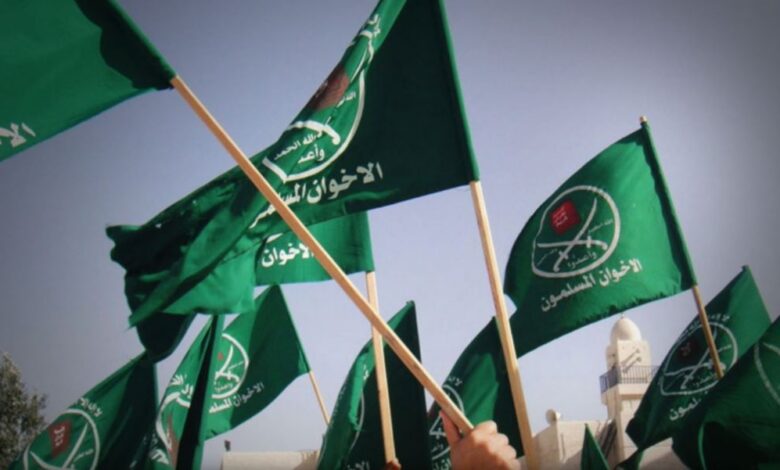
Under the cover of investment and charitable activities, a complex Muslim Brotherhood-linked financial network operates across Europe, involving prominent figures such as Azzam al-Tamimi and Abdulrahman Abu Daya.
-
The Muslim Brotherhood in Europe: Ireland on the frontline
-
The Muslim Brotherhood in Europe and Youth: A Long Arm with 31 Branches and a Recruitment Strategy
Information concerning the group’s activities across the European continent indicates that these financial networks, through which millions of euros allegedly flow each year, are not limited to financing specific entities. They support a broad system of organizations and associations linked to the Muslim Brotherhood that pursue objectives involving societal penetration, political influence, and the dissemination of the group’s radical discourse.
At the same time, the funding map indicates that money flows are not random but pass through a limited number of influential figures within the European Muslim Brotherhood network who have the ability to manage funding channels and connect them to broader influence and advocacy networks.
-
The Muslim Brotherhood in Europe and Youth: An Extensive Arm with 31 Branches and a Structured Recruitment Strategy
-
International Expert Reveals Strategies to Confront the Muslim Brotherhood in European Countries
Four Pillars of Influence
Beginning in the late 1980s, leaders of the Muslim Brotherhood network in Europe began working to establish a broad organizational structure across the continent, with the aim of creating an umbrella framework bringing together institutions and entities linked to the movement.
In 1989, Muslim Brotherhood members established the Federation of Islamic Organizations in Europe (FIOE), an organization headquartered in Brussels that was intended to serve as an umbrella body for institutions affiliated with the organization across European countries.
-
New book reveals the reality of “Jihadist” Groups and the Muslim Brotherhood in Europe
-
France – Successive blows to the Brotherhood in Europe to control its extremist activities
Over time, the federation, later renamed the Council of European Muslims, became an umbrella structure that helped establish several specialized entities serving specific objectives. These included the Forum of European Muslim Youth and Student Organisations (FEMYSO), which brings together 32 youth organizations operating across the continent.
The federation’s activities were not limited to youth affairs. It also established the European Council for Fatwa and Research (ECFR) in Dublin, which presents itself as a religious body providing guidance and support to European Muslims. Critics, however, accuse it of being one of the channels that contributed to spreading Muslim Brotherhood ideas in Europe.
-
Growing Pressure in Austria to Place the Muslim Brotherhood on the European Union’s Terrorist List
-
A Western tightening around the Muslim Brotherhood: Washington shakes European hesitation
Real Estate Funding Sources
One of the most prominent financial arms associated with the Muslim Brotherhood network in Europe is Europe Trust, a company headquartered in the United Kingdom with branches in several European countries, according to a March 2022 report by Austria’s government-run Documentation Centre for Political Islam.
According to the center’s report, the institution is subject to the influence of several leaders within the European Muslim Brotherhood network and is involved in various financial activities, primarily real estate investment, which critics of the group regard as one of the channels used to support entities linked to it.
-
Europe and the Muslim Brotherhood: why has the Western security mood shifted toward political Islam?
-
Paris… how a Brotherhood-aligned gathering turned into a platform to undermine European values
In 2021, the institution financed the purchase of an entire property in Berlin for four million euros, which was subsequently used as a headquarters for associations affiliated with the group. The transaction sparked widespread political and media criticism in Germany.
A German government memorandum submitted to Parliament in June 2022 also revealed that Ibrahim al-Zayyat had served on the board of Europe Trust and was regarded, according to the memorandum, as one of the prominent figures within the group’s financial structures in Europe.
-
The slow dissolution… How is the risk of the Muslim Brotherhood infiltrating the heart of Europe?
-
Conference on the Muslim Brotherhood: Europe Examines Political Islam Networks in Budapest
According to the same memorandum, Europe Trust claims to receive financial resources through donations from organizations and individuals, in addition to income from its real estate investments and property rentals, as well as funds originating from foreign countries.
Europe Trust’s activities, however, are not limited to real estate investment. According to official reports and monitoring, the Muslim Brotherhood network in Europe continues to build its influence through companies operating in the real estate sector, using the industry as one of the channels through which entities linked to the group can potentially be supported.
-
Broad European initiatives reveal the map of the Muslim Brotherhood’s presence across the continent and its funding sources
-
Muslim Brotherhood funds in Europe under scrutiny: examination of transfer methods
In this context, raids carried out by Austrian authorities in 2020 targeted seven real estate companies and three private institutions as part of investigations into the activities of entities and individuals linked to the Muslim Brotherhood.
As part of the case, authorities opened an investigation into an investor who held stakes in approximately 70 start-ups in Austria and whose name emerged in investigations concerning his links to circles associated with the group.
-
From France to Sweden, Europe’s Front Against the Muslim Brotherhood Expands
-
Recent Reports and Warnings Reveal the Expansion of Muslim Brotherhood Activity in Europe: Details
Other companies have also appeared on the map of real estate investments linked to individuals considered close to the Muslim Brotherhood, including Yas Investment and Real Estate and Navel Capital, both headquartered in London and presenting themselves as real estate investment portfolios.
The two companies are managed by Abdulrahman al-Jabri, who resides in Britain and is listed on the United Arab Emirates’ domestic terrorism lists. He is the son of Hassan Munif al-Jabri, who was convicted in the case known as the “Secret Organization” case.
-
Europe and the Muslim Brotherhood: who holds the key to a ban?
-
Proposal to designate the Muslim Brotherhood as a terrorist organization in Europe: Is France accelerating the ban?
Halal Certification
Alongside real estate activities, the halal certification sector represents another source of funding relied upon by networks linked to the Muslim Brotherhood in Europe. A report issued by Austria’s Documentation Centre for Political Islam identified four main sources of funding for the group, including:
- donations from its members;
- foreign contributions;
- profits generated by companies operated by the group in Europe;
- as well as assistance from European governments provided through programs supporting integration and engagement with Muslim communities.
-
Europe’s crackdown on the Muslim Brotherhood: banned networks, financial restrictions and security measures
-
Denial of Lineage: The Shadow of a Ban Haunts the Muslim Brotherhood in the U.S. and Europe
Halal certification activities are among the sectors that have raised questions among some European authorities, with estimates suggesting that the industry represents a significant source of revenue for the entities operating it.
In this context, Germany’s Federal Office for the Protection of the Constitution, the country’s domestic intelligence agency, stated that the Islamic Center of Munich, which it describes as one of the most important entities linked to the Muslim Brotherhood, issues halal certificates for certain products.
-
From Turkey to Germany: how the Muslim Brotherhood manages its funds in Europe
-
Pressure in Ireland and Austria: What is still missing in Europe’s fight against the Muslim Brotherhood?
The Bavarian Office for the Protection of the Constitution, in southern Germany, classifies the Islamic Center of Munich as an “extremist entity under observation” and as being linked to the Muslim Brotherhood. The agency has also expressed reservations about the center’s role as a halal certification body.
The agency stated that some extremist currents view halal certification as a profitable business model that not only generates financial returns but may also contribute to expanding circles of radicalization and recruitment, describing this development as a source of concern.
-
Under the banner of freedoms: how the Muslim Brotherhood infiltrates Europe through subtle means
-
Europe and the Muslim Brotherhood Battle: The Defensive Belt Expands
Production Companies: al-Tamimi and Abu Daya in the Spotlight
Alongside its economic investments, the Muslim Brotherhood has sought to establish a media presence through production companies and broadcasting platforms, with the aim of creating tools to disseminate its radical discourse.
In this context, Muslim Brotherhood figure Azzam al-Tamimi stands out. In 2005, he founded the group-affiliated Al-Hiwar television channel, which broadcasts from London.
At the time Al-Hiwar was established, al-Tamimi was also managing another London-based company called Islam Expo Limited, which operates in the field of investment in artistic and cultural activities.
Meanwhile, Muslim Brotherhood figure Abdulrahman Abu Daya manages Noon Multimedia Limited in London, as part of a network of media and investment activities linked to individuals considered close to the group.
-
After the Arrest of a Hamas Cell in Berlin: The Brotherhood’s Danger Infiltrates Europe
-
Germany’s Muslim Brotherhood between delayed ban and soft confrontation: Is the European equation about to change?
The Use of Charitable Cover
In addition to economic and media channels, the alleged exploitation of European government funding represents another avenue within the influence network built by the Muslim Brotherhood across the continent.
Reports and monitoring indicate that a number of organizations and associations linked to the group’s broader environment have relied on charitable and community-oriented labels to obtain official financial support.
In recent years, organizations belonging to circles close to the Muslim Brotherhood in Europe have received public funds allocated to activities related to integration, the prevention of extremism, and combating racism and “Islamophobia.” These programs were established by European governments to promote social engagement and cohesion. Critics, however, argue that some entities linked to the group exploit these mechanisms to strengthen their presence and build influence networks within European societies.
-
Women Exploited by the Muslim Brotherhood to Circumvent European Immigration Laws
-
European awakening on the Muslim Brotherhood issue: seven countries on the path to counteraction
According to a report by Austria’s Documentation Centre for Political Islam, organizations affiliated with the Muslim Brotherhood network receive funding from European government aid agencies to implement projects in areas described as having special needs in Africa, the Middle East, and Asia.
In this context, a memorandum sent by the German government to Parliament on October 30 of last year, revealed that the German Interior Ministry had provided €60,000 in financial support during the 2024 fiscal year to Kleim, a Muslim Brotherhood-linked organization active in combating racism, followed by €373,000 during the 2025 fiscal year.
-
France Leads European Initiative to Ban the Muslim Brotherhood… What’s New?
-
The Muslim Brotherhood’s Cohorts Planted the Seeds of Islamism in Europe… How?
The Federal Government Commissioner for Migration, Refugees, and Integration, who is also responsible for combating racism, provided funding for a project affiliated with the Kleim Alliance amounting to €54,770.22 in 2022, €281,610.90 in 2023, €202,283 in 2024, and €230,254 in 2025.
In the same context, the 2021 report titled “A Network of Networks: The Muslim Brotherhood in Europe,” published by the European Conservatives and Reformists group, stated that FEMYSO, an organization linked to the Muslim Brotherhood, had received €288,856.50 in funding from the European Commission up to 2019.
-
Hidden Details Behind the Scenes: How the Muslim Brotherhood Creates Followers in Europe
-
How the Muslim Brotherhood Infiltrated the Heart of Europe
A Hidden Influence Network Behind Multiple Fronts
According to observers, the Muslim Brotherhood network in Europe does not rely on a single source of funding. Instead, it is based on a multi-channel system that extends from companies and investments to media institutions and entities operating under charitable and community-oriented cover.
These observers believe that this diversification of funding channels gives the group the ability to reproduce its influence through different instruments, leveraging economic, media, and community spaces to establish an enduring presence across the continent.
-
“Terrorism and Extremism in Europe from the Inside”: A Book Warns of the Dangers of the Muslim Brotherhood
-
The Brotherhood worked to establish its schools in Europe to expand its ideas
What is particularly notable about this network, according to observers, is the concentration of influential roles in the hands of a limited number of individuals who operate across multiple fields and combine responsibility for financial, media, and organizational affairs.
Among these figures is Ibrahim al-Zayyat, regarded as one of the individuals linked to the Muslim Brotherhood’s financial structures in Europe, alongside Azzam al-Tamimi and Abdulrahman Abu Daya, whose names have been associated with media and investment activities. According to observers, this reflects the overlapping roles within the influence system that the group has built over several decades.
-
Analysts reveal the danger of Muslim Brotherhood expansion in European Societies
-
The curse of the Muslim Brotherhood haunts European parties that supported them