Balloons Are Redefining the Future of Warfare: Platforms for Launching Drones
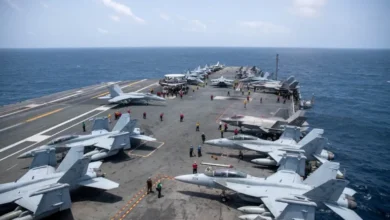
Military technologies are undergoing a rapid transformation with the emergence of a new concept centered on converting balloons into platforms for launching drones.
According to press reports, this development could reshape reconnaissance methods and combat operations in the years ahead.
-
The Baltics fortify against drones with Ukrainian shelters: battlefield expertise transfer
-
Russian drones plunge Ukraine into darkness, an attack deepening winter hardships
The concept involves deploying high-altitude balloons capable of carrying and launching unmanned aerial vehicles over operational areas. This would make it possible to establish a persistent surveillance and communications network capable of operating for days or even weeks, while reducing the need for conventional air bases or costly manned platforms.
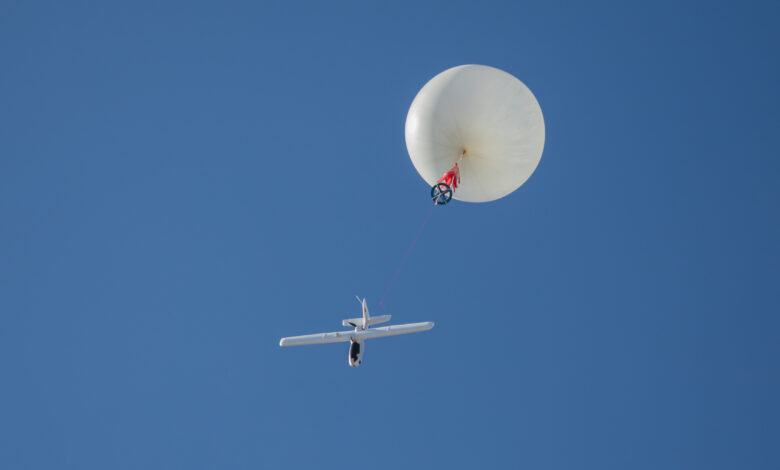
According to a report by The War Zone, the U.S. company Aerostar is leading this approach by developing systems that integrate balloons and drones into a single network. The company has successfully tested the Lightning balloon as a launch platform for an Apollo-R reconnaissance drone, an achievement that represents the first step toward developing larger and more capable platforms.
-
New Round of the Night Drone War: Russia Intercepts 419 Ukrainian Drones
-
The Zebra in the Ukraine War: A Russian Weapon Designed to Deceive Drones
In the future, the company plans to operate the Thunderhead balloon, which is designed to carry multiple drones or different types of equipment simultaneously. This would enable reconnaissance, communications, and surveillance missions to be conducted from a single airborne platform.
Technical Capabilities Beyond Traditional Concepts
These balloons rely on advanced satellite-linked navigation systems that enable them to maintain their position over designated areas despite changing wind directions. They achieve this by adjusting their altitude within the stratosphere, the second layer of Earth’s atmosphere.
-
Shadow War in the Black Sea.. Drones Target Three Cargo Ships
-
A storm of Ukrainian drones strikes Moscow, the largest since the start of the war
The Lightning balloon can remain airborne for up to three days at altitudes ranging from 50,000 to 78,000 feet while carrying a payload of up to 45 pounds. The Thunderhead balloon offers more advanced capabilities, remaining airborne for more than 60 days while carrying up to 200 pounds at similar altitudes. This gives it the ability to provide a persistent aerial presence that would be difficult to achieve through conventional means.
The Apollo-R drone, meanwhile, is a solar-powered glider specifically designed for long-duration, high-altitude flights. After separating from the balloon, it continues flying using its own capabilities before landing at a designated location for recovery and reuse, making it an economical option for reconnaissance, surveillance, and targeting missions.
According to company officials, the aircraft’s cost, ranging from $100,000 to $200,000, makes its use in certain one-way missions a practical option compared with more expensive conventional aerial platforms.
-
Ukrainian drones downed by friendly fire: aerial chaos disrupts the front
-
Ukrainian drones strike Moscow in a rare targeting ahead of Victory Day celebrations
Balloons as Communications Towers
The significance of these balloons is not limited to their role as launch platforms. They can also serve as high-altitude airborne communications hubs.
Equipped with mesh radios, they can establish high-capacity data links with a range exceeding 160 kilometers and speeds of up to 40 megabits per second. This makes them comparable to floating communications towers in the stratosphere, capable of extending the operational range of drones and providing continuous connectivity beyond the limitations imposed by conventional ground-based networks, according to the report.
The system provides military units with significant operational flexibility, as the balloons can be deployed by small teams and from almost any location, without requiring runways or permanent infrastructure.
-
Russian drones, the stars of April battles in Ukraine
-
Lessons from the Ukraine war: drones and robots alone are not enough
Furthermore, operating at very high altitudes places them beyond the reach of most conventional air-defense systems. This allows them to provide persistent intelligence and communications coverage to units deployed on the front lines without relying on centralized systems that could be targeted or subjected to electronic jamming.
The developers of these systems believe that the balloons’ small size and low detectability, combined with their lower cost compared with strategic drones such as the RQ-4 Global Hawk and MQ-9 Reaper, could enable large numbers of them to be deployed over operational theaters.
-
Russian drones plunge Ukraine into darkness, an attack deepening winter hardships
-
A decisive week awaits Ukraine’s coffers, as Russia intercepts drones
Rather than relying on a single expensive platform, operators could establish a broad network of airborne nodes, meaning that the loss of any one node would not disable the entire system. This would enhance the network’s resilience in complex combat environments.
The technology is attracting growing interest within the U.S. military, where the Army, Navy, Marine Corps, and Special Operations Forces are testing various operational concepts.
Over the past several years, the U.S. Naval Research Laboratory has conducted a series of experiments under the CICADA project to launch drones from high-altitude balloons. The U.S. Army also recently demonstrated the launch of an Apollo-R aircraft from a balloon operated by Urban Sky during the Valiant Shield 2026 exercise in the Pacific Ocean.
-
Shahed-136: Russian drones now pose a threat to Ukrainian fighter aircraft
-
Massive Russian attack on Kyiv… as Ukrainian drones strike oil facilities
In another experiment, balloons carrying drones were launched from a logistics support vessel off the Moroccan coast during Exercise African Lion 26, demonstrating the potential for these systems to be operated from both land and sea.
Interest in this technology is not limited to the United States. China, Ukraine, and other countries are also developing similar systems to varying degrees, as part of a rapidly accelerating race to exploit the stratosphere as a new operational domain combining characteristics of both the aerial and space environments.
-
Russia-Ukraine War: Drones Fly Both Ways amid Shifting Frontline Developments
-
Export of maritime drones… Kyiv’s weapon to expand its international influence