As the 25th anniversary approaches: why did the United States fail to prevent the September 11 attacks?
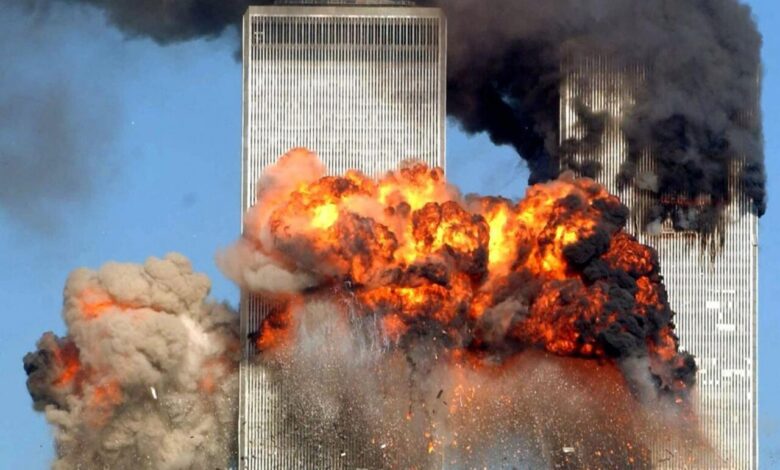
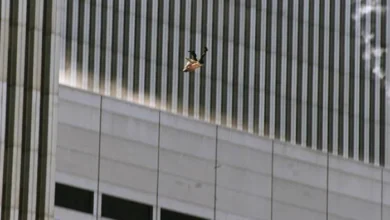
September 11 remains one of the most extensively studied days in American history, as well as one of its most tragic.
From the moment former U.S. President George W. Bush received his first warning on August 6, 2001, until Tuesday, September 11 of that same year, nineteen men from the Middle East systematically advanced their plan without intervention from any official and without being detected by intelligence agencies or airline companies.
-
Collapse of 9/11 Mastermind’s Plea Deal: Justice Hunts the Architect of Terror
-
Similar to 9/11… Terrorist Plot Targeting U.S. Interests Uncovered
According to an analysis published by the American magazine Newsweek ahead of the twenty-fifth anniversary of the attacks, U.S. intelligence agencies knew that something significant was coming, but their response lacked any coherent methodology.
Although countless indications suggested that terrorist plots involved large commercial aircraft, the Central Intelligence Agency (CIA) never managed to piece together the full picture.
More importantly, neither the CIA, nor the Federal Bureau of Investigation (FBI), nor any other agency effectively used the tools at their disposal. There was no nationwide manhunt and no unequivocal warning issued to airlines or airport security authorities.
-
Saudi FM: Kingdom Has Always Demanded Declassification of All 9/11 Documents
-
Responsible for the Benghazi Attack: U.S. Court Brings Abu Khattala Closer to a Life Sentence
The federal government continued operating in a state of complacency, inefficiency, and administrative inertia. Most senior officials were on vacation, and government employees failed to assemble the complete picture.
Following the September 11 attacks, criticism was directed at George W. Bush, the White House, former President Bill Clinton’s administration, the CIA, the National Security Agency (NSA), the FBI, and even the Department of Defense (the Pentagon), all of whom were accused of negligence and a lack of focus.
In a statement that became famous after the attacks, then–Secretary of State Condoleezza Rice said: “I don’t think anyone could have predicted that these people would board an airplane and fly it into the World Trade Center.”
-
The future of the Five Eyes… A shadow alliance reshaping global intelligence maps
-
Retreat Summits: European Leaders Take Shelter in Castles During Times of Crisis
However, records from the days preceding the attacks demonstrate that authorities could have prevented much of what happened, as this exact scenario had already been discussed within the FBI.
The arrest of Zacarias Moussaoui in Minneapolis on August 16—a man attempting to learn how to fly Boeing 747 aircraft and whom the FBI had identified as an extremist—caused serious concern among intelligence agencies and the Federal Aviation Administration. Nevertheless, it did not lead to any formal warnings.
Although no laws or regulations prevented investigators from searching Moussaoui’s computer and belongings, the FBI simply chose not to seek a criminal search warrant. While different FBI offices debated the appropriate course of action, no one outside the bureau intervened.
-
The Washington attack brings it back into the spotlight… What do we know about the National Guard?
-
The F-14’s journey from Cold War battles to modern missions: a legacy that endured beyond 2006
Meanwhile, the CIA finally reviewed older intelligence reports in August. For more than a year, the agency had possessed information indicating that Khalid al-Mihdhar and Nawaf al-Hazmi, both known Al-Qaeda associates, had been present in the United States since January 2000. One of them had even traveled to the Middle East and returned to New York on July 4.
The two men were eventually placed on a watch list to prevent them from re-entering the United States, but the measure came too late, as they were already inside the country. Notifications were sent to the FBI office in Los Angeles to locate them. Agents checked computer databases and hotel records, but made very limited efforts.
The CIA also failed to analyze intelligence indicating that the two men had traveled to Malaysia before arriving in the United States and had stayed with a man who had previously worked with Moussaoui. In other words, the information was available, but the agency failed to connect the dots.
-
Henry Kissinger and Latin America: 5 Sins That Changed the Course of History
-
After the American report, how did the chaotic Western withdrawal lead to a disaster in Afghanistan?
The National Security Agency intercepted several communications containing both general planning discussions and specific warnings of an imminent operation. However, the agency did not analyze these communications before the attacks, focusing instead on collecting additional intelligence rather than making use of what it already possessed.
After the attacks, the most shocking and tragic failure of all came to light—one that remains difficult to fully understand. The intelligence community did not identify Khalid Sheikh Mohammed as the mastermind behind the airplane attacks until senior Al-Qaeda leaders were captured in 2002.
During the final days before the attacks, intelligence reports indicated that a man known as “Mukhtar” and another individual named Abdul Rahman al-Ghamdi were recruiting terrorists and sending them to the United States for flight training.
-
FIFA insists on the privatization of the World Cup amid a deepening crisis
-
Radiation-saturated land: eight sites that encapsulate the cost of the nuclear venture
Both names were aliases used by Khalid Sheikh Mohammed, whom the intelligence community claimed it had never heard of, despite the fact that he had been indicted in 1996 by the U.S. Attorney for the Southern District of New York for his involvement in the 1993 World Trade Center bombing and for plotting to hijack aircraft and use them as weapons.
His name had already appeared on watch lists, and he had been the target of a failed capture attempt by FBI and CIA agents. Yet afterward, the intelligence community seemed to forget about him entirely.
There were also other major failures. Tens of thousands of dollars flowed to the hijackers inside the United States without being detected by the Treasury Department, despite its authority and resources to identify such transactions.
-
After Three Decades of Pause, the United States Resumes Nuclear Weapons Testing
-
Battle for survival: the US Sky Guardian drone arms itself with intelligence
There was also the infamous “Phoenix Memo,” written in July by a perceptive FBI agent warning that men from the Middle East were receiving flight training in the United States.
In addition, the Federal Aviation Administration failed to issue sufficient warnings, while dozens of airline and security personnel neglected their duties on the morning of the attacks, when nineteen men—some carrying questionable documents and at least one unable to speak English well enough to answer security questions—boarded the aircraft.
-
The last warning from Katz and Trump to Hamas: release the hostages or Gaza will be destroyed
-
Trump plans to revive the War Department: what do we know about the Pentagon?